![PortStrategy[GreenPort]](https://www.portstrategy.com/wp-content/uploads/2026/09/PortStrategyGreenPort.svg)


FROM RIB TO TUG SOMETHING FOR EVERY OCCASION
Mention of the term workboat conjures up a variety of images and frequently means different things to different people, reports Jack Gaston .
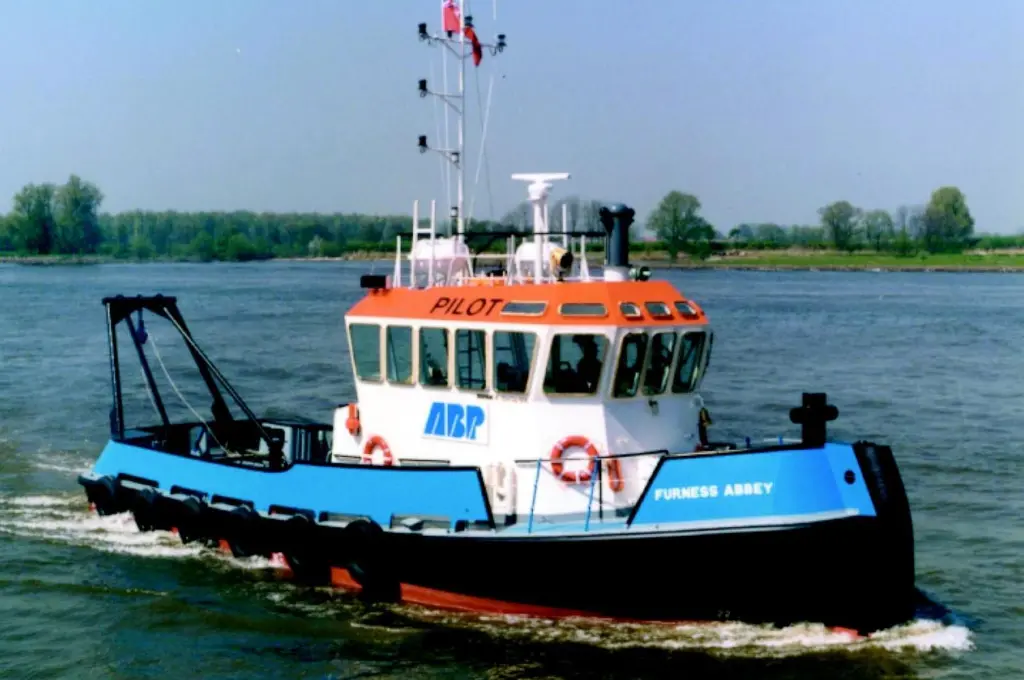
At one end of the scale it can be a relatively simple rigid inflatable boat (RIB), or conversely, a complex multi-purpose vessel carrying out a variety of maintenance and support tasks around a port or harbour. It is a fact, however, that such vessels represent an essential ingredient in day-to-day port operations. How these vessels are employed and funded can be a contentious issue and the approach varies widely from port to port.
This article attempts to identify the many and various vessels classed as ‘workboats’ and examine the tasks on which they are deployed.
Workboats can be found carrying out any of the following tasks as part of normal port operation; dredging, survey work, buoy and mooring maintenance, towage, line handling, pilotage, patrol duties, pollution control, and local salvage. One of the most common buzzwords in the workboat sector is ‘multipurpose’ and several of those functions can be satisfactorily combined in many cases.
The purist may be reluctant to regard the dedicated high-speed pilot boat as a workboat but in the cold light of day it forms part of the overall port facilities package and may be manned and operated by a common marine services team. Alternatively, in a small port the transportation of pilots may be just one of a number of duties performed by a ‘multipurpose’ vessel. Most ports are fully responsible for pilotage in their own areas and providing the means of embarking and disembarking pilots. The latter is an important and potentially hazardous activity that requires a high degree of skill on the part of the operators and exactly the right type of vessel to undertake the work in the prevailing weather and sea conditions.
Purpose built pilot launches, usually built for the high speed transportation and safe delivery of pilots to and from ships, have long been the province of specialist boat-builders and designers. A wide range of options is now available to port operators for the provision of such vessels. Some organisations prefer to own and operate their own vessels and in some of the smaller ports where the pilotage workload is relatively low a purpose-built launch is owned by the port and operated by marine services personnel who may also be employed on other duties when not required. Alternatively, wholly owned vessels may be operated under contract with specialist crews provided by a third party agency. An attractive proposition for the port authority that is keen to divest themselves of all but major shipping and dockside matters is one of the increasingly popular lease/hire arrangements.
A recent example is a deal signed a year ago by Associated British Ports (ABP) with the UK’s leading commercial and military boat builder VT Halmatic. Under a revolutionary ten-year Fleet Hire Contract the company now supplies seven vessels for the marine services fleet in the port of Southampton. ABP Southampton’s existing pilot-boat, survey and patrol fleet comprising seven vessels, have been procured by VT Halmatic and leased back on a fully supported contract, incorporating a six-vessel replacement programme. The first new vessels were delivered to ABP’s Gosport Pilotage Station before the end of 2003 with further vessels due to come on line over the duration of the contract. With reliability of paramount importance, the new pilot cutters are of the well-proven Halmatic Nelson 48/50 design, fitted with Volvo Penta engines rated at 450 horsepower to provide a service speed of 23 knots.
LEASE/MAINTENANCE OPTIONS VT Halmatic provides 24 hour/365 day per year maintenance and service cover to ensure that a comprehensive pilotage, patrol and survey service can be maintained for the busy port without interruption. In the event of major maintenance or damage, spare pilot cutters are available from Halmatic’s own fleet to ensure that suitable cover is maintained. For a competitive fixed monthly fee the port operator has transferred the risk of operating and maintaining their marine services fleet. This ensures that ABP Southampton will continue to operate a modern, well equipped and maintained fleet of vessels well into the next decade. The use of modern state-of-the-art boats brings with it the added advantages of reduced maintenance and improved fuel economy. By undertaking this scheme VT Halmatic has further strengthened its longstanding relationship with ABP and current discussions may lead to similar contracts with other ports.
There is much debate on the subject of port security, counter terrorism, and the manner in which it is enforced, particularly in waterfront areas. Ports in the United States have seen a significant increase in the use of patrol vessels operated by the US Coastguard in harbours and close inshore. In Europe such services are largely the province of police authorities and specialist boat builders/suppliers report no substantial increase in the procurement of dedicated patrol boats by port authorities. Where harbour patrols are carried out it is usually with an emphasis on immigration, safety and anti-pilfering duties. Such work may be carried out by dedicated patrol vessels, operated on behalf of the harbour master or by the vessels and crews of the pilotage service.
Pilotage duties are just one of the functions carried out by many of the small ‘multipurpose’ workboats employed in small ports in almost every part of the world. These are typically specially constructed steel craft of between 14 and 19 metres in length designed to carry out a useful range of services within the environs of the port or harbour. Based on a small tug/workboat configuration, the vessels may be single or twin-screw and generally have sufficient power and manoeuvrability to give towage and mooring assistance to small ships. To meet the requirements for pilotage, special handrails and boarding platforms may also be fitted to ensure the safe transfer of personnel to and from ships underway. Many small harbours have special needs with regard to tidal conditions and water depths in their approach channels and workboats of this type are frequently equipped to carry out survey work as well. To this end the vessel may be fitted with DGPS, electronic charting, a high accuracy recording depthsounder and the appropriate transponders.
An almost universal feature of the multipurpose vessel of this type is the ability to undertake small dredging operations with a towed plough. This equipment is demountable if the vessel is also used for towing but frequently remains permanently in place if it does not compromise other operational functions. Dredging with a towed plough enables berths, approach channels and dock entrances to be kept free of silt. During these operations the material is moved into a deep channel to be dispersed by the tide or to a position where it is accessible to a trailing suction dredger. Many small vessels engaged in this work are equipped with a purpose designed electronic charting system with a graphics display depicting the area to be dredged and the path of the vessel at each pass of the plough.
Small tug/workboats of this type are frequently wholly owned by the port or harbour authority but the services they offer, particularly plough dredging and survey work, are available from a number of well known dredging and marine contractors. Many such operators are contracted to carry out regular periodic survey and dredging work in ports, harbours and marinas where the costs associated with a permanent facility cannot be justified.
In some major ports and oil/gas terminals frequented by large ships, there is also a requirement for a suitable vessel to handle mooring ropes and in some cases hoses – a task within the capability of many tug/workboats. The principal limiting factors are sufficient power and manoeuvrability and a safe working environment for the crew. Tubular overhead guards are commonly used to prevent mooring ropes fouling the superstructure and fittings and a ready means of temporarily securing the ropes onboard is also required. Line-running boats of this kind may be supplied by the port authority but more commonly a marine services contractor is employed to undertake all aspects of mooring – ashore and afloat.
Where the services required from a workboat include lifting and some transportation, a ‘pontoon type’ multipurpose craft is becoming increasingly popular. Such vessels have much improved buoyancy which frequently go hand in hand with the possibility of an inherently shallow draft. A feature of most vessels of this type is invariably the installation of a powerful hydraulically operated deck crane. In very recent years the lifting ability of marine cranes used in this application has improved enormously, to the point where vessels so equipped can undertake major lifting operations around the port during maintenance work and marine construction. This has simplified many routine tasks such as buoy maintenance. Deck cranes fitted aboard a moderate sized work vessel can now readily lift navigational and mooring buoys, and their anchors and sinkers, without the need to resort to A-frames or ‘bow horns’.
POLLUTION SOLUTION With increasing emphasis on environmental concerns, the need to provide pollution control measures is a serious preoccupation for many port managers. Purpose-built, fast response, counter pollution craft are in place in some ports but again the pontoon type multipurpose vessel has certain advantages, particularly where oil retrieval is concerned. The buoyant hull is invariably well sub-divided and lends itself to the allocation of dedicated tanks for retrieved oil and oil/water separation. Skimming equipment can be deployed by crane or built into the vessel’s structure. Likewise, chemical detergents can be accommodated in separate tanks and dispensed by means of extendable spray booms. The large clear working deck also makes an ideal platform for the deployment of floating protective anti-pollution booms.
Many of the multipurpose vessels mentioned above are constructed by specialist shipbuilders offering standard designs intended for series production, with the Netherlands being at the leading edge of this work. This well established production principle enables vessels to be built in sufficient numbers to benefit from economy of scale, with all major steelwork being produced to a given standard in areas where labour costs are low. Fitting out is to an established high standard and a degree of customisation can be included within a competitive price range.
Manning workboats of any type in a port services environment is a serious issue involving the need to utilise efficiently both vessels and manpower resources. In smaller port organisations, workboat personnel are often multi-skilled and perform a variety of land-based and waterborne duties. Crewing levels for workboats in Britain are largely governed by the Maritime & Coastguard – Workboat Code of Practice that includes comprehensive rules for the construction and operation of pilot vessels and workboats of less than 24 metres waterline length. The rules contained therein apply to both port authorities and other commercial workboat operators and clearly define the parameters under which they can be deployed. Training services are now available from a number of commercial sources covering all aspects of the Code of Practice and include additional subjects such as the operation of modern hydraulic deck cranes.
Related Articles
 CONTAINER & CARGO HANDLING
 CONTAINER & CARGO HANDLING
 EQUIPMENT