


Getting more for less
Carly Fields spoke with Navis’ Frederik Stork about the need for the company’s optimisation team to boost productivity
What’s the driver behind the launch of Navis’ Optimisation Services?
“We have launched a number of different types of services primarily to help our customers with improving operational productivity and efficiency. Comparative benchmarking is one – we see value in comparing two terminals that are similar but not competing – but our starting focus areas are closer to our software. We are asking which are the modules that if properly implemented can deliver the most value, but prove to be a struggle to implement (these are usually optimization modules, such as Navis Expert Decking, Autostow, and Prime Route). We recognise that it is difficult when a consultant comes in and puts a base configuration in for modules in a couple of days and then leaves and expects the customer to handle it from there. That approach does not work. We want to support our customers end-to-end so they are enabled going forward.”
Why do some terminals struggle to implement optimization modules from the go-live?
“The most common issue – not just in the container terminal business – is that whenever you take a decision away from a human and you let a machine do it that causes conflicts. Some business users are very open to that and are glad to not have to do all that detailed decision making. Others are afraid of losing their job, or concerned that their job will change. Also, because the software is extremely configurable – it needs to be because we are serving all sorts of terminals – it is complex and you need to invest time to understand what the different configuration options are. People sometimes lose sight of this as other business takes precedent, or the employee that was most involved in the implementation leaves and the knowledge is lost.”
Can a fixation on the ‘old ways’ hold back implementation as well?
“You can’t turn the TOS off, but you can turn an optimization module off and you wouldn’t even notice for some time. We’ve seen this several times: people start trying to customise modules to handle an observed operational exception, don’t get the expected result, and then give up and turn it off. This is a common problem in any optimisation systems. This is another item Navis is trying to address through more operational training and mentoring.”
How do you convince a customer of the potential return on investment?
“From an ROI perspective, we determine which modules have the potential to deliver the highest ROI. To do this, we work with the customer to quantify that ROI. A lot of the data needs to come from the customer and then we use our standard ROI calculation approach which is simple math to forecast what the customer can expect based on all the assumptions they have provided.”
What about the challenges of automated terminals?
“As you automate more equipment you need more automated decision making. What’s the point of automating to remove the driver of the AGV, when you still need someone in the office directing the AGV? Those decisions need to be done by the software. So our engineering team have built a lot of optimisation capability around that.”
How have the optimisation services been received?
“It’s been going great overall. Since we started we have helped a number of customers implement modules that were previously on the shelf, or helped them to implement optimization software successfully that they have just licensed. The key to success is combining the deep operational experience that we have with the analytical skills of knowing how optimisation modules should be implemented and analysed.”
Are their examples of ports that stand out as success stories for optimisation?
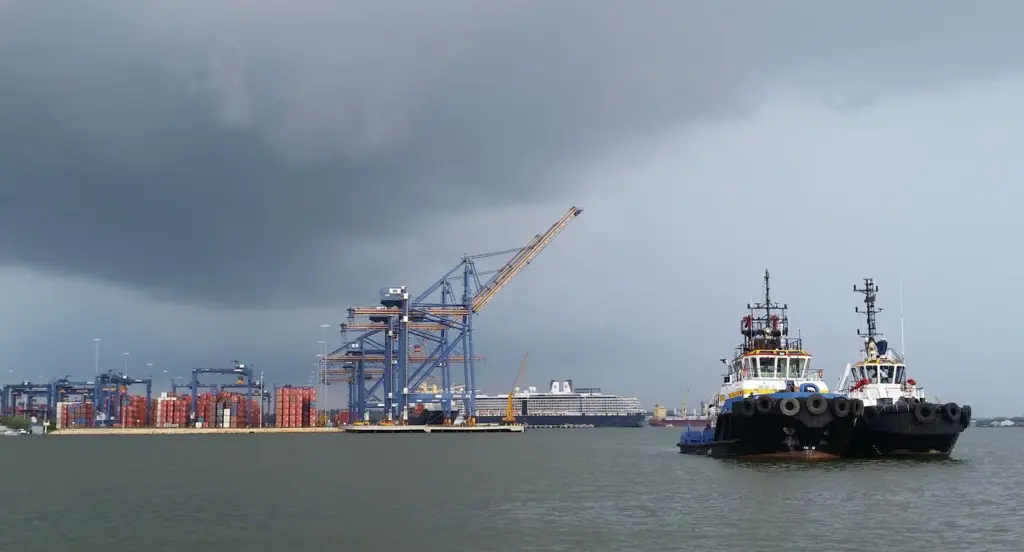
“Sociedad Portuaria Regional de Cartagena is doing a great job; they are a role model for what you can do with a manual terminal. They are using all three Navis modules of Autostow, Expert Decking and Prime Route, and regularly update the configurations based on terminal KPIs observed through business intelligence.”
Where next for optimisation?
“We are tying all this together as an initiative to bring our entire professional services into focus as a tool to improve productivity and efficiency at terminals, against pure technical integration of a piece of software at a terminal.”
Related Articles
 EQUIPMENT
 EQUIPMENT