![PortStrategy[GreenPort]](https://www.portstrategy.com/wp-content/uploads/2026/09/PortStrategyGreenPort.svg)





Kalmar: box terminal overcapacity a myth
Container terminal industry overcapacity is “a myth” which is “based on a naïve additive calculation of container handling capacity and a simplistic model of how a terminal operates”, Kalmar vice president Frank Kho has said.
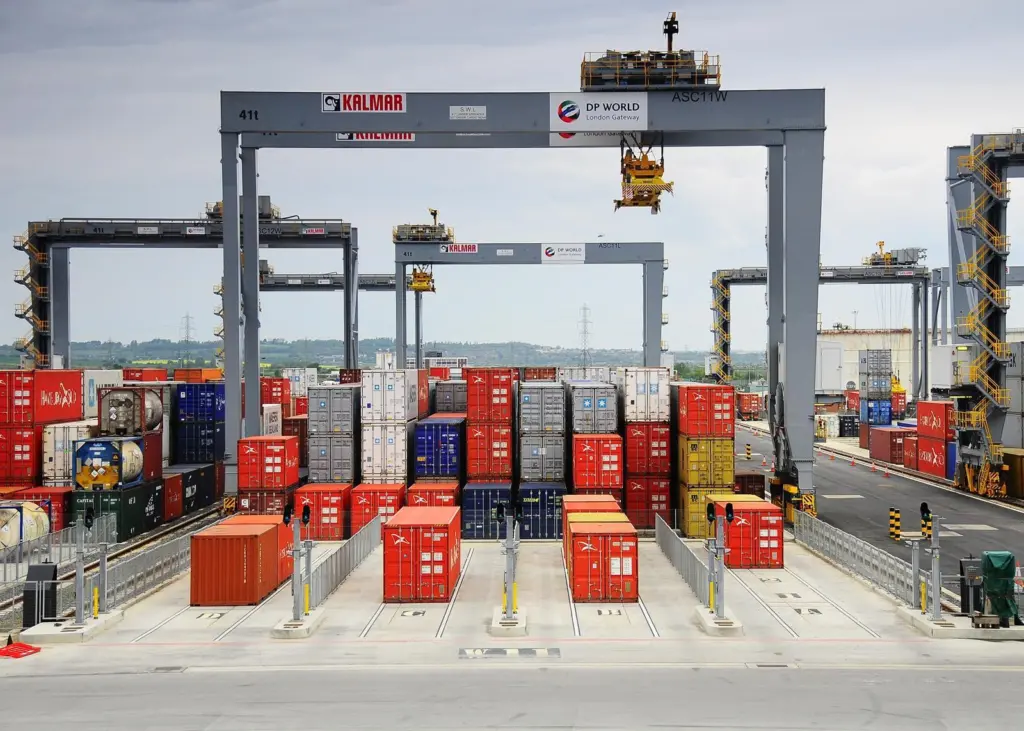
In a blog, Mr Kho said that people need to alter the way they think and talk about supposed container terminal industry overcapacity.
The vice president noted that it doesn’t matter if a person has ten 200,000 teu terminals almost empty and awaiting customers if none of them can offer the 1m teu capacity and service-level that are needed by new ships and shipping alliances.
In the article, Mr Kho explained that in previous times, a terminal might have handled 200,000 teu a year for one shipping line, but “if this demand suddenly mushrooms to 1,000,000 teu thanks to alliances and a new fleet of mega-capacity ships”, it is only great news if a terminal can cope with it, and there are high chances that it cannot.
He said that a container terminal is “a buffer” rather than “a production line”, and that if a terminal’s throughput alters according to the figures noted above, capacity cannot just be ramped up (e.g. through adding an assembly line or by employing more people).
“What happens, instead, is that your terminal/buffer can no longer handle its function of smoothly interfacing between the modes of sea and land transport,” he said.
“Put more bluntly, you can’t serve your customers.”
Mr Kho concluded that the value offered by a terminal is in getting a container “to point B” precisely when it is required.
“Even if your quay cranes can unload 18,000 containers from a single ship at maximum speed, your entire buffer still needs to be scaled up in order to perform its function as part of the global logistics chain,” he said.
“This is no small feat, and it – not industry ‘overcapacity’ – is the real issue that we need to be thinking about today.”
Related Articles
 CONTAINER & CARGO HANDLING
 CONTAINER & CARGO HANDLING
 EQUIPMENT