



Keeping the pace
Keeping up with the latest technological developments is a full time job as John Bensalhia finds out.
In the technology relay race, there’s never time for even the slightest pause. In order to keep up with a constant stream of ideas, innovations and advancements, technology companies stay one step ahead of the game. The baton is always being handed over, whether it’s from a gramophone to an iPod or from Betamax to BluRay. Technology is always evolving, shifting, and most importantly meeting the changing requirements of customers.
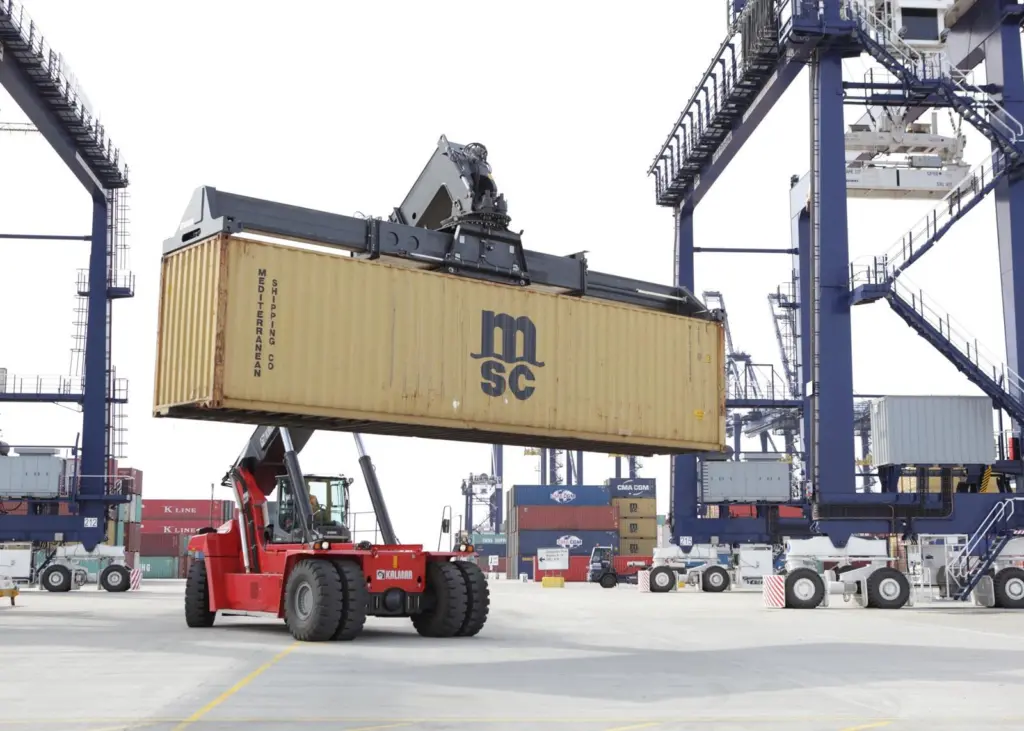
But it’s also the customers who run the technology relay race. Ports, for example, need to keep up with the pace and staying on top of the latest technology is a situation that ports face on a constant basis. “In parallel to technological developments in other industries, new technologies have also been introduced to ports and terminals,” says Chuck Schneider, vice president sales and marketing at Kalmar. “The developments can concern improvements of existing equipment, or alternatively the introduction of new systems to support and improve the processes in ports and at terminals.”
In order to provide a competitive, efficient service, the port needs to employ the latest technological innovations, devices and equipment in order to ensure that it doesn’t fall ‘behind the curve’ in this regard.
For example, recent years have seen major breakthroughs with voice communications. Voice communication devices from the likes of Frequentis and VisSim have enabled port operators to concentrate on improved communication levels, safety and data management. The last couple of years have seen a rise in mobile data devices such as the Android or the iPad. Such innovations mean that port operations can be managed on the go. No wires. No central location. Simply tune into the required internet, email page or downloadable special app through one of these portable devices and you can manage operations any time and anywhere.
On the go
One of the great things about burgeoning technology is that it can allow for greater convenience. Take the mobile app, which can be downloaded to mobile phones, Androids and other portable computer devices. The app can provide information and instant convenience in the palm of your hand.
The MarineTraffic app, for example, provides a wealth of real time information. The app covers a large number of important shipping routes, real-time positions for more than 80,000 worldwide vessels and worldwide coverage of more than 4,000 ports. Real time arrivals and departures, weather conditions, ETAs: all here in one convenient mobile app.
Port authorities have also been getting in on the app. Harbour Centre Port Terminal inc has announced a mobile system for its online seaport transactions. Any clients of HCPTI can use this app, U-PORT (Unified Port Operations Real Time Technology) to make a transaction using devices such as Android smartphones, iPads or iPhones. The app was initially devised for HCPTI for internal use on operations like automated vessel and yard planning, berth management and human resources.
The Port of Amsterdam has introduced a free app, iamPort. This provides shipping information which can be transferred to smartphones, including regional shipping movements, arrival and departure times, and the size, draft and berth of each ship in the port. Meanwhile, Port Metro Vancouver’s app provides a mix of knowledge and fun. It includes an interactive map of the port for navigators, an event planner and data on vessels coming through the port. And for a bit of fun, users can also enjoy a photo frame which puts them in the picture with the port’s mascot.
Technology first
But ports also need to look to the future with regards to the equipment that they use. There are many reasons as to why ports need to keep up to date with the latest technological innovations. Mr Schneider offers some examples: “Efficiency (being able to handle more boxes in the same time); safety (ensuring workers are kept out of harm’s way); sustainability (avoiding unnecessary emissions and noise); control and visibility (gaining oversight and insight into the performance of operations); and government regulations (requirements with regard to security/safety/ergonomics).”
In addition, Mr Schneider says that ergonomics (to ensure that the working area supports health, efficiency and safety), predictability (consistent performance of the terminal over time) and also reduced total cost of ownership during operations are key factors in considering the benefits of new technology.
Liebherr expands on the need for new innovation at ports: “Thanks to innovative technology, throughput rates can be significantly increased. Especially crane management systems and analysis tools can indicate where there is room for improvement of operation. This also affects whole economies as ports often represent the point of connection regarding trade. New technologies can also reduce the environmental impact of port operation and thereby improve working conditions for port personnel. Another issue is safety: new tools for easier/semi-automatic operation and highly professional training show huge potential to improve safety in ports.”
One of the biggest issues facing ports with respect to technology is the familiar one of money. While the latest technology goes a long way in boosting productivity, safety and environmentally friendly production, it comes at a price. It’s a quandary that any business faces – can the short-term price tag pay dividends in the long run? Liebherr comments: “The development of new technologies requires substantial investments in research and development, even though the real ‘value’ of an innovation is quite uncertain when research starts. On the other hand, innovation is of utmost importance, drives the industry and pushes it ahead.”
Investment arms
Mr Schneider says that there is always a tension between the (short term) investment required and the (long term) savings and benefits realised during the subsequent operations of the equipment. “New technology typically requires a larger investment by the terminal relative to traditional equipment, which is to be recouped from the operations. In some cases the ROI can be within a year (process automation solutions), while for automated equipment a longer horizon will be required to off-set the additional costs. This is logical though, as the equipment is also operated for a longer period of time.”
As the technology race continues to run, ports will need to look to the latest equipment innovations in order to meet the demands from outside influences. “Future growth of global trade as well as more restrictive environmental regulations may even accelerate innovation processes,” says Liebherr. “Additionally, new technologies evolve and find their way to the port business.”
Liebherr adds that there is a lot of potential for new technologies in the port sector in order to optimise throughput. “Due to the continued drive for increased productivity, various levels of automation are now becoming standard, particularly on new developments. The incorporation of productivity technologies as a whole has become much more widespread on both larger and smaller cranes.”
“As technological developments continue, so will the introduction of new technology to ports,” says Mr Schneider. “Container handling at terminals has come a long way since its start and the developments are not slowing down. New, larger ships are being introduced while the time in port needs to be reduced, resulting in higher requirements on the people, systems, services and equipment operational at the terminal. Without new technology this wouldn’t have been possible.”
Related Articles
 EQUIPMENT
 EQUIPMENT