![PortStrategy[GreenPort]](https://www.portstrategy.com/wp-content/uploads/2026/09/PortStrategyGreenPort.svg)





London blazes trail
The PLA has long been a supporter of identification systems, despite the major expenditure required to introduce AIS equipment, as Alex Hughes found out
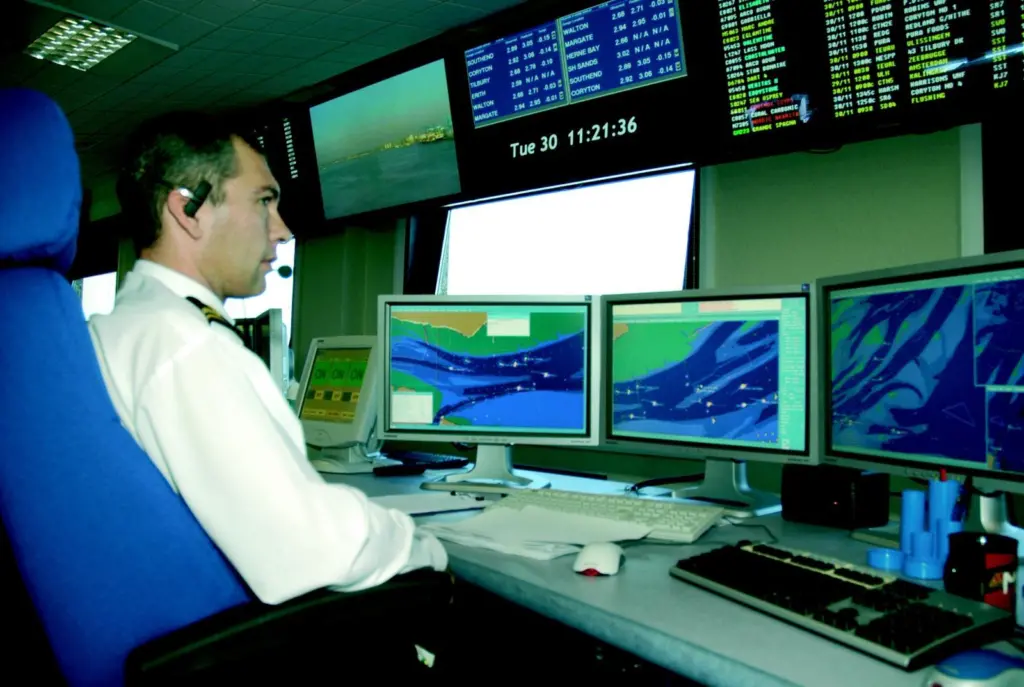
The Port of London Authority (PLA) was an early adopter of Automatic Identification Systems (AIS) technology, integrating it into its overall Vessel Tracking System (VTS) before its mandatory use by vessels upwards of 300 gross tons as from January 1, 2005. Half the VTS upgrade budget of £1m went on software provided by Sofrelog, which along with the PLA was represented on many of the original policy making committees set up specifically with AIS implementation in mind.
Because it is not mandatory for ports to receive information generated by AIS systems, those wishing to do so are not constrained by any general requirements on how the necessary tracking equipment is integrated into existing VTS systems, says Barry Goldman, the PLA’s VTS manager.
“We have embraced AIS as being a really big advance in traffic management, ” he stresses, pointing out that in the PLA’s VTS centre, charts have both radar and AIS overlay. This not only substantially resolves potential vessel identification problems, but also provides all relevant data about the vessel being tracked, including positional changes. Long gone are the days of radar ‘target swapping’, whereby the identity of ships passing on the river could quite literally become transposed.
PLA base stations established at Clacton and Margate can detect incoming vessels at a range of at least 25 nautical miles. A third station, at Gravesend, receives AIS signals from all river traffic as far west as the Thames Barrier. Information picked up by these base stations is brought together in what is known as ‘the node’, where information is compared and correlated before being transferred to the traffic imaging system at the PLA’s traffic management centres at Gravesend and Woolwich.
Tackling the thorny problem as to how to justify major expenditure on AIS equipment, Mr Goldman stresses the huge leap in navigational safety that accrues, although he adds that AIS should be viewed as a complementary tool. “Without well managed port traffic, vessels will simply not come here. So, there is an absolute commercial justification for having AIS, ” he says.
An AIS system should be capable of handling 4,500 time slot reports per minute split between two VHF channels, which is massively above current PLA needs. Indeed, it has been calculated that the types of major traffic flow to be found in the Dover Straits would give rise to about 2,500 reports per minute and the approaches to Singapore about 3,000 reports per minute, so capacity is not an issue. Furthermore, were a system overload ever to occur, more distant targets would simply be ignored in favour of those closer to the port’s base stations.
Asked for his opinion on Long Range Identification & Tracking (LRIT) systems, Mr Goldman concedes that they may help some of the larger, more congested ports, such as Rotterdam, in their longer range planning and validation requirements, which could be of real commercial benefit.
“For London, there are only limited advantages in looking that far out, ” says Mr Goldman, commenting that the PLA’s pilot manager sees a potential benefit in being able to track vessels bound for London as they leave ports on the near continent. This is because some pilots have to be taken out as far as Harwich, a journey of up to five hours.
If a vessel therefore fails to give the PLA an accurate ETA, either the pilot or the ship can be left waiting with obvious commercial implications.
This prompts Mr Goldman to remark that LRIT is perhaps more of a security imperative, rather than being driven by strict commercial criteria; indeed access by ports to LRIT data may well be restricted.
Unfortunately, for purveyors of LRIT equipment, commercial alternatives, in the shape of AIS Live and SeaSearcher, already exists.
These, claims Mr Goldman, provides the PLA with much of the critical medium range information that it needs. Although open to members only, AIS Live and SeaSearcher make available on line AIS information from a number of contributing ports, effectively allowing the PLA pilot coordinator to monitor vessels bound for London as they leave their previous port of call.
Related Articles
 CONTAINER & CARGO HANDLING
 CONTAINER & CARGO HANDLING
 EQUIPMENT