![PortStrategy[GreenPort]](https://www.portstrategy.com/wp-content/uploads/2026/09/PortStrategyGreenPort.svg)

Mooring solution could prevent interruptions
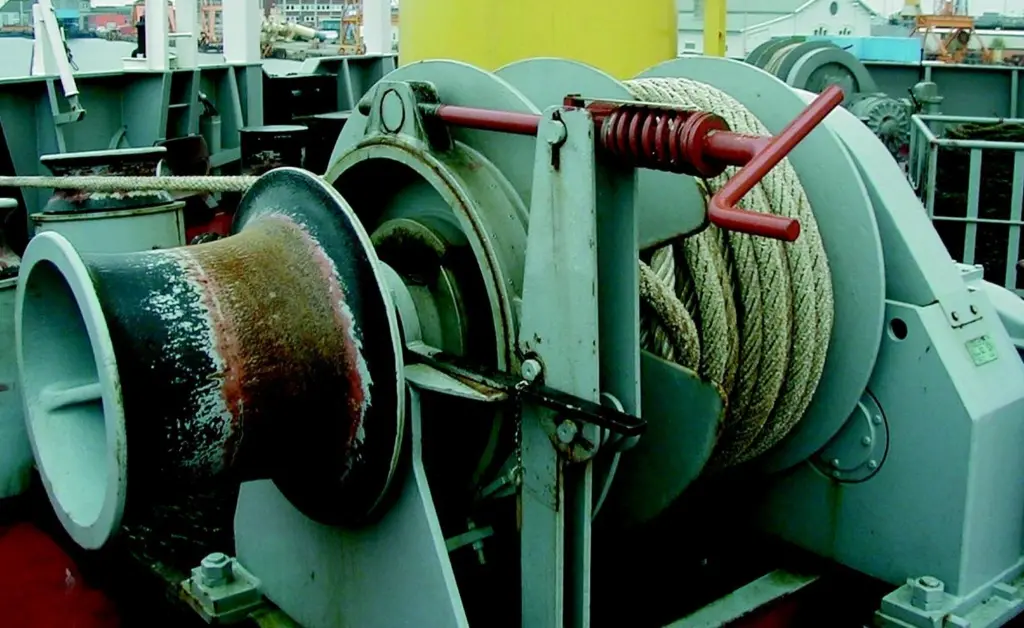
Two German companies have teamed to develop a new type of mooring system for vessels in exposed locations of the type likely to be used for the new generation of offshore LNG terminals. Working in close collaboration with Hatlapa, the new mooring concept was developed by Marine Service GmbH, a Hamburg-based consultancy that specialises in LNG ships and handling and transport of liquefied gases. The new mooring equipment will be the subject of a series of tests that are due to be conducted with Maritime Research Institute Netherlands (MARIN).
As Marine Service’s Dr Ing Jochen SchmidtLuessman explains, in exposed locations ships may be exposed to substantial forces from wind, waves and currents, producing significant motions that can interrupt loading and unloading or, in a worst case scenario, lead to the disconnection of loading arms and hose connections.
Cyclic tensioning during vessel motion can cause fatigue in mooring lines in a relatively short period of time, and a conventional mooring system has little damping effect.
Marine Service’s solution is to add two additional mooring winches and lines with a control system similar to a constant tension system. In contrast to constant tension winches, however, the control system for the winches adjusts the tension of the mooring line depending on the rotational direction of the winch drum, allowing them to effectively act as damping units. The damping units can be electrically or hydraulically driven, and can be located on the quayside, and pull the ship, or vice versa.
Marine Service and Hatlapa say calculations they have carried out prove that the mooring system with damping units is capable of reducing a vessel’s motions very effectively, with, for example, the amplitude of swaying motions reduced by up to 80%.
PS
Related Articles
 CONTAINER & CARGO HANDLING
 CONTAINER & CARGO HANDLING
 EQUIPMENT