![PortStrategy[GreenPort]](https://www.portstrategy.com/wp-content/uploads/2026/09/PortStrategyGreenPort.svg)





Namibia and Taiwan opt for Transas
Transas has installed two VTS systems in the Namibian ports of Walvis Bay and Luderitz. The independent port surveillance systems fitted are to assist port control operators to supervise ship traffic within the port and help ship masters and pilots avoid collisions when following the port approach channels.
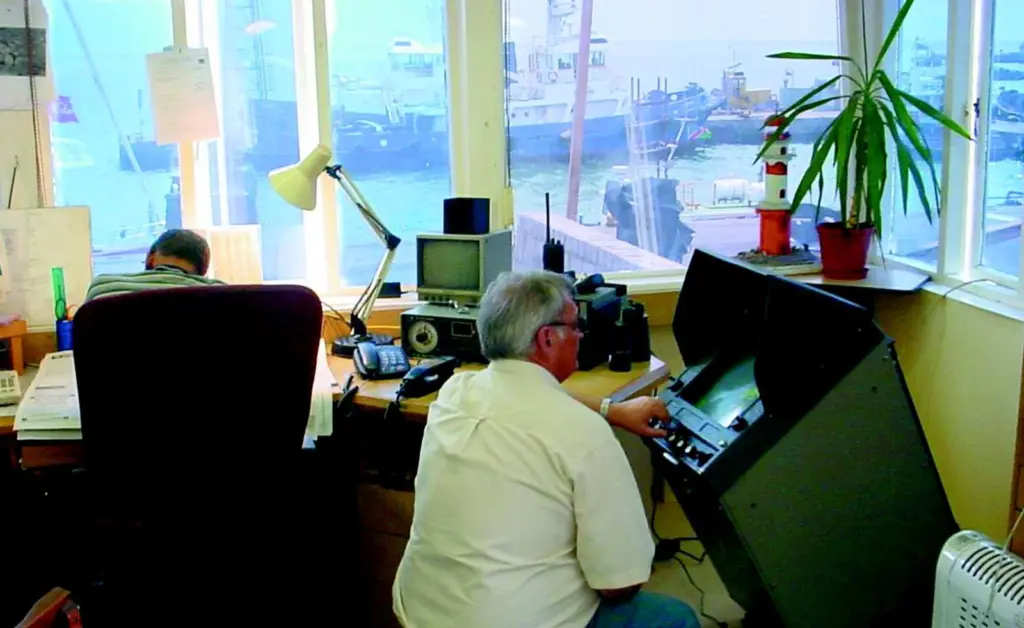
Walvis Bay has two long approach channels. As the waters are relatively shallow, both channels, which have maintained depths, provide the only safe approach.
It is therefore important to keep the channel marker buoys in good condition and accurately positioned. The Transas system ensures observation and guarding of more than 30 buoys so the loss of off-anchored buoys or damage to buoys caused by passing ships can now be tracked and replayed to restore the situation.
Port captain, Vladimir Gusev, commented: “The VTS will provide accurate radar tracking of all vessels and NavAids and help us significantly reduce the cost of channel maintenance as well as increasing the navigational safety”.
Both VTS systems have identical configurations and comprising Bridge Master E radar, ORS3 radar processor with radar control unit and a Transas Navi-Harbour Operator station (ODU). Each system provides full coverage of port/harbour area, trafficrelated information on ODU screen, all data recording in digital form and playback.
Meanwhile Taiwan’s HoPing port VTS installation complies with the VTS IMO/IALA regulations, improves port management systems and increases navigational safety in the area, says Transas. The HoPing VTS incorporates two Bridge Master E radars (Xand S-band) in hot-stand configuration with full remote control/diagnostics and radar data processing provided by dedicated Transas VTS ORS-3 radar processor, dual-display Operator Station, as well as VTS Information System with user terminal and advanced recording facility. This provides sensor and system data recording as well as four VHF radio stations voice data, all in digital form for up to one month. The recorded data can be scanned by Playback application for the particular fragment with the reference to vessel name/MMSI/Call sign, or by time attribute.
During the replay, all traffic and other related information appears on the screen exactly as it was shown in real-time.
Related Articles
 CONTAINER & CARGO HANDLING
 CONTAINER & CARGO HANDLING
 EQUIPMENT