




Optimism for port investment rises among owners
The latest Trelleborg Barometer Report reveals port owners and operators are most optimistic for future investment in the sector since the annual survey began in 2010, despite other challenges ahead.
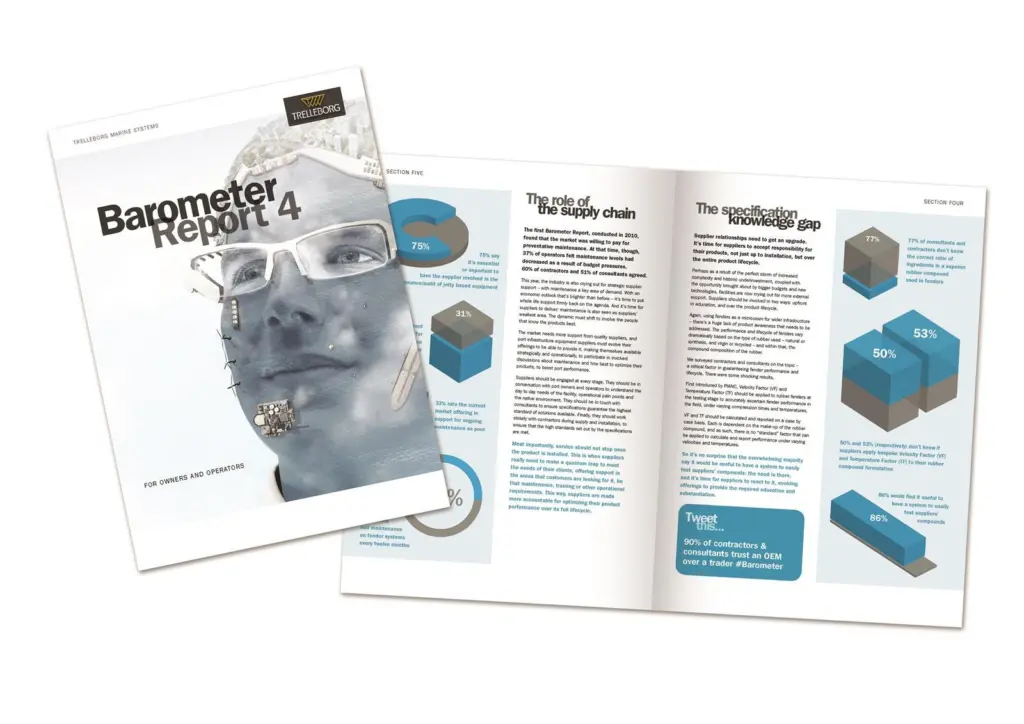
Of those surveyed, 93% are expecting capital expenditure budgets to increase over the next 12 months and 88% are expecting operational expenditure budgets to grow too. Ninety-eight percent of consultants and contractors also said they expect capital and operational expenditure budgets to increase.
“Spending these increased budgets strategically is what will really help ports to increase efficiencies. Unfortunately, this doesn’t seem to be happening at the moment,” explained Richard Hepworth, president of Trelleborg’s marine operation. “The report revealed that, although optimism is returning, 61% of contractors and consultants feel their clients are concerned by upfront purchase costs, rather than prioritising whole life value.”
Trelleborg’s report also revealed that ports are under pressure to adapt quickly to increasingly complex demands on infrastructure. Of those surveyed, 40% don’t think current port infrastructure is adequate to keep up with the onward logistics requirements of increased vessel sizes and throughput, while 67% are taking a “wait and see” approach to the expected increase in LNG bunkering, following the implementations of 2015 regulations.
This suggests that facilities are already lagging behind the demands placed upon them, but they can ensure they don’t fall further behind by acting now to optimise new investment opportunities.
“As the market continues to strengthen, there’s an opportunity arising for those that can get ahead of demand and invest strategically now. Those that don’t will suffer as new, modern terminals multiply and others quickly upgrade. The response to LNG as a marine fuel is a perfect example of a market that is inert and reactionary, rather than bold and deliberate,” concluded Mr Hepworth.
Related Articles
 EQUIPMENT
 EQUIPMENT