![PortStrategy[GreenPort]](https://www.portstrategy.com/wp-content/uploads/2026/09/PortStrategyGreenPort.svg)






Ports simulator removes operational uncertainty
Flexsim Software Products has released a 3D discrete-event simulation softwaretool to model and simulate container port and terminal operations.
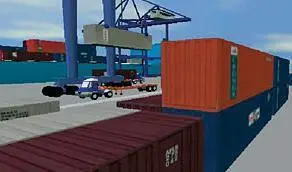
Developed after requests from existing Flexsim customers, Flexsim Ports helps find ways of moving more containers more efficiently and at less cost.
Ideas for improving a process can be simulated, tested, and justified prior to implementing them in the actual system and the results of each simulation can be analysed graphically through 3D animation, and through statistical reports and graphs.
The company’s Anthony Johnson said: “We took the challenge and created a steering committee made-up of engineers and managers from APM Lighting specialist Chalmit Lighting has developed a new emergency wall/ bulkhead light for application in extreme environments.
The NexLED was initially developed for use in oil and gas extraction, but is equally useful for port environments. Said Chalmit director Archie Haughey: “The output from fluorescent lamps diminishes in extremely low temperatures, whereas the light from LED’s increases by around 20% in the same conditions. “LEDs also have an extremely long life of up to 50,000 hours – almost six years continuous use, so re-lamping will be rarely required during the lifetime of the installation.”
With die cast corrosion resistant marine grade aluminium enclosures, toughened glass covers, silicone rubber gaskets and stainless steel fittings, NexLED promises long life with minimal maintenance.
Terminals, The Port of Los Angeles, Moffat & Nichol, and The Port of Cartagena who helped us design how the container-terminal simulator should look and function. With the steering committee’s input on how the objects and software should work, we’ve created a very powerful, visual, and easy-to-use simulation tool for them and others within the industry.”
In addition to moving more containers more efficiently and at lower cost, Flexsim claims that organisations and individuals using simulation gain a “greater insight into the interrelationship of how resources are used, which in-turn helps managers to predict and control a terminal’s operations with greater reliability in the future”.
Related Articles
 CONTAINER & CARGO HANDLING
 CONTAINER & CARGO HANDLING
 EQUIPMENT