![PortStrategy[GreenPort]](https://www.portstrategy.com/wp-content/uploads/2026/09/PortStrategyGreenPort.svg)






Safety and quality paramount
Towage companies whose core business is aimed principally at providing ship-handling services are becoming increasingly concerned with the need to comply with recognised international standards for quality and safety. Jack Gaston reports.
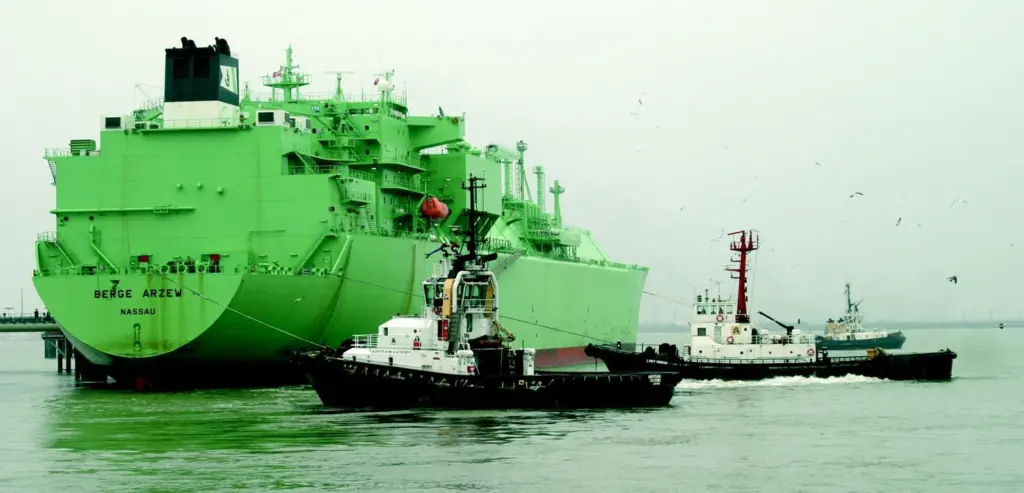
Demands for the industry to become leaner, more cost effective and to provide more agile vessels with greater power has led to smaller tug fleets and less personnel ashore and afloat. At the same time such tug fleets are being asked to handle ever larger ships, often of high value and/or with hazardous cargoes, while paying even greater attention to operational safety. Demands on tug operators to have greater involvement in safety and pollution prevention measures have come from several directions, shipowners, underwriters, port authorities, and national governments.
In keeping with other commercial organisations, many towage companies have long since recognised the need to apply for accreditation to recognised Quality Management standards. Along with it comes the need to put in place the necessary formal procedures for management, documentation, traceability, calibration, and the constant review of quality related matters. Currently this, in the simplest terms, is what is required to meet the normal international standards applicable under the ISO 9000 series for a service provider.
ISO accreditation has often been an absolute necessity for operators pursuing contracts with oil-related industries and major shipping companies who are themselves accredited and anxious to deal, where possible, only with organisations operating to similar quality standards.
However, from a towage company point of view the ISO series of quality standards are not totally adequate as they do not cover the requirements for stringent maritime safety needed to manage effectively the operation of vessels of any kind. When the International Safety Management (ISM) Code was introduced in 1993 by the International Maritime Organisation (IMO) it offered shipowners an effective tool with which to manage safety matters at all levels to improve the safety of international shipping and to reduce pollution from ships by impacting on the way shipping companies are managed and operated. The ISM Code establishes an international standard for the safe management and operation of ships and for the implementation of a safety management system (SMS).
Effective implementation of the ISM Code should lead to a move away from a culture of ‘unthinking’ compliance with external rules towards a culture of ‘thinking’ self-regulation of safety and the development of a safety culture. This safety culture should result in a culture of selfregulation, with every individual – from the top to the bottom – feeling responsible for actions taken to improve safety and performance.
Since its inception the Code is only mandatory for ships of over 500 gross tonnes (gt) although a 300 gt lower limit is under discussion. Its application for shiphandling tugs has therefore been adopted on a voluntary basis and applied through the registered accreditation authorities in exactly the same way as a large vessel.
This offers real advantages to the client shipowner/operator. His vessel will undoubtedly be subject to the same ISM standards and result in an inherent understanding of the level of safety being applied aboard attending tugs.
The ISM Code is still adopted by some towage operators in addition to ISO accreditation – thereby demonstrating considerable commitment to quality and safety. In recent practice it has been found that from a towage perspective the flexibility of the ISM Code is such that it can be expanded to meet all of the requirements of a potential client and can be readily synchronised to match the shipowners’ systems for safety and quality.
In outline the ISM Code establishes safety management objectives and requires a safety management system (SMS) to be established by ‘the Company’, which is defined as the shipowner or any person, such as the manager or bareboat charterer, who has assumed responsibility for operating the ship. The Company is then required to establish and implement a policy for achieving these objectives. This includes providing the necessary resources and shore-based support. Every Company is expected “to designate a person or persons ashore having direct access to the highest level of management”. The procedures required by the Code should be documented and compiled in a Safety Management Manual, a copy of which should be kept on board.
As it is applied, this regime places a considerable responsibility on the crews of individual tugs, which in European shiphandling vessels commonly number between 3-5 persons. Ship towage by its very nature is a ‘contact sport’ with tugs operating in close proximity to other vessels in a manner alien to many deepsea personnel. This brings the need for safety awareness into sharp focus for all members of a small crew.
Implementation of the ISM Code in towage and its ultimate effectiveness relies heavily on the participation of the personnel onboard each and every vessel. Full support must be available at all levels of management ashore and a robust audit trail established through the management chain and administration. In this way those with an intimate knowledge of the vessel and its operation are deeply involved in developing safe, effective working practices to meet the requirements of the Code.
The benefits of structured systems with control of standards, quality and management procedures can be considerable. Initially, if implemented correctly it has a high upfront cost but ultimately yields financial savings and becomes part of company ethos, a particularly important factor for those customers who operate in heavily regulated safety environments.
Related Articles
 CONTAINER & CARGO HANDLING
 CONTAINER & CARGO HANDLING
 EQUIPMENT