![PortStrategy[GreenPort]](https://www.portstrategy.com/wp-content/uploads/2026/09/PortStrategyGreenPort.svg)





The human factor: friend or foe?
Asked how wireless is received by those who have to use it, Frans Kok reckons very well. It is seen by workers as an endorsement of their operational role. Training is not a problem either he believes, because the radio computers LXE use are fully graphical and support all languages. As applications move into more remote areas, flexibility and ease of use are key factors to maximize efficiency, so the focus is on graphical rather than character-based applications. The benefits are numerous: operator training can be performed quickly and easily; the screens of the mobile computers are clearer and easier to read and use; temporary workers can quickly become acquainted with them; and they are language-independent.
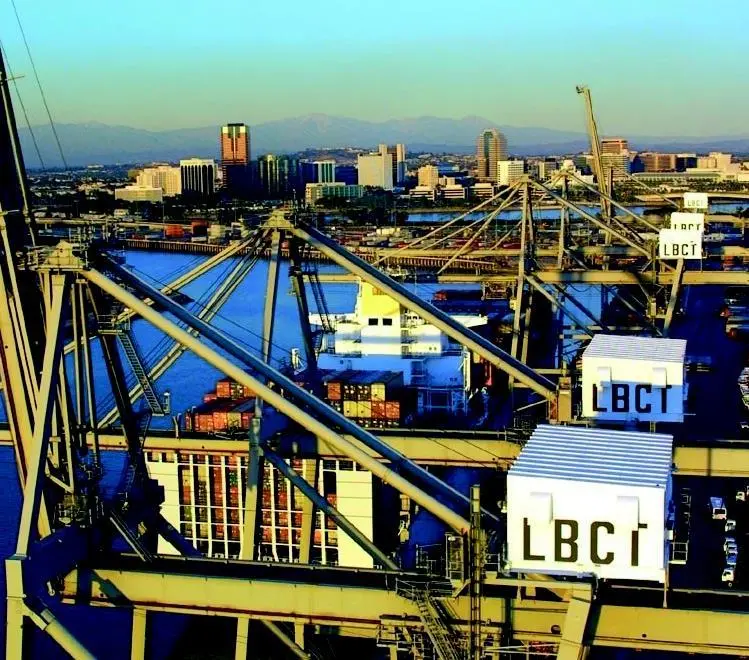
As the growth of the global container fleet outpaces growth in port capacity, and ports are coming under increasing pressure to bring about improvements in the speed at which containers move through a port, and the accuracy with which they can be tracked, so more and more operators are turning to wireless communications.
“In most port projects the unions will be involved in the decision-making process, at some level, on what types of technology are implemented,” says Mark Oetken. “There are the few cases where some consider technology to be a threat to their jobs, but overall most agree that implementing wireless technology makes the port more efficient and more competitive, and by being competitive in the marketplace job security is maintained.
Related Articles
 CONTAINER & CARGO HANDLING
 CONTAINER & CARGO HANDLING
 EQUIPMENT