![PortStrategy[GreenPort]](https://www.portstrategy.com/wp-content/uploads/2026/09/PortStrategyGreenPort.svg)






The layout
The efficient operation of an empty depot depends very much on its layout. As well as the obvious gate, it is important to have sufficient queuing space so that trucks do not queue on the public road, says Royal Haskonings Jan van Beemen.
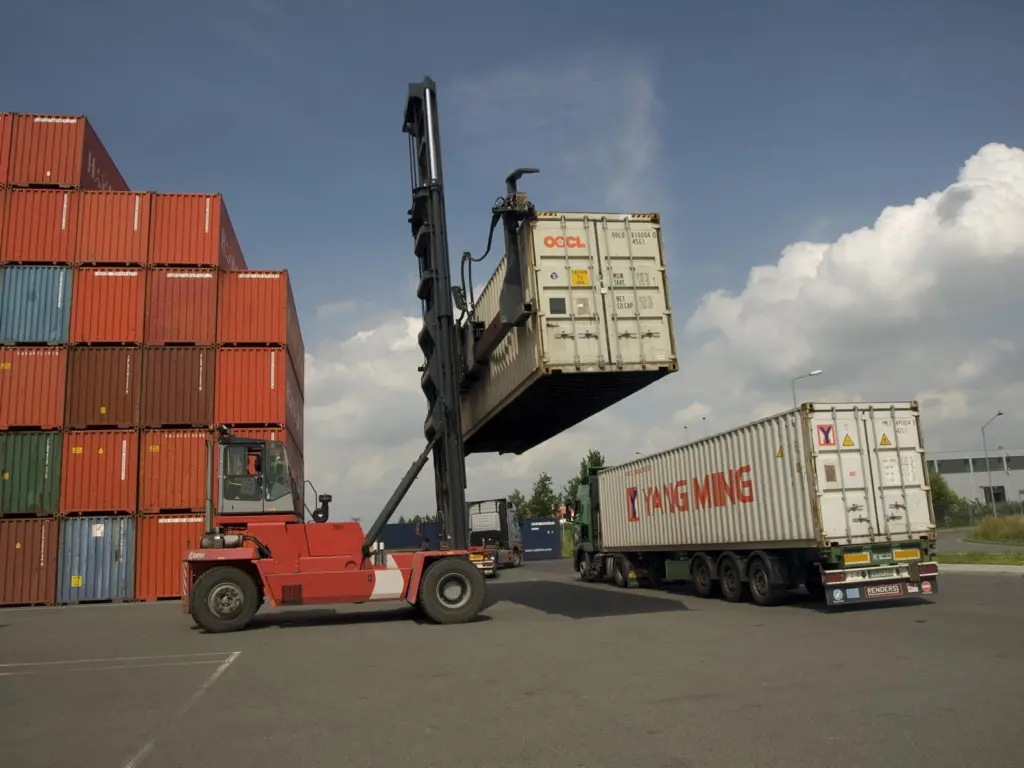
“Inside the yard you need traffic circulation space, sufficiently wide so that trucks can be serviced by empty handlers and other trucks can pass. Stacking height is, of course, important for yard utilisation.”
Indeed, empty stacking gets higher and higher – Mr van Beemen says empty stackers are now available for stacking up to 11-high. “It is a little frightening to watch and these very high empty stacks are susceptible to high winds,” he says.
Clients of empty depots – generally the shipping lines or container leasing companies – will look for quality of procedures and administration and reporting, trustworthiness (not being charged for repairs that never took place or were unnecessary), adherence to first-in-first-out (fifo) and general care of the boxes, says Mr van Beemen.
Containers cannot be used without a valid warrant of fitness and must be regularly inspected and tested. That is why adherence to fifo is required, he adds. In an empty yard, containers are generally stacked in blocks of the same type, size and owner.
“For every type, size and owner combination, you minimally need two blocks – one you are building up and one you are breaking down. If you do not do that, a brand new container may end up right at the back, right at the bottom, and may not come out for decades.”
Mr van Beemen says that empty depots across the world are “absolutely full” because there are simply more containers in the world than are needed.
Even in normal conditions, there will always be a need for empty depots, especially where there is trade in both directions. The empty depots play an important role in the “land-to-land” flow of containers – when an import container is stripped at the receiver’s warehouse and then returned to an empty depot that receives it on behalf of the shipping line. When the line then has a export client, the empty depot hands out the empty container to the shipper.
However, in places with a large trade imbalance in containerised goods, there is less need for empty depots, says Mr van Beemen. “Because the shipping line needs to reposition the empty anyway, the shipping line with generally require that the receiver returns the empty to a marine container terminal for shipping out empty.”
Related Articles
 EQUIPMENT
 CONTAINER & CARGO HANDLING
 CONTAINER & CARGO HANDLING