



Track and trace
VTS requirements vary tremendously, but a common trend is to add more functions into the mix. Felicity Landon reports
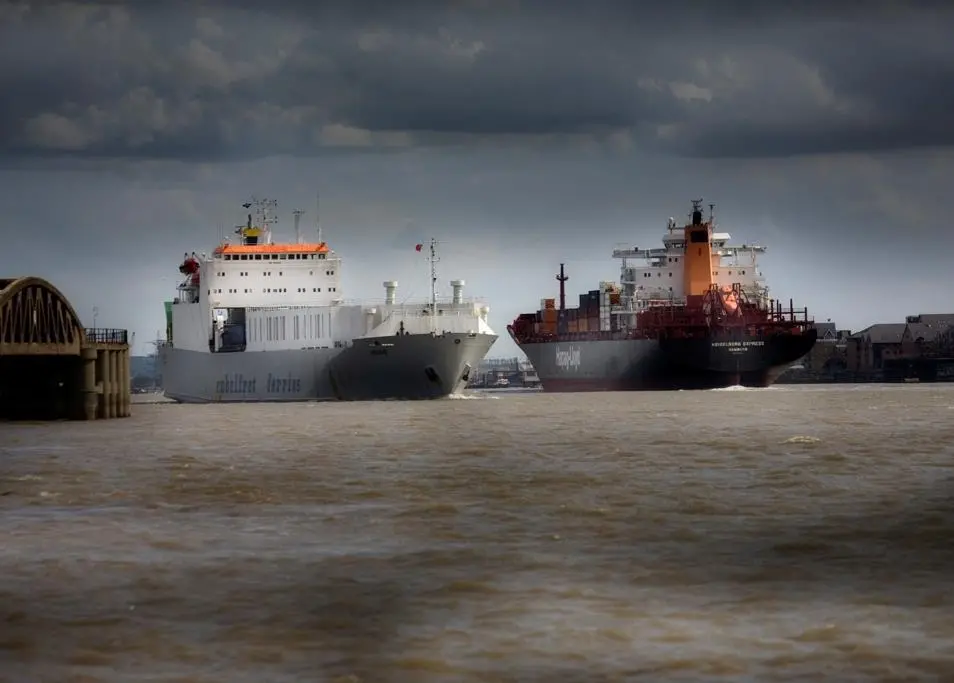
The early functions of Vessel Traffic Services (VTS) or Vessel Traffic Management Systems (VTMS) were pretty clear – to provide maritime navigation safety in ports and coastal areas. The clear trend today is to bolt on extras, whether for operational, security or other reasons.
“There is a distinct trend towards the fusion of the concepts of ‘safety’ and ‘security’, says Chris Loizou, business unit director at Transas Marine. “VTMS systems are more and more often expected to be involved in security activity – for example, to prevent illegal immigration, or monitor particular areas to lower the possibility of terrorist attack.”
At the same time, there is also a tendency towards better “system openness” – that is, easier data exchange and more integration of data from different sources, he says.
A key advancement this year has been the announcement by all radar producers of solid state coherent radars, offering improved radar performance in small target detection and accuracy. Previously this technology was used only in the military and was not available. “Rapid recent developments in high-frequency elements manufacturing have made solid state coherent radars feasible for the civilian market,” says Mr Loizou. “Among obvious advantages are enhanced detection probability for small targets and higher clatter immunity.”
Among those looking at the potential of solid state radars is the Port of London Authority, whose VTS manager, Barry Goldman, says: “We have done a trial and the indications are very favourable that discrimination and the ability to detect smaller targets should be vastly improved. We are looking seriously at introducing this new generation of radars to replace our existing ones on a progressive basis. Essentially there will be slightly higher capital costs compared to the [older] magnetron radars, but this is balanced by much lower through-life costs.”
There is a set of basic functionalities on which most VTMS systems are based, but there is no “standard VTMS” solution which will satisfy all or a majority of customers, as system scale or requirements vary significantly system to system, says Transas’ Mr Loizou. On top of this, the level of awareness about VTMS systems varies tremendously from one port authority to another. There are many customers with significant VTMS experience, he says: “They know exactly what they want, based largely on past operational and maintenance experience, and have clear ideas about changes, modifications and improvements they want to achieve.”
The PLA, which overseas shipping movements over 400 square miles of estuary and tidal river, is nearing completion of a major upgrade of its VTS, in partnership with its long-term supplier, Sofrelog. The focus is on simplicity in operating and managing, says Barry Goldman; key elements include incorporating automatic control of CCTV and significantly modernising the interface and user controls, to make the system much more user-friendly for the VTS operators.
The upgraded system, to be introduced desk by desk, after some extensive and detailed operator training, is designed to give great certainty and reliability but also straightforward presentation and functionality, says Mr Goldman.
The PLA built in a high degree of “future-proofing” and flexibility during its last major VTS upgrade, in 2004, and this has been vital in a smooth transition this time, he says.
Clearly the PLA has more than an eye on security and safety in 2012, when the Thames will be extremely busy during the Queen’s diamond jubilee, the London Olympics and other key events.
Resilience has always been a priority, and the PLA has the capability to switch all VTS functions, as well as its port management information system, POLARIS, from its main port control centre at Gravesend to the port control centre upriver at Woolwich – or the other way round.
Meanwhile, the PLA’s PISCES, the Port Information System for Coordinating End-to-End Services, has been integrated into the VTS. Introduced in 2008, PISCES is an online information input system; agents log on to the PLA website to enter vessel details, pilotage requirements, hazardous goods data and other information, and submit a request. The Thames AIS (Automatic Identification System), which is mandatory for all passenger boats, tugs and commercial vessels over 50 gt throughout central London, has also been integrated into the Sofrelog network.
Meanwhile, Transas has just signed a multi-million euro contract to supply and install a national scale Coastal Surveillance System in Libya. Previous contracts have included installation national-scale VTMS systems in Malta, Cyprus and Bulgaria.
“National VTMS systems are a reality and they successfully operate in a number of countries worldwide,” says Mr Loizou. “In some cases, national VTMS platforms are carried out as a single project. In others they are built on a foundation of existing separate VTMS systems. In this case, national systems are achieved by adding regional and national control centres that accumulate information from the local VTMS.”
National VTMS are currently all financed by national governments, he says. And while international systems are technically possible, the most controversial issue here is funding.
“There are some international projects, for example the Marine Electronic Highway, which are financed internationally; however, it looks like such projects are progressing much slower compared to national ones, due to various difficulties, including bureaucratic ones.”
One of the current issues being discussed in industry circles is traffic regulation in international waters. “If this initiative receives a green light, then VTMS operations having an international dimension are likely to appear,” says Mr Loizou.
Related Articles
 EQUIPMENT
 EQUIPMENT