![PortStrategy[GreenPort]](https://www.portstrategy.com/wp-content/uploads/2026/09/PortStrategyGreenPort.svg)


Air quality kudos
Air quality around one UK port is good and well within the required national standards.
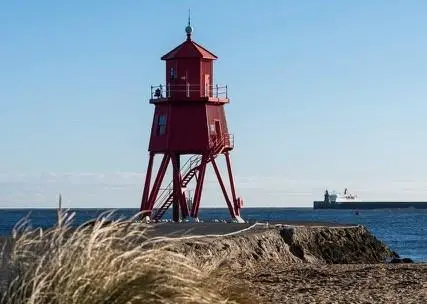
The study, conducted by the air quality expert Ove Arup and Partners for the Port of Tyne, verified that port-related activity accounts for just 1-2% of total air pollutant concentrations; and that levels can be officially classified as ‘minor’ when compared to existing background concentrations of air pollutants.
“These results are extremely pleasing and although emissions are already low, we expect them to further decrease as we progress towards the port’s 2050 goals,” said Steven Clapperton, Maritime Director and Harbour Master at the Port of Tyne.
“As always, our intention is to be completely open and transparent about efforts to improve air quality and to ensure that the highest levels of protection for people living and working in and around port areas are maintained. This assessment clearly demonstrates the Port of Tyne’s commitment to air quality and the considerable progress we have made towards improving quality of life for everyone within the wider Tyne Estuary.”
Tyne 2050
The study involved an impact assessment utilising complex atmospheric dispersion modelling to predict pollutant concentrations at identified sensitive receptors and their compliance with standards defined within the National Air Quality Regulations.
All ports in the UK with bulk cargo throughput in excess of one million tonnes per annum are required to develop an air quality strategy for their designated statutory areas in line with the Department for Transport’s Port Air Quality Strategy guidance.
This requirement involves compiling an inventory of relevant emissions for the baseline year (which the Port of Tyne declared to be 2017) and this includes emissions from port related activities on land, as well as emissions from all vessels visiting the Tyne in 2017.
A detailed report summarising the study and its findings is available from the Port of Tyne website.
Although emissions released to air as a result of the port’s activities are already well below statutory requirements, Mr Clapperton said that the Port of Tyne will be continuing with its ongoing efforts to further improve air quality within the Tyne estuary.
He said that all port operations are on track become fully Net Zero Greenhouse Gas (GHG) by 2030 and the programme to replace gas oil-fired plant equipment with clean energy, electric equivalents, is well underway.
To encourage the early adoption of green shipping technology among its customer base, the port is evaluating the potential of a “Green Ship” Tariff. This would see the cost of using the port’s facilities decrease for vessels powered by clean energy.
Mr Clapperton said that the final transition to an all-electric port is expected by 2040 and this will include the provision of shore-based power sources for visiting vessels.
Related Articles
 ALTERNATIVE FUELS GREENPORT
 NEWS
NEWS