![PortStrategy[GreenPort]](https://www.portstrategy.com/wp-content/uploads/2026/09/PortStrategyGreenPort.svg)


Clean ferry first
An ambitious agreement aims to establish a first of its kind fossil fuel free ferry line.
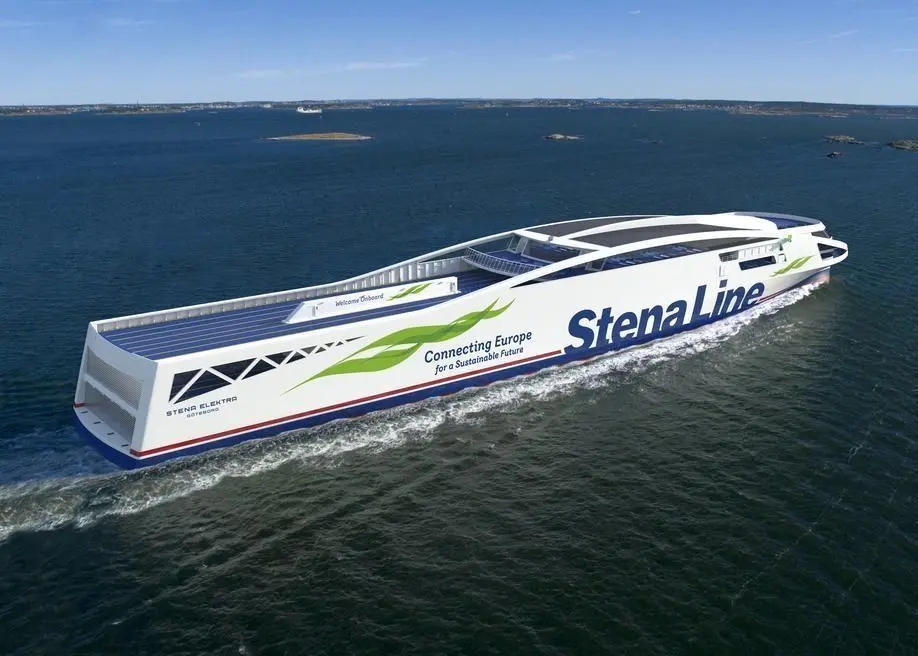
Stena Line, Frederikshavn Municipality, and the Port of Frederikshavn plan to deploy two battery powered Stena Elektra ferries on the Gothenburg-Frederikshavn route by 2030 and investing in charging infrastructure onshore. The ferries will be the world’s first fossil fuel free ro-pax vessels of their size.
We are already ten years ahead of the international shipping industry’s target for reducing carbon dioxide emissions, but with Stena Elektra we are taking another big step on Stena Line’s sustainable journey, on the road to a completely fossil fuel free operation,” said Stena Line’s CEO Niclas Mårtensson.
Large capacity
The ferries will be approximately 200m long, with a capacity of 3,000 lane meters and 1,000 passengers. Battery-powered with a capacity of around 60-70 MWh, they will have a crossing time of three hours, with one hour turnaround call/charging time.
As part of the agreement, the Port of Frederikshavn has committed to securing the necessary infrastructure. The shore infrastructure requirements include a high voltage shore power cable of around 30-40MW.
“The Port of Frederikshavn shares the high and green ambitions that make this project possible,” said Mikkel Seedorff Sørensen, CEO of the Port of Frederikshavn.
Stena Line aims to reduce its total carbon emissions 30% by 2030. Stena Line recently launched the Tranzero Initiative with the Volvo Group, Scania and the Port of Gothenburg. The aim is to reduce carbon dioxide emissions linked to the Port of Gothenburg by 70% by 2030.
In 2018, Stena Line took the first step on their battery journey and invested in battery hybrid power on Stena Jutlandica, currently operating on the Gothenburg-Frederikhavn route.
Related Articles
 ALTERNATIVE FUELS GREENPORT
 NEWS
NEWS