![PortStrategy[GreenPort]](https://www.portstrategy.com/wp-content/uploads/2026/09/PortStrategyGreenPort.svg)






Businesses need to prepare more for Brexit
Businesses trading with the UK have not prepared for Brexit sufficiently, but the repercussions of a hard Brexit could result in a loss of 30-45% British-Dutch trade with added customs and tariff aggravators, the Port of Rotterdam Authority’s external affairs manager has said.
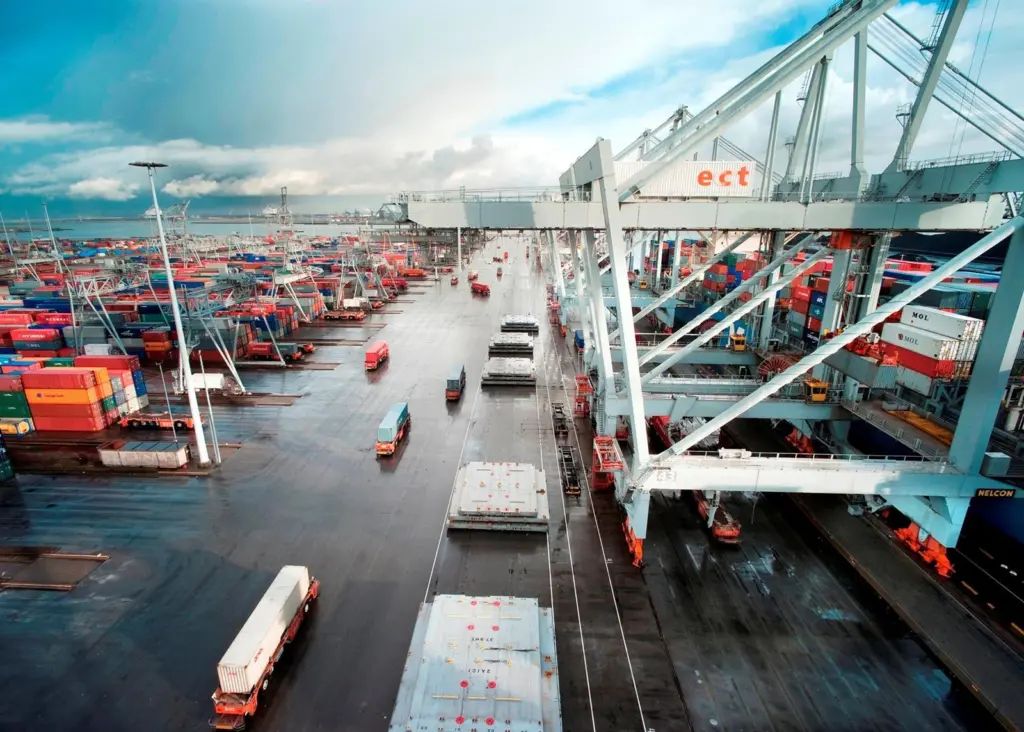
Speaking at the port’s Brexit press event in collaboration with Dutch Customs, the Netherlands Food and Consumer Product Safety Authority (NVWA) and the Stena Line shipping company, Mark Dijk stressed that while the Netherlands’ Ministry of Infrastructure has said that in the case of a hard Brexit without an agreement with England, British-Dutch trade may dip as much as 45%, the Ministry of Economic Affairs has said that only 18% of Dutch companies are prepared for Brexit.
He pointed out that trade between England and Rotterdam is 40m tonnes. “We’re taking about 10 to 20 million tonnes, that’s a serious impact, he said.
Irresponsible outlook
Mr Dijk stated that “only a very small share of the businesses currently trading with the UK have so far made serious preparations for the change. This is hardly responsible, because there’s quite a lot at stake – and definitely for the Netherlands, since the UK is one of our most important trading partners.
“We urgently call on both the private sector and government – at the national and European level – to make serious preparation for Brexit. The clock is ticking.”
Ferry companies operating within ports need to be aware of customs procedures for “third” countries as this will be England’s status after the UK leaves the EU, said Mr Dijk.
He added that “the ferries bring in transporters to deliver products. The products come from manufacturers, so the entire logistical chain must prepare.”
In addition to customs, tariffs will have an impact which will make goods less attractive to export to England and vice versa, he explained.
Liesbeth Koojiman from the Dutch Food Safety Authority stated that considering more import checks on goods coming into Europe from the UK will be needed and that the Authority estimates it will be undertaking 30% more import checks and potentially 100% more import checks than now.
Related Articles
 PORT & TERMINAL NEWS
 EXPANSION & DEVELOPMENT
 PORT & TERMINAL NEWS