![PortStrategy[GreenPort]](https://www.portstrategy.com/wp-content/uploads/2026/09/PortStrategyGreenPort.svg)






Coronavirus could accelerate digitalisation
Coronavirus (COVID-19) could accelerate digitalisation in the shipping industry, a European port has said.
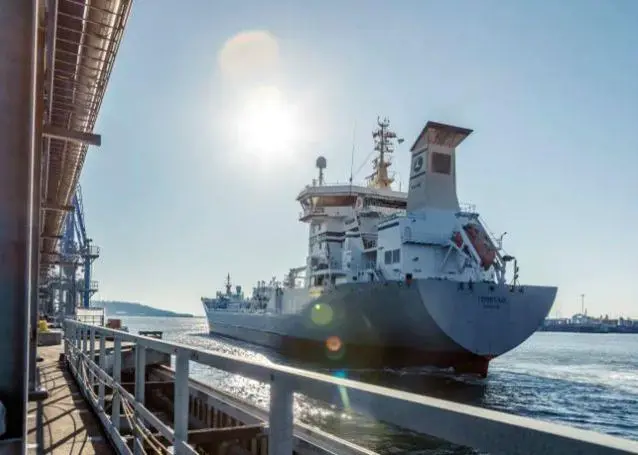
Greater use of digital tools has been part of the solution to practise social distancing while maintaining an efficient quayside workflow during the COVID-19 pandemic, said the Port of Gothenburg . But introducing new routines means that operations, which traditionally require a range of physical interactions between the crew and the dockworkers, currently take longer than normal, despite a great deal of the work already taking place remotely during the approach.
Dan-Erik Andersson, chief operating officer at the Energy Port in Gothenburg, said: “Loading and discharge are traditionally based on human contact. It’s quick and the entire system has been refined over the years. Changing the whole structure so quickly may result in a loss of time and momentum. However, by introducing new routines and new systems, and ensuring more tasks are carried out simultaneously rather than consecutively, we can probably become more efficient in the long run.”
Johan Östlund, chief officer onboard the vessel Ternvag, and his crew have just berthed. Energy products are being loaded for onward export to Finland.
“Fortunately, we can deal with most things using computer systems and email exchange even if it takes a little longer,” said Mr Östlund.
Clear results
The majority of automation and digitalisation initiatives that have already been introduced have proved to be particularly constructive during the Corona pandemic, said the port. The digital system Permesso, which was introduced in 2019, has resulted in a significant reduction in administration and face-to-face contact when issuing work permits to contractors. The automatic gates for trucks introduced by APM Terminals at the Container Terminal are another example of a more efficient operating procedure, reducing the need for physical interaction.
Malin Collin, deputy CEO at Gothenburg Port Authority, said extensive digital changes at the port will be introduced within the near future and could make a substantial difference.
According to Ms Collin, it is largely a question of improving efficiency and visualising freight flows and traffic movements to and from the port. “This is one of the most critical issues and we have dedicated resources to finding a solution. We are currently examining how artificial intelligence can make use of historical data to predict events and speed up the decision-making process. We can improve planning through data-driven decisions, identifying trends, and predicting events. By doing so we can create a platform for more efficient freight flows and transport movements on land and at sea.”
She states that enhanced digitalisation will benefit everyone. Nevertheless, if it is to produce the desired outcome, more people in the transport chain need to link into common systems and share information with each other.
Related Articles
 PORT & TERMINAL NEWS
 EXPANSION & DEVELOPMENT
 PORT & TERMINAL NEWS