![PortStrategy[GreenPort]](https://www.portstrategy.com/wp-content/uploads/2026/09/PortStrategyGreenPort.svg)






Intermodal partnership at Gothenburg
Sandahlsbolagen Sweden AB has signed a five-year agreement with Gothenburg Port Authority to operate the new intermodal terminal at the port due to commence operations in December 2017.
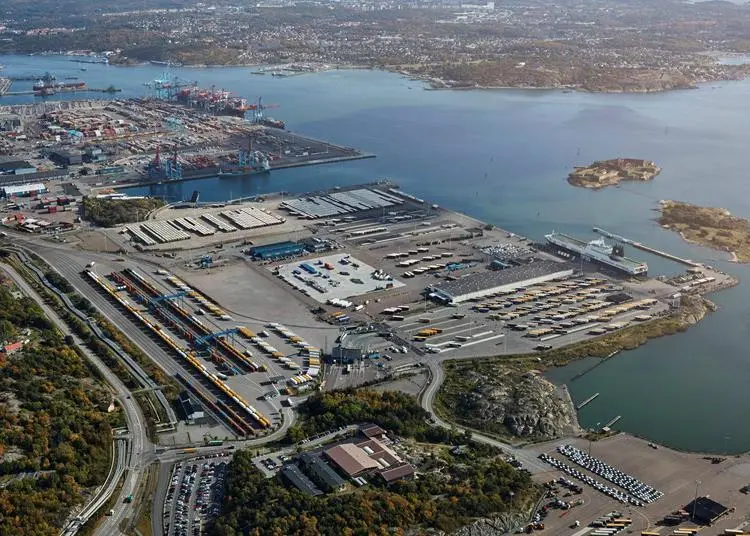
At the end of 2017, the intermodal terminal beside the central station in Gothenburg will move to the outer port area on the island of Hisingen to cater for the planned development of the city centre and the construction of the West Link rail tunnel.
Locating the terminal close to the port will facilitate the introduction of new transport systems that will link up shipping and rail traffic. It should also reduce road traffic in the centre of Gothenburg significantly.
Sandahlsbolagen Sweden already operates terminals in Luleå, Umeå, Sundsvall and Jönköping.
“We are looking forward to running an intermodal terminal beside the largest port in the Nordic region and we are proud of the trust that has been shown in us. It will be an open access terminal for all rail operators that are interested,” said Thord Sandahl, chief executive of Sandahlsbolagen Sweden AB.
The Port of Gothenburg is renowned for its rail shuttles. Today, more than 50% of containers arrive at the port by rail instead of by road. However, increasing the number of road trailers carried on rail trucks has proved slightly more challenging, but Mr Sandahl feels that this is all about to change.
“I can see considerable potential to increase the number of trailer trains into and out of the port, particularly to and from the more northerly parts of the country and the Oslo region. With better access to trailer trains, the logistics situation for Scandinavian industry will be improved considerably and emissions from transport will be reduced,” he said.
Construction of the intermodal terminal will take place in two phases. The first phase will be completed in December 2017, when operations are due to commence. The terminal will be fully operational by 2019-2020. By that time, loading will take place using cranes instead of trucks and the entire terminal be electrified and controlled by signals.
Related Articles
 PORT & TERMINAL NEWS
 EXPANSION & DEVELOPMENT
 PORT & TERMINAL NEWS