![PortStrategy[GreenPort]](https://www.portstrategy.com/wp-content/uploads/2026/09/PortStrategyGreenPort.svg)




Life after feedering
Black Sea ports are following Constantza’ s lead to take on a transhipment role in the region.Alex Hughes reports
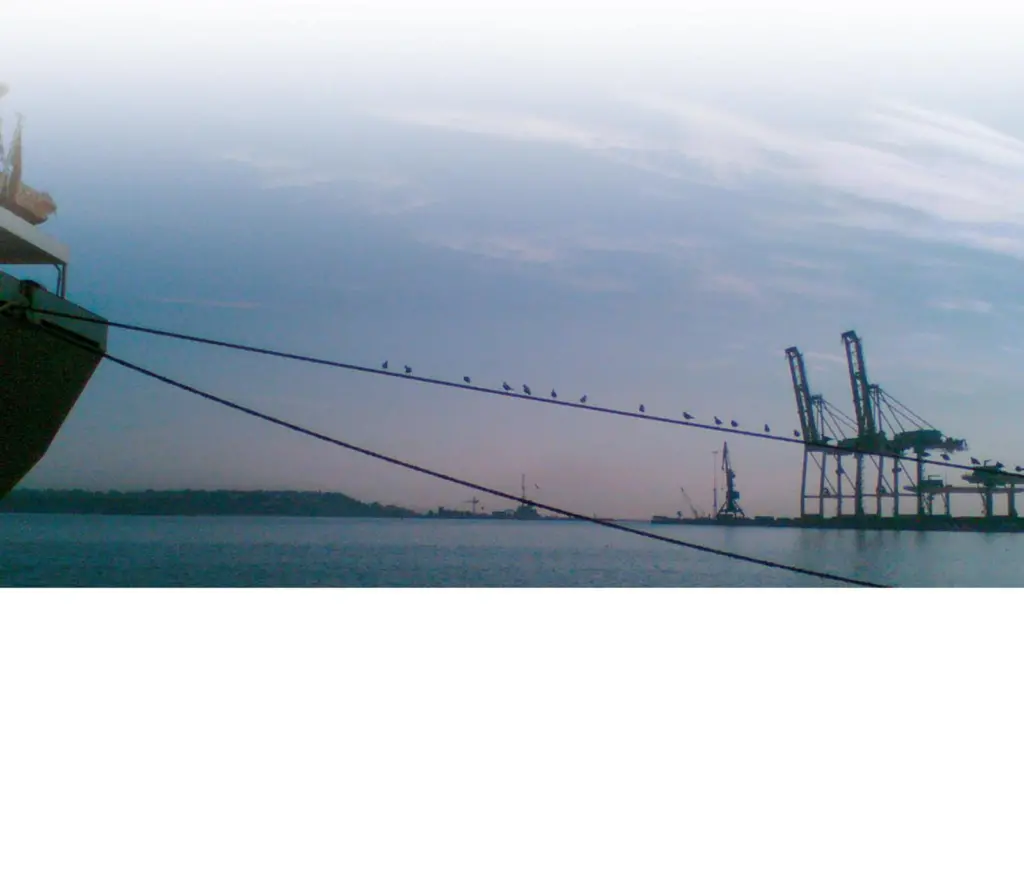
For too long,ports in the Black Sea have effectively been reduced to little more than feeder port status as inadequate infrastructure and equipment has kept away calls from deep-sea lines. Although Constantza has carved out a niche as the Black Sea transhipment port of choice, ports in Ukraine and Russia are investing as a means of wrestling back the initiative.
Leading the pack is the Ukrainian port of Illichivsk, which handled 324,036 teu last year, 11.3% more than in 2005. However, Anastas Kokkin, general director of Ukrtranscontainer, a subsidiary of Russia’s NCC, concedes that, when compared with the 24% box growth for Ukraine as a whole, this does not appear to be up to scratch. However, major reconstruction of the terminal is taking place, which has effectively reduced the overall operating area.Old ship-to-shore cranes and straddle carriers are being taken out of operation oneby- one to undergo extensive modernisation, which takes three to four months for each unit. “For 2007, we are looking at handling in excess of 400,000 teu.
This will be possible with the commissioning in August of berths 3 and 4 and the arrival of two new post-panamax gantry cranes and six rubber-tyred gantries (RTGs). This will double our capacity to 860,000 teu. As from October, we will be able to accept vessels of up to 6,000 teu, as well as being able to provide fixed berthing windows and offer productivity commitments. This will be a first for Ukraine,”Mr Kokkin says to Port Strategy.
Andrii Kuzmenko, deputy director (commerce), notes the arrival of a direct service from the Far East with the May 3 port call of Maersk’s new direct Asia- Ukraine service.Illichivsk will be the only Ukrainian port of call for a service which features 5,000 teu vessels.As from October, two more direct service calls from Southeast Asia are also scheduled.
“Despite the rising number of direct calls,we still get the majority of our cargo by feeder out of various Mediterranean hubs, although Constantza is not the largest point of origin in this respect. However, as our new capacity comes on line, there will be an opportunity for all lines to serve Ukraine via direct calls.
This will eliminate extra transhipment and therefore reduce transit times, cut logistics costs and optimise fleet deployment. We therefore expect that, as from 2008, the share of Ukrainian cargo transhipped elsewhere will shrink drastically,”Mr Kuzmenko says. Mr Kokkin adds that, normally, Illichivsk operates three ship-to-shore gantry cranes on berths 5 and 6.
Ukrtranscontainer has already modernised one, a second is undergoing upgrading work and will be followed by the third later this year. In addition, two gantry cranes are deployed on berth 1, albeit on an ad hoc basis.A mix of straddle carriers, reach-stackers and rail-mounted gantries are used for yard operations. Upon reconstruction, new berths 3 and 4 will also be equipped with two new post-panamax quayside gantry cranes and six RTGs.
“Earlier,we purchased 16 terminal tractors,chassis and an empty box handler, as well as different auxiliary equipment:front loader,bobcats,utility trucks,OH frames, and so on.We have also put into operation IT hardware for our radio network and container terminal management systems. Once our $45m investment programme has been completed,we will see levels never before seen in Ukrainian terminals,”says Mr Kokkin. But productivity has suffered as a result of the modernisation of both infrastructure and equipment.
At any given moment, one of the gantry cranes is undergoing reconstruction, while the long distance between the quay and remote yards also represents something of a handicap. Despite this, highs of 25 moves-per-hour have so far been achieved for major customers using 1.5 cranes, with surges in excess of this. At the new berth, two gantry cranes are expected to reach 60 hourly moves.
“Apart from a few boxes rotated out to Odessa, Illichivsk doesn’t currently have any major transhipment traffic. However, we are confident that, with new operational areas coming on line,we will be able to offer that kind of service to lines and therefore increase volumes handled tremendously,” says Mr Kuzmenko.
Asked whether the Ukraine government actually helps its sea ports in developing traffic, Mr Kuzmenko says the relationship is a positive one, with ongoing attempts to improve the ports’financial situation, while optimising the cargo base.
“Results are mixed, but we do expect governmental support in making life easier, especially on the organisational side. We need to see a simplifying of procedures by customs and other governmental agencies in ports to improve dwell time and, at the same time, usher in European standards of paperwork and communication,”he comments.
Related Articles
 PORT & TERMINAL NEWS
 EXPANSION & DEVELOPMENT
 PORT & TERMINAL NEWS