![PortStrategy[GreenPort]](https://www.portstrategy.com/wp-content/uploads/2026/09/PortStrategyGreenPort.svg)






Muelle Prat begins testing phase
Terminal Catalunya (TERCAT) has had its first vessel call at Muelle Prat signifying the start of the testing phase which will cover all equipment and IT systems at the new terminal.
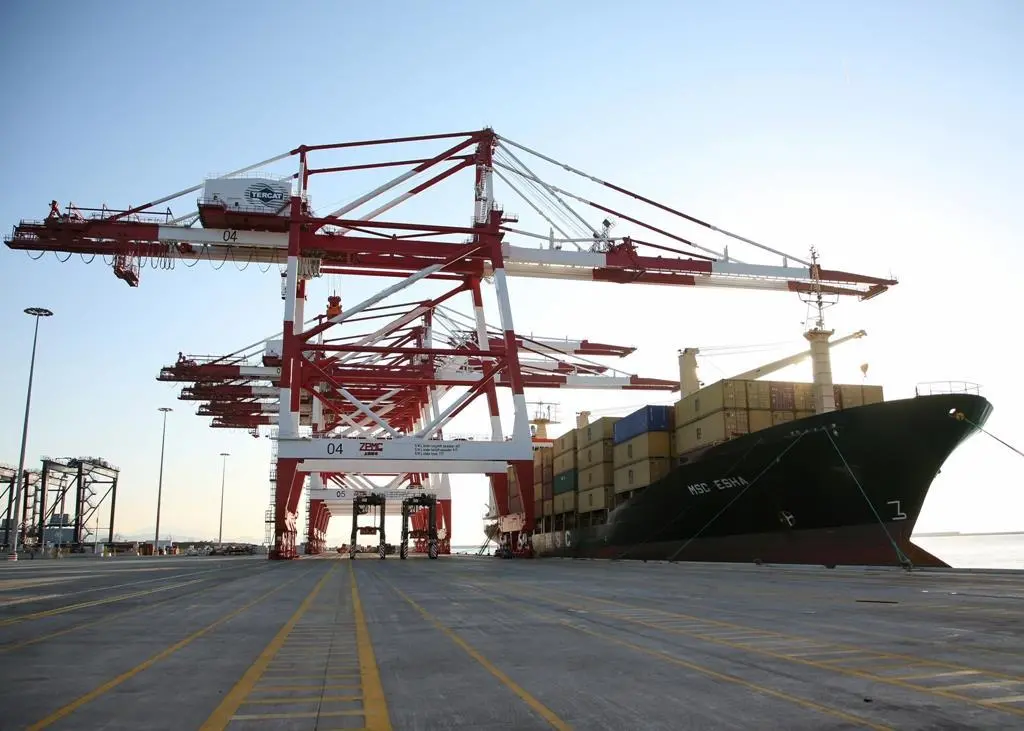
The unloading of containers from the Mediterranean Shipping Company’s MSC Esha ran smoothly demonstrating the successful integration of the terminal equipment with HPH’s proprietary terminal operating system, nGen.
During the operation, a total of 436 containers were handled, achieving an average productivity rate of 30 moves per crane per hour.
Iratxe Pérez de Miguel, commercial and marketing analyst, Terminal Catalunya, said to Port Strategy: “The Port has an ambitious plan that involves the road and rail access, that will allow us to offer a competitive service to compete with the North European ports.”
The Port of Barcelona has many features that positions itself as the main port of the European Mediterranean area and in medium term will be a real competitor against Northern European ports in certain geographic areas.”
She added that the Port of Barcelona is well positioned in the market it has the aspiration to improve that position.
And it’s well placed to to do so – the terminal has an eight-track railway facility and the biggest on-dock railway terminal of any port in Spain connecting it to traffic coming from, and destined for, Southern Europe. So, it has a strong advantage over other southern European ports.
The traffic that crosses Suez – Gibraltar is currently divided between Northern European ports and the Mediterranean ports at a ratio of 75/25 – even though passage through Southern ports could reduce transit time.
Muelle Prat, located at the Port of Barcelona, is the first semi-automated terminal in the HPH global network of ports. The terminal is scheduled to be fully operational during 2013 and when fully completed it will have 1,500m of quay, a depth of 16.5m and a 100 hectare yard.
Related Articles
 PORT & TERMINAL NEWS
 EXPANSION & DEVELOPMENT
 PORT & TERMINAL NEWS