![PortStrategy[GreenPort]](https://www.portstrategy.com/wp-content/uploads/2026/09/PortStrategyGreenPort.svg)




Northern ports have more to offer
New study claims that increasing traffic to ports in the north of England will improve infrastructure throughout the UK, reports Felicity Landon
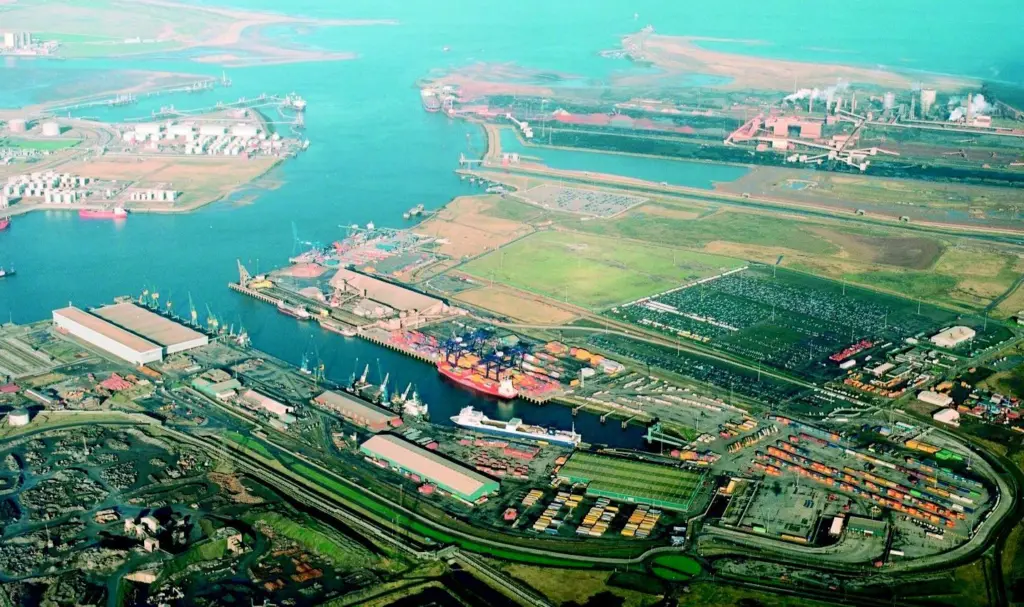
A ports policy encouraging and supporting port development in the north of England would lead to a number of distinct transport and economic benefits for the region and the whole of the UK, according to a new report commissioned by The Northern Way. But at the same time, the report’s authors warn that such developments could bring “disbenefits” for the region too.
The report, by MDS Transmodal and Regeneris Consulting, concludes that the overall environmental impact of channelling more cargo through the northern ports would be positive, reducing road congestion and truck miles in the South East and making deliveries more reliable. However, the price would be an increase in the volume of traffic on northern roads and perhaps even increased traffic costs.
“In general terms, measures that increase traffic through northern ports (particularly in the shortsea unit load and deepsea container feeder markets) can play an important role in improving GB’s overall transport infrastructure, contributing to the efficient movement of freight between GB and the rest of the world, thus enhancing the business competitiveness of GB as a whole and contributing to the Government’s competitiveness agenda, ” says the report.
The growth of the region’s ports would also provide economic and regeneration benefits for the north of England, it says.
Analysis has shown that 40% of unitised freight (measured in tonne-kms) heading inland from the southern ports is bound for the Northern Way region and Scotland, says the report. This figure rises to 48% for the Dover Straits. For exports, 52% of freight transport through the southern ports is from the north – rising to 58% for Dover.
“Overall, therefore, nearly half of all freight tonne kilometres of containers and trailers passing through southern ports are to and from the Northern Way regions and Scotland and this traffic is therefore adding to congestion on the road and rail networks in the south of England, ” says the report.
Northern ports have the potential to play a crucial role in the achievement of a sustainable distribution network, it says. The growth of shortsea ro-ro traffic through the northern ports is likely to lead to a significant reduction in HGV kilometres on the national road network, reducing congestion in the south and the Midlands and helping to enhance competitiveness.
The report considers the effect of developments such as Felixstowe South, Bathside Bay and London Gateway on the northern ports’ container volumes.
It says that while transhipment via the continent has been a traditional route for some import and export containers, growth in traffic through the northern ports since 1999 is likely to have been mainly due to the lack of deepsea container capacity in the south-east.
The development of new capacity in the south-east would reduce but not eliminate further growth of feeder traffic through the north, it concludes. However, the report says that planning approval for these developments “does not necessarily mean that all the capacity will be developed”, and there is “considerable potential” for the growth of feeder services.
The report predicts that the demand for ro-ro services will grow steadily in the north, providing port capacity is expanded. “This is due to the diversion of some traffic that currently uses southern English ports to services via ports due to increasing relative levels of road congestion [in the south].”
The potential to grow deepsea container traffic direct to the north’s east coast is less certain, it says. This would arise where deepsea capacity in the south-east was constrained and the capacity in mainland European ports was also constrained.
“The implication of this particular scenario is that the scope to tranship from the continent via feeder services is constrained, making it increasingly economic for deepsea services to make direct calls at a northern port.”
The report also highlights the fact that fiscal measures such as the introduction of road pricing would play a role in creating the circumstances in which feeder services and hence deepsea container traffic to the north could grow significantly.
The Northern Way: Evidence Based Review of the Growth Prospects of the Northern Ports. The Northern Way is a Government-supported initiative, led by the three regional development agencies.
Related Articles
 PORT & TERMINAL NEWS
 EXPANSION & DEVELOPMENT
 PORT & TERMINAL NEWS