![PortStrategy[GreenPort]](https://www.portstrategy.com/wp-content/uploads/2026/09/PortStrategyGreenPort.svg)





Shortsea: For Europe, the future lies in the past
For Europe and its shortsea ambitions, the future lies in the past, as Stuart Pearcey explains
More than half a century after the first steps towards European union, everyone in the port and shipping industries has been urged to remember that it was formed to allow free movement of goods and services – and to work together to make that possible.
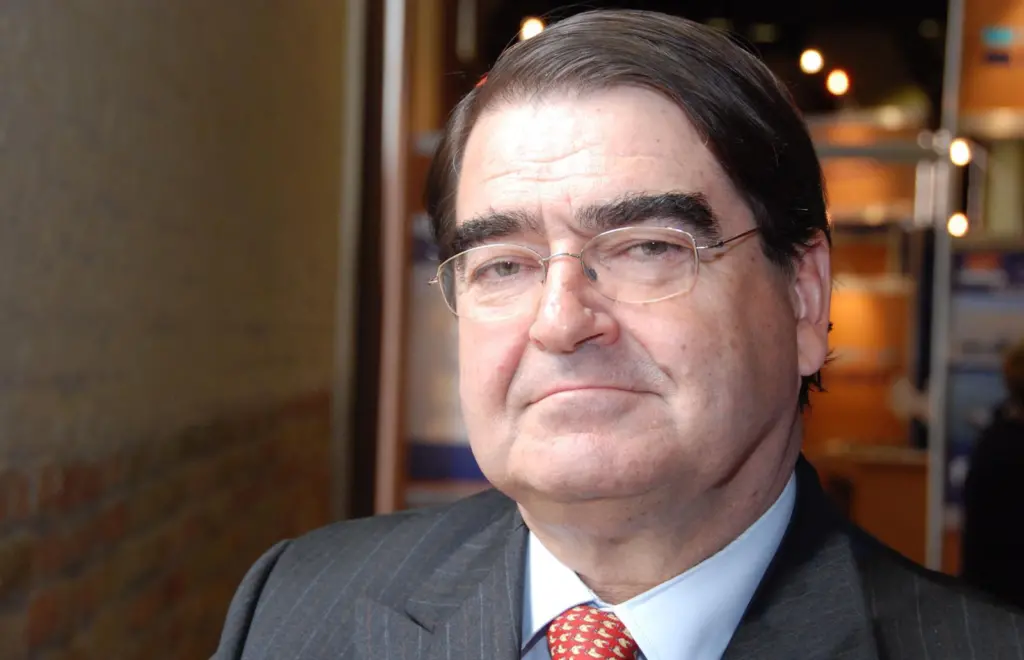
In its present form the EU has lost sight of the ‘four freedoms’ enshrined in the Treaty of Rome – free movement of people, goods, services and capital, according to European Shippers’ Council Chairman Dick van den Broek Humpreij. Instead it had become bound up in administrative burdens, he says.
And he has called for an end to subsidy, and a levelling of the playing field. “If there is no level playing field there will be difficulties with subsidies for all eternity. Subsidies are dangerous. If it can’t survive without subsidy, then don’t subsidise it. Subsidy, or financial support, should go to cover uncertainty before start-up of a venture, and not running one,” he said.
Instead he advocated that a business plan should be put together, and offered to those who could underwrite the financial performance. “A subsidy should be in the form of a guarantee available afterwards from a Government or central Europe. Let’s have no subsidies; let’s level the playing field and stop this crazy world,” he says.
Speaking at the ShortSea Conference 2009, organised by De Lloyd, in Brugges, he said: “All governments and Brussels must do away with bureaucratic nonsense.”
His impassioned plea was for everyone who goes down to the sea in ships to work much harder at promoting their services – at the same time removing the need for shippers to worry how it happened.
“Shippers want to see goods travel door-to-door and arrive in good condition. They don’t understand how to move things; their only concern is to get goods to clients. How do we get intermodal transport right so that shippers don’t have to be bothered by understanding it?,” he asks.
“We must start to work together, or we will get nowhere. Look at road haulage; it provides the sort of service we would all love to provide. People within short sea know the advantages of short sea, but must offer them to the shipper in a way that he can understand. Only a few shippers know about it, but they all see the complexity of associated paperwork.” And that’s the burden he advocates stripping away, highlighting that road transport is not the only way to go.
While road transport was fine when just-in-time was more in vogue than it is today, he believes that what’s important now is reliability – and, citing the example of a road journey between southern Spain and northern Europe, that was becoming less and less so.
Acknowledging that it was expensive to set up new services, run ships, and maintain the equipment and infrastructure needed to run them, he said it wasn’t in shippers’ interests to see services decline or companies go out of business. “But don’t expect too much sympathy; shippers face the same hardships and uncertain future.
“They will expect the shipping industry to manage itself out of difficulties, to seek out areas of unnecessary bureaucracy, and inefficient practice.” He says that should be half of the business strategy of short-sea for survival and growth. The other half rests with supply chain management, and is about finding the best way short sea services can help their businesses.
“The use of assets, reducing overheads, improving efficiency of production, warehousing and distrubution give them the reliability they need to supply and impress their customers, and give customer service that builds trust and loyalty.
“Together with shippers and forwarders, we must work to do away with adminstration burdens, and make connections simple. Get the ears of shippers, and prove you can deliver an unobstructed flow of goods arriving in the best condition, and you can win the world. We need to see that’s what we can start to deliver.”
Related Articles
 PORT & TERMINAL NEWS
 EXPANSION & DEVELOPMENT
 PORT & TERMINAL NEWS