![PortStrategy[GreenPort]](https://www.portstrategy.com/wp-content/uploads/2026/09/PortStrategyGreenPort.svg)



Top slot out of reach for Turkey
Turkeys ports would like nothing better than to steal the transhipment hub crown from Constantza, but are development options limited without private sector investment, asks Alex Hughes
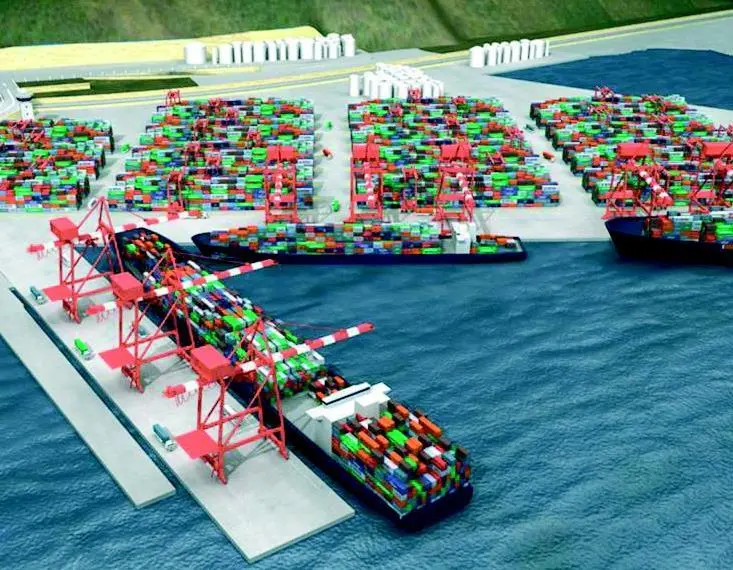
Potentially, ports in Turkey could challenge the role Constantza seems to have carved out for itself as the main hub for Black Sea traffic. However, according to Yavuz Tarku of Inchcape Shipping Services (ISS) in Istanbul, existing single or dual berth facilities, offering restrictive draught and modest capacity remain insufficient for modern day container handling requirements.
But as is seen time and time around the world in today’s port business, private sector investment could change all that.
The DP World project to build a five-berth 1m teu capacity container handling facility in Yarimca, for example, will give it considerable clout in the region. Initially, however, it will replace capacity lost through the planned closure of Istanbul’s existing city centre port of Haydarpasa, which should take place within the next two years.
“Haydarpasa currently handles around 350,000 teu annually, but generates a lot of unwanted truck movements through the city, not to mention considerable noise pollution. The idea is therefore to redevelop the site and move box handling activities out of town, ” notes Mr Tarku, adding that no one single container terminal is available on the Asian side of Istanbul to absorb this displaced traffic, while Ambarli on the European side is already congested.
There are nevertheless inherent problems with the Yarimca project, which make it less than ideal. While communications with central Istanbul are good – Yarimca is linked to the city via a three-lane highway – its location next to a major oil refinery would make it difficult to expand the facility. Although space does exist, acquiring it would be very expensive, suggests Mr Tarku, adding that expansion could therefore mean having to undertake capital intensive reclamation work. However, while DP World may not necessarily have viewed Yarimca as a wholly ideal location for the construction of a box terminal to serve Istanbul and the surrounding region, there are so few available sites left in Izmit Bay that it probably had little choice other than to back the scheme.
The Turkish government claims it would also like to see built a brand new container terminal facility alongside the existing port of Derince, whose own operations are scheduled for privatisation. Ironically, the originally scheme was proposed by P&O Ports seven years ago, but impenetrable bureaucracy meant no progress was made. P&O Ports’ new owner, DP World, must therefore hope it has more luck with the Yarimca project.
Local company Arkas has been similarly frustrated in its own attempts to build its brand new Belde Container & Ro Ro Terminal at Gebze. This is despite the fact that Arkas is a big hitter in the region.
In addition to operating its own shipping line, it has either joint venture or exclusive agency agreements with several major shipping lines, including MSC, Hapag Lloyd, Tarros, Grimaldi, Hanjin and Senator, as well as operating the Marport container terminal on the European side of Istanbul.
The location of the Belde Terminal at the entrance to Izmit Bay is virtually ideal, with excellent regional road and rail access. However, the project, which has been ongoing for about six years, has stalled following disputes between partners, rather than as a result of red tape.
The Belde Terminal is being developed in two phases. Initially, the aim is to open a 325,000 sq m facility, which will have an annual throughput capacity of 388,000 teu. The 450m long quay will have alongside draught clearance of 16.5m and be equipped with postpanamax quayside lift.
“Were they to start construction today, they could have two berths operational within 12 months, ” believes ISS’s Mr Tarku, pointing out that the basic infrastructure for these is already built.
He also identifies another, smaller project at the Port of Evyap, which currently consists of a finger pier capable of throughputs in the region of 100,000 teu. Two or three small container lines are already calling there, although plans exist to expand this facility too.
Then there is Yilport, which is located at the entrance of Izmit Bay and managed by a private sector Turkish mining company. The owner recently acquired two nearby smaller facilities (Sedef Port and Alemdar Port), for future development as container terminals.
Finally, M Tarku stresses the role that the Turkish government is playing in trying to develop containerisation. Its policy is to privatise many rail freight services currently operated by Turkish Railways. This should help improve productivity and also perhaps make it possible for satellite terminals to be set up in the interior, from where it will be possible to feed box traffic into deep sea ports.
Related Articles
 PORT & TERMINAL NEWS
 EXPANSION & DEVELOPMENT
 PORT & TERMINAL NEWS