![PortStrategy[GreenPort]](https://www.portstrategy.com/wp-content/uploads/2026/09/PortStrategyGreenPort.svg)





Thames Freeport unveils 20-year growth plan
Thames Freeport has launched a 20-year growth plan targeting £4.9bn investment, 28,000 jobs and doubled trade capacity
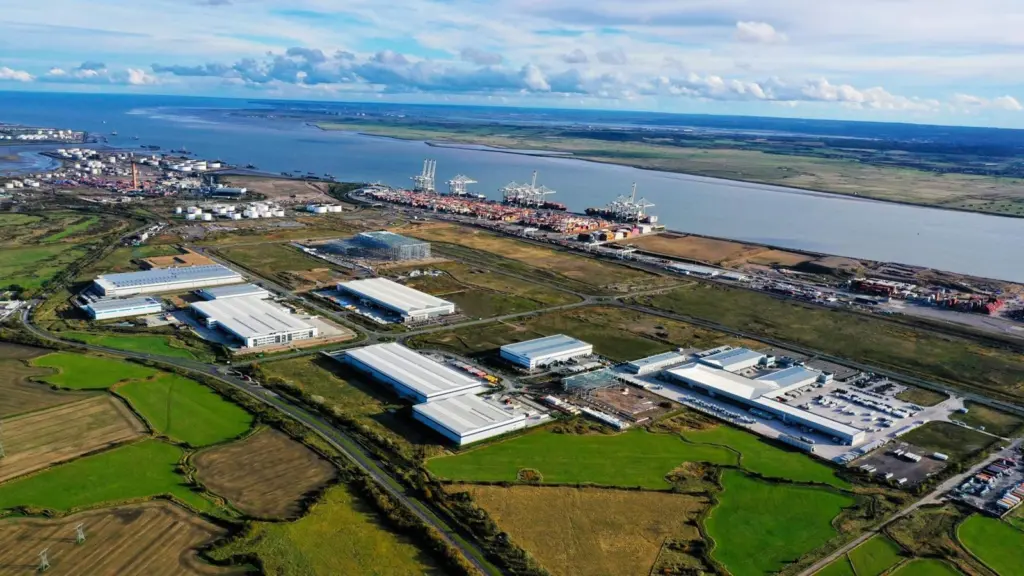
Thames Freeport has launched a 20-year Growth Plan designed to unlock economic growth, investment and jobs across its area, which spans Thurrock in Essex and the London boroughs of Barking & Dagenham and Havering.
Commissioned by Thames Freeport and developed by an EY-Parthenon-led consortium, the plan aims to attract up to £4.9bn in additional private sector investment and deliver £2.5bn in gross value added. It also targets a doubling of trade capacity and up to 28,000 new jobs.
“The Growth Plan provides a roadmap to unlock the investment and potential that would not otherwise be possible in the area,” said Ruth Kelly, chair of Thames Freeport.
“It gives investors, government and our communities a clear, costed programme for the next 20 years.”
The programme will deploy an estimated £350m of retained business rates, alongside public funding and private capital. Thames Freeport will use its funding strategically to close viability gaps and accelerate projects.
Five priorities underpin the plan: Industry, Development and Innovation; Energy and Smart Infrastructure; Skills, Education and Employment; Housing, Place and Community; and Transport, Access and Trade Flow.
Proposals include innovative and affordable industrial buildings, stronger supply chains, reliable lower-cost power for ports and freight fleets, and a green hydrogen logistics hub supporting the UK’s net-zero ambitions.
The skills programme is expected to create up to 28,000 jobs, including 12,000 positions for local residents, alongside 2,500 apprenticeships and training for up to 3,000 employees.
The plan will also support sustainable housing, improved amenities and connectivity, while transport upgrades will tackle network barriers and support the transition to low-carbon fuels.
Investment will be focused on four priority clusters: Technology and Advanced Manufacturing, Sustainable Construction, Advanced Ports and Logistics, and AI.
Stuart Rimmer, Interim chief executive at Thames Freeport, said: “We have identified exactly what is holding back growth in this region, from energy availability to skills shortages, and the Growth Plan sets out a roadmap to unlock the area’s potential.”
The plan runs to 2045 and is intended to provide continuity for investors and communities regardless of future political changes.
Related Articles
 EXPANSION & DEVELOPMENT
 EXPANSION & DEVELOPMENT
 EXPANSION & DEVELOPMENT