![PortStrategy[GreenPort]](https://www.portstrategy.com/wp-content/uploads/2026/09/PortStrategyGreenPort.svg)


Critical Stability
The Iran war: structural effects on maritime networks in the Middle East? Peter de Langen
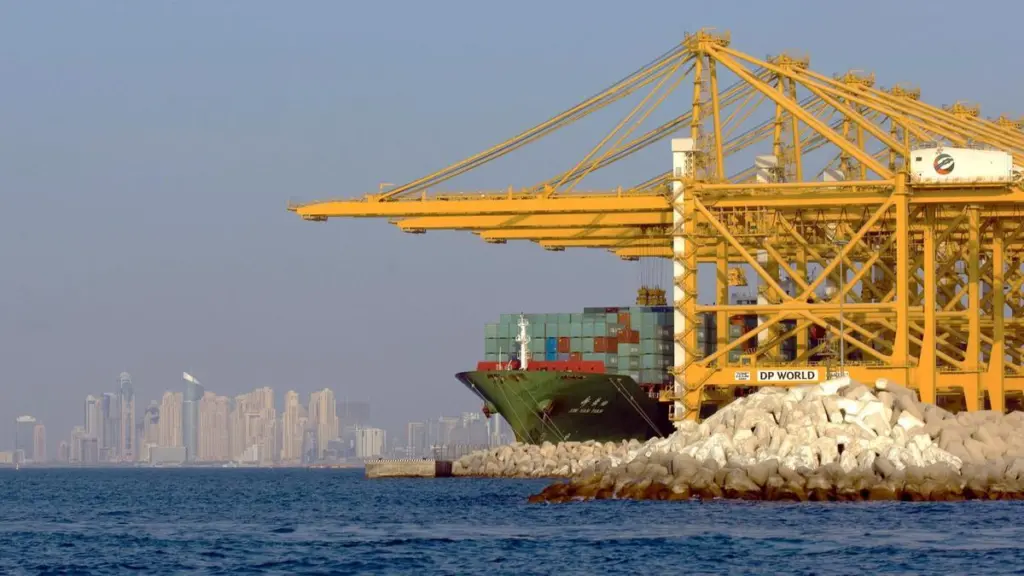
Various past crises turned out to have ‘structural effects.’ The port infrastructure of Kobe was re-built after the earthquake in 1995, but the port never recovered the central position it previously had in shipping networks. The Ceres container terminal in Amsterdam never recovered from the volume drop due to the economic and financial crisis 2008-2009. It may well be that Dubai does not fully recover its central hub position after the Iran war.
Dubai’s hub position is clear from its large transshipment volumes (>10 million TEU) as well as its large re-export volumes (around 3-4 million TEU). Dubai re-exports a variety of commodities, including electronics, transport equipment, rice, and coffee. Both can shift to other ports/logistics clusters with relative ease compared to import/export flows. And for both, other countries in the region, such as Qatar, Saudi Arabia and Oman have put massive investments in place to challenge Dubai’s central position. This has happened in other regions as well. For instance, Tanger-Med has successfully challenged the once dominant hub position of Algeciras, and Malaysia and more recently Vietnam have gained market share over Singapore, the dominant hub port in the Malacca Strait.
The war in Iran led to adapted maritime networks without transshipment in the Gulf and an increase of ‘landbridge volumes’ both from Jeddah and Omani ports into the Gulf region. Competing ports will be eager to hold on to these new activities. Especially if the risks of new hostilities remain present, they may be well positioned to succeed. Thus, while Dubai will remain an important container hub in the region, it may not quite regain its rather exceptionally high share of the transshipment and transit market. But arguably all of this is small money for Dubai. After all, other world cities like New York and London have developed because they were large ports, but in both cities, the importance of the port in their ‘economic fabric’ has steadily declined. The same is true for Dubai. Its most critical challenge is to remain attractive as a global city. In any case, stability in the region is critical for both the port and the city, and for the millions of people that have had to suffer the consequences of the war.
Related Articles
 CONTAINER & CARGO HANDLING
 INSIGHT & OPINION
 INSIGHT & OPINION