![PortStrategy[GreenPort]](https://www.portstrategy.com/wp-content/uploads/2026/09/PortStrategyGreenPort.svg)



Geo-politics and the Anaklia, Georgia, port project
A couple of months ago, the Georgian government announced that a consortium of firms from China would construct the new deep-sea port of Anaklia, located in western Georgia, following a bidding process in which only this consortium placed a bid.
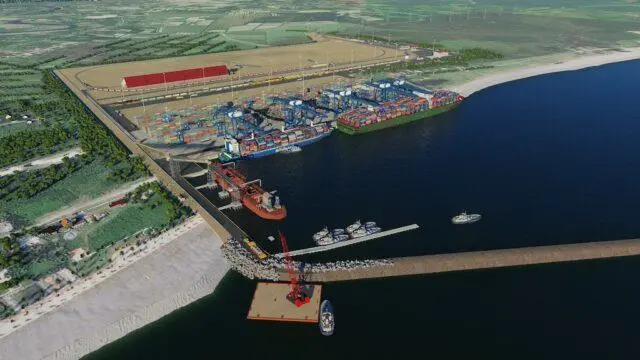
The decision to conclude an agreement with this Chinese partner is widely seen as another indication of Georgia’s shift away from Europe and the US and towards China.
The Anaklia port development project in Georgia has a long history. In 2020, after years of uncertainty, delays, changes in the composition of the consortium and political and geo-political maneuvering, the government cancelled a previous concession contract. At that time, the project was ‘unbankable’ without government guarantees, which is not surprising given the political and economic uncertainties in the region as well as the competition from other ports in Georgia and Russia. Even though concession conditions were not disclosed, in all likelihood the project continues to be not commercially viable. This would explain why the Georgian government retains a 51% stake.
While there are valid reasons to seek to improve Georgia’s ports (which currently have draft limitations and limited connectivity), the government decision carries a substantial risk of ‘private profit and public loss.’ On top there is a risk of increased geopolitical leverage by China over Georgia if the project fails to attract anticipated cargo volumes.
In my view, the ‘root cause’ of the port development problems in Georgia lies in the way in which Georgia’s ports (mainly Poti and Batumi) were privatised. The sale of Poti (including the port land) and the very open concession of Batumi implies the Georgian government has practically no instruments to influence pricing, performance, or investments of these ports. Unfortunately, it is easy to create a flawed port governance model but very hard to fix it. In such a context, it is tempting to initiate new greenfield port development. But in my view, it is unlikely that this agreement is the final chapter in Georgia’s port development struggles.
Related Articles
 CONTAINER & CARGO HANDLING
 INSIGHT & OPINION
 INSIGHT & OPINION