![PortStrategy[GreenPort]](https://www.portstrategy.com/wp-content/uploads/2026/09/PortStrategyGreenPort.svg)




Risk of congestion looms again on the US west coast
Transit times and productivity are back to normal at USWC ports, but potential cargo diversion from strike-hit Canadian ports could bring back unwanted congestion.
That’s according to insight by Eleanor Hadland, senior analyst, ports and terminals, at Drewry.
”After over a year of negotiations, the Pacific Maritime Association (PMA) and International Longshore and Warehouse Union (ILWU) finally announced an agreement on a new six-year contract covering all 29 USWC ports. Now all that’s needed are the volumes,” she said.
But these volumes may come in disruptive way after the Canada branch of the ILWU rejected a four-year wage deal and resumed strike action, raising fears of resurgent disruption to North American maritime supply chains.
Recovery
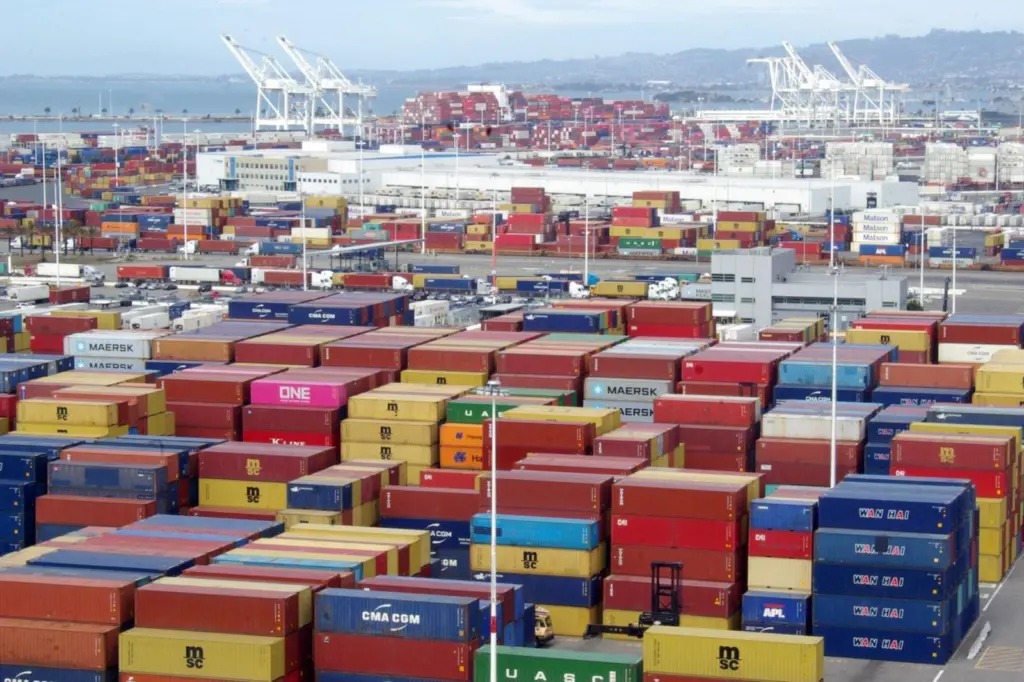
Throughout the labour negotiations on the west coast, operational disruptions were minimal until June 2023. As a result, terminal productivity has normalised, with both Los Angeles and Long Beach reporting average 0.3 days terminal duration per 1,000 teu of throughput, well below pandemic peaks.
Average transit times on the eastbound Transpacific trade have also shown a notable improvement, averaging 14 days since March 2023, more than 70% below February 2022 peak, according to Drewry’s Ports and Terminals Insight.
Drewry’s latest trade forecasts suggest that WCNA volumes (including US, Canada and Mexico) will fall 8% in 2023.
While the resolution of the USWC labour agreement and risk of draft restrictions in the Panama Canal favour a shift of cargo back towards the Californian gateways, this outlook may be downgraded in light of the current Canadian port strikes.
Despite weaker trade, strike-prone congestion at Canadian pacific ports could result in cargo being re-routed south of the boarder, adding to congestion risk at California’s San Pedro Bay ports of Los Angeles and Long Beach.
”While Seattle remains the first diversion option for carriers, its longshoremen appear adamant that they will not handle Canadian destined cargo,” Ms Hadland said.
”Diverted cargo will likely prove longer staying until intermodal operators can re-route it northwards, clogging up quaysides and raising dwell times.”
The recent spike in average vessel size at Long Beach, which according to Drewry’s Ports and Terminals Insight breached the 12,000 teu mark in April could make the port complex particularly vulnerable to landside congestion.
A prolonged Canadian ports stoppage could see congestion spread to vessel waiting time and slower steaming, lengthening carrier service transit times.
Related Articles
 CONTAINER & CARGO HANDLING
 INSIGHT & OPINION
 INSIGHT & OPINION