![PortStrategy[GreenPort]](https://www.portstrategy.com/wp-content/uploads/2026/09/PortStrategyGreenPort.svg)


The “dark” fleet a ticking timebomb that needs to be addressed
As PS goes to press the news breaks that European parliamentarians have called on the EU to impose “more targeted” sanctions against what is dubbed the “dark” or “shadow” fleet.
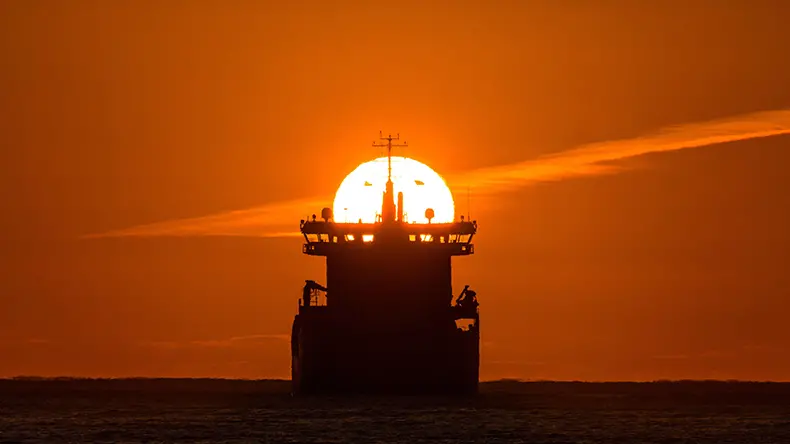
As PS goes to press the news breaks that European parliamentarians have called on the EU to impose “more targeted” sanctions against what is dubbed the “dark” or “shadow” fleet. The ageing fleet of tankers that Russia employs “that engage in illegal operations for the purposes of circumventing sanctions,” as the IMO puts it, and in the process evade compliance with safety or environmental regulations and often operate without insurance.
Specifically, in a resolution adopted on November 14, 2024, the European Parliament called for an upgrade in EU sanctions measures which will impact individual ships, their owners, operators and managers as well as related financial accounts, banks and insurance companies. Even more interesting the parliament forcefully stated the case for “the systematic sanctioning” of vessels transiting EU waters without insurance and an increase in surveillance activities in this respect, and particularly by drone and satellite monitoring. Furthermore, MEPs have stated that they want EU member states to nominate ports capable of receiving sanctioned ships carrying crude oil and LNG where cargoes can be seized without compensation.
Of course, there are strong reasons for implementing this course of action as a path to reducing the role these tankers play in filling the coffers that fund Russia’s war with Ukraine. But equally important, is reducing the potential for an environmental disaster via major oil spillages. Already there is some evidence of this, the media organisation POLITICO, in a joint investigation with the not-for-profit journalism organisation SourceMaterial, has reported at least nine instances of dark fleet vessels leaving spillages around the world in the period since 2021. These have been identified by using satellite images from the SkyTruth NGO together with data from Lloyds List and commodity platform Kpler.
A typical incident was the recent discovery of an oil spill around 100 kilometres off the Scottish coastline with this extending 23 kilometres into the North Atlantic Ocean. The source of this is believed to the tanker Innova which at the time was carrying one million barrels of oil from Russia to a refinery in India.
In terms of what could happen, however, this sort of incident is small scale. There is significant potential for a much larger incident given the age of the ships involved – above 15 years and their clandestine, unregulated, operation. Generally, the vessels are defined by independent experts as “high risk.” In practical terms, their age and poor management make them more susceptible to technical problems encompassing steering, structural integrity and general seaworthiness.
Estimates suggest that up to four fifths of the dark fleet operate without bonafide insurance and that they frequently avoid international oversight and regulation. As POLITICO reports, Isaac Levi, Europe-Russia Lead and shadow fleet specialist at the Centre for Research on Energy and Clean Air (CREA) designates the ships of the dark fleet as a “ticking time bomb.”
Clearly, EU Parliamentarians are pursuing a correct course of action – more needs to be done in this area to minimise both funding for Putin’s unjust war and to avoid a major environmental disaster.
Related Articles
 CONTAINER & CARGO HANDLING
 INSIGHT & OPINION
 INSIGHT & OPINION