![PortStrategy[GreenPort]](https://www.portstrategy.com/wp-content/uploads/2026/09/PortStrategyGreenPort.svg)




California queue rule
A new queuing process for San Pedro Bay-bound container ships is being introduced as part of the battle against congestion.
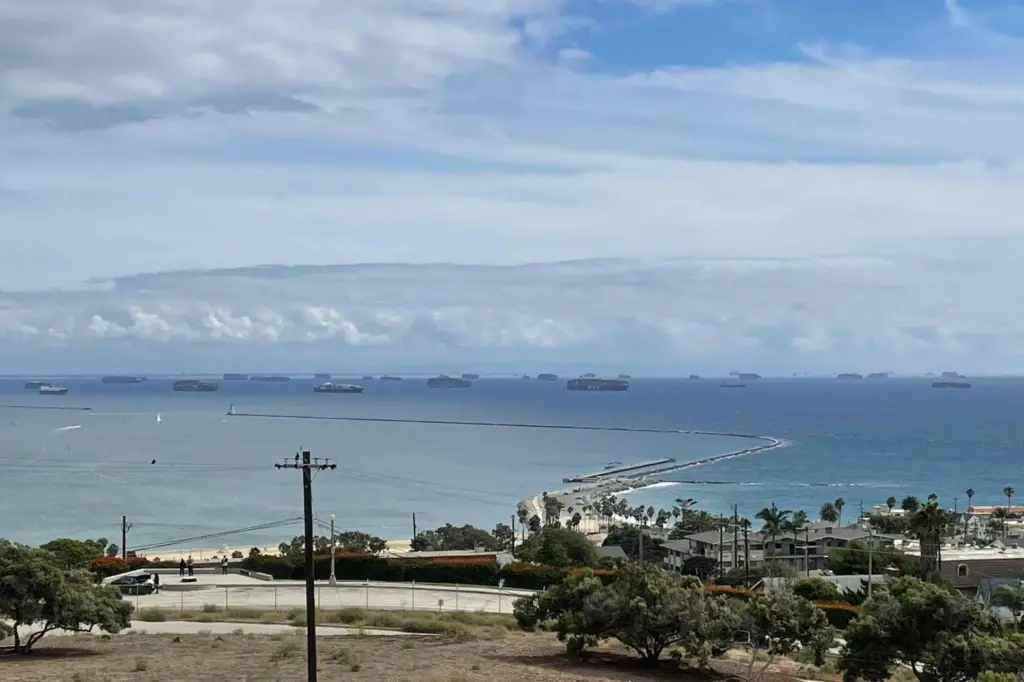
Developed by the Pacific Maritime Association, Pacific Merchant Shipping Association and Marine Exchange of Southern California, as well as individuals from member companies, the plan aims to significantly reduce the number of backlogged ships at anchorage off the ports of Los Angeles and Long Beach in the coming months.
“The new container vessel queuing process creates a fair and transparent system to reduce vessels at anchor near the Ports of Los Angeles and Long Beach,” said PMA CEO, Jim McKenna. “Designed through strong collaboration between the PMA, PMSA and Marine Exchange of Southern California, this new procedure will improve maritime safety and air quality while helping ensure ports operate as efficiently as possible.”
Numbers game
Effective 16 November, the process calls for each vessel to be assigned a place in the arrival queue based on their departure time from their last port of call, and requires vessels to wait for an available berth approximately 150 miles off the California coast. This process is intended to allow vessels to slow their speed and spread out, reducing vessels at anchor before the onset of winter weather, in addition to reducing emissions near the coastline.
Vessels will operate outside the new boundaries known as the Safety and Air Quality Area, designed by the Marine Exchange of Southern California to limit the number of container vessels near the port complex.
While awaiting a berth, eastbound ships must remain 150 miles west of Southern California, while northbound and southbound ships must remain more than 50 miles from California and Mexico. Vessels can come into the harbour for fuel, crew changes and regular ship business as per normal processes.
Under the current system, container vessels enter the arrival queue based on when they cross a line 20 nautical miles from the San Pedro Bay Port Complex.
Related Articles
 EXPANSION & DEVELOPMENT
 EXPANSION & DEVELOPMENT
 PORT & TERMINAL NEWS