![PortStrategy[GreenPort]](https://www.portstrategy.com/wp-content/uploads/2026/09/PortStrategyGreenPort.svg)





Canadian ports disrupted by rail blockades
Canadian ports are experiencing significant disruption as a result of rail blockades established in opposition to a natural gas pipeline project.
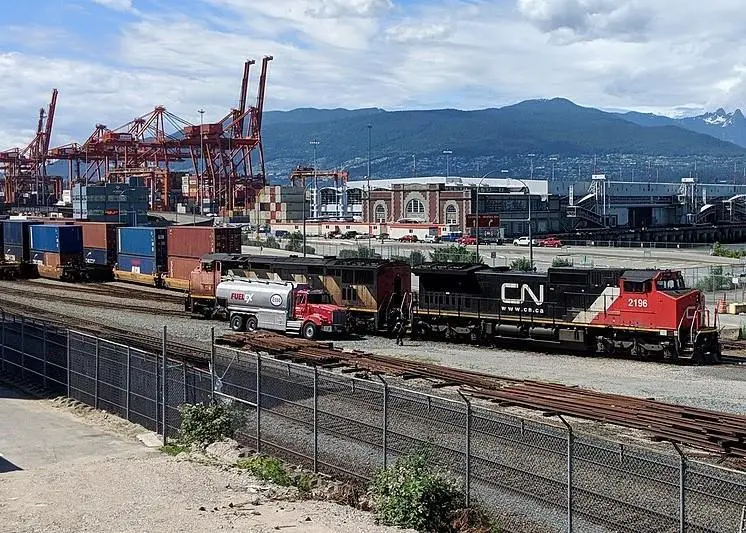
The blockades in British Columbia, Ontario and Quebec have resulted in congestion and a backlog of ships at the Port of Vancouver, while rail services have also been impacted at the Port of Montreal and the Port of Halifax.
A spokesperson from the Port of Vancouver said: “We continue to see congestion and backlog due to the cumulative impacts of weather, line outages and the rail disruptions as a result of the protest activity, but port operations have resumed.
“The demand for anchorages is currently exceeding the availability, causing a backlog of ships waiting to get into port.”
50 ships waiting
The port confirmed that it expects the backlog to be a short-term issue, although there are more than 50 ships at anchorage.
The blockades have been set up by protesters supporting Wet’suwet’en chiefs who oppose the Coastal GasLink pipeline project that crosses the traditional territory of the Wet’suwet’en First Nation in northwestern British Columbia. Protesters began obstructing railway tracks on 6 February.
Montreal fallout
The Port of Montreal said that ships are on schedule but added: “With the CN network blockade, part of our rail services are impacted.”
Truck transportation is keeping its Quebec containers market moving, but its Ontario containers market is suffering with 15% of the containers at the port immobilized, or around 3,600 containers.
“The CN network blockade greatly complicates the logistics of transporting goods or completely blocks the movement of goods for CN users,” explained the port.
Halifax also impacted
Halifax Port Authority also expressed concern over its immobilised cargo. “Without rail, import cargo destined for inland markets cannot move from the terminals. The longer this carries on, the more difficult it becomes to manage yard space.”
There is already a decline in carrier calls, with cargo owners and ocean carriers starting to route their cargo through US gateway ports that are not affected by rail disruptions, said the port authority.
“When the Port of Halifax is no longer able to accept import cargo destined for inland markets or receive export cargo from those same inland markets, carriers may stop calling, and we are seeing that happen already.”
It also warned: “Once cargo routes are altered, it is difficult and sometimes impossible to restore them.”
Emissions are set to increase due to an increased number of trucks on the road to compensate for rail stoppages and delays, plus the decrease in eco-efficiency due to a single engine hauling a single container compared to a locomotive hauling hundreds of containers on a dedicated freight line.

Related Articles
 EXPANSION & DEVELOPMENT
 EXPANSION & DEVELOPMENT
 PORT & TERMINAL NEWS