






Freeport LED-refit half-complete
The US’ Port Freeport has seen the completion of the first of two stages in its transition to high-mast (HM) light-emitting diode (LED) lighting.
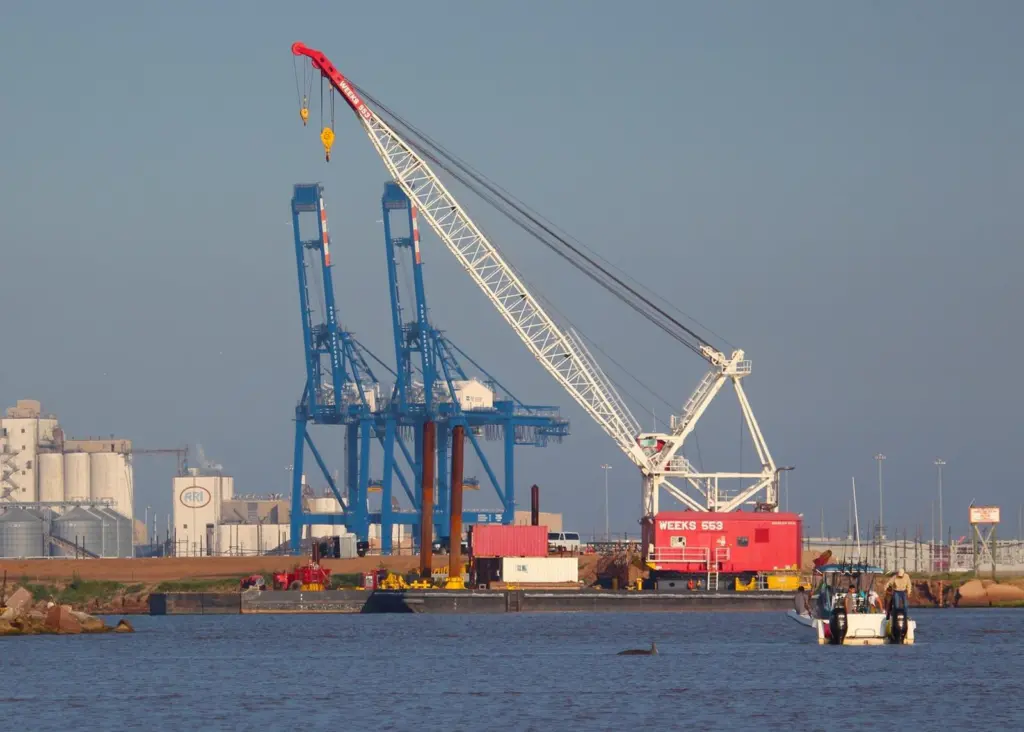
In a joint release, the Texan facility said that Georgia state-based Bright Light Systems (BLS), an energy-efficient LED luminaire and wireless lighting control-manufacturer, finished Phase 1 of the move to the lighting along with Bright Light Management System (BLMS) software.
BLS combines solid-state LED lighting technology with wireless capabilities and an asset management platform.
The transition started with the replacement of the legacy 1000-watt high-pressure sodium lights in the Port Freeport’s Inner Harbor area.
The next stage, which is scheduled to commence next month, will replace the HM lighting in the facility’s Velasco Terminal.
Equipment explored
When finished, the retrofit will illuminate more than 250 acres in the terminal with around 400 Nova HM LED lights — with integrated wireless sensors and controls.
The port will also use the BLMS platform, which is a centralised lighting management, monitoring and reporting tool offering scheduling capabilities, asset management information and energy data analytics and reporting.
According to the release, the high-performance LED lights will offer improved illuminance levels in the terminal plus an operating lifetime of more than 100,000 hours.
Additionally, the low-profile design with integrated glare shields will eliminate light trespass and glare for local neighbourhoods.
“By installing the Nova-series LED lights with our intelligent lighting controls platform, we’re helping the port save money while achieving their objective of becoming one of the safest, most-sustainable terminals in the country,” commented BLS Sales executive vice president Bill O’Connor.
Port Freeport chief executive Phyllis Saathoff said BLS’ LED lighting and controls solution supports the port’s commitment to sustainable energy management and reducing its carbon footprint.
Meanwhile, Port Freeport Commission chairman Paul Kresta, commenting on the retrofit, noted that the bettered energy savings and decrease in light dispersion to Port Freeport’s surrounding community demonstrates the facility’s dedication to providing a safer, more-efficient environment for both its clients and citizens.
Related Articles
 PORT & TERMINAL NEWS
 PORT & TERMINAL NEWS
 OPERATIONS