![PortStrategy[GreenPort]](https://www.portstrategy.com/wp-content/uploads/2026/09/PortStrategyGreenPort.svg)



Itajai
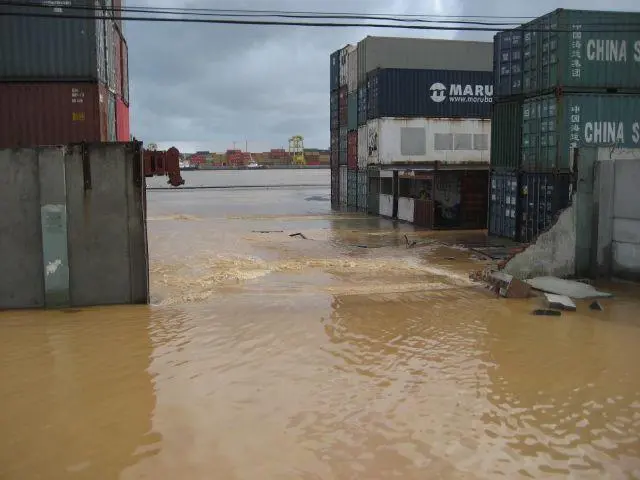
The flood stricken and devastated port of Itajai in Brazil will not resume normal operations for several months, although one pier may be open within three weeks if emergency dredging can be carried out quickly enough to clear debris from the channel.
As the death toll reached 122 on Saturday for the southern state of Santa Catarina, where mudslides and drowning were the main killers – with one body of a young man found near the port of Itajai itself – Brazil’s President Lula affirmed again that some Reais1.6bn ($643m) would be made available immediately for the state to offer emergency relief and start repairing damaged infrastructure. Of that some Reais350M ($140.7m) would go direct to the Itajai Port Authority (IPA), which is Brazil’s number two port for containers with 900,000 teu forecast for this year, and a key export gateway for chicken and other agricultural produce.
Some $5bn worth of chicken (3.3m tonnes) is exported from Brazil with around 50% of it via Itajai, and the neighbouring port of Navegantes, which escaped structural damages, according to its managers.
The money is urgently needed because the flash floods saw the River Itajai-Acu flowing at 24 km per hour (instead of the usual 2 km per hour) and the river level was two metres higher than the normal 10 metres at the port of Itajai.
Much of the infrastructure of the port had been washed away or seriously damaged, with one of the three berths at the APM-operated Teconvi box terminal disappearing and one other cracked and crumbling into the river.
Patricia Barcelos, who works for the IPA, told Port Strategy: “We had 90% of the city of Itajai under two metres of water, it is an absolute catastrophe. It has barely stopped raining for two months and we are supposed to be entering the summer period. During the weekend of rain that cause the terrible flooding, we had a month’s rain in two days and the river and its tributaries just couldn’t cope.”
Now all eyes are on the rescue package and Emergency Dredging which could start within a week, to bring channel depth back up to 10 metres. Today it is between 6 metres and 7 metres in most places.
Related Articles
 EXPANSION & DEVELOPMENT
 EXPANSION & DEVELOPMENT
 PORT & TERMINAL NEWS