![PortStrategy[GreenPort]](https://www.portstrategy.com/wp-content/uploads/2026/09/PortStrategyGreenPort.svg)

Katrinas ill wind
At time of press US Gulf ports were showing signs of getting back to something vaguely resembling normality. New Orleans port was just reopening, Gulfport had reopened, Biloxi remained closed as did several others whilst along the coast yet more were operating on restricted draughts. The Mississippi itself had re-opened for two-way traffic.
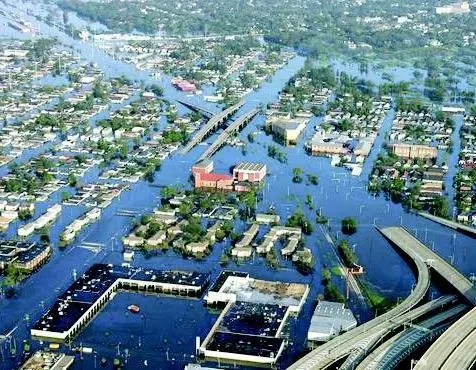
Some facilities have been totally destroyed whilst many of those that are re-opening will be preoccupied with relief work for weeks to come. But Port of New Orleans president and ceo Gary LaGrange had set a goal for the port to work its first commercial cargo ship by 14 September. “We know that this is an aggressive schedule in the wake of the damage that we have sustained from Hurricane Katrina. But we have many port assets that survived the storm in good shape.” The port is reserving two to three berths at its Uptown Complex for commercial cargo.
Grain shipments have resumed and the overall picture emerging is now more positive with a firm focus on recovery and resumption of commercial activity.
The Port of New Orleans Authority says it is now bringing together all of the pieces that will allow it to be a major force in the reconstruction of New Orleans. “The Port of New Orleans’ riverfront terminals survived Hurricane Katrina in fairly decent shape, ” said LaGrange. “Although they are damaged, they are still workable once electrical power and manpower is available.”In the next several weeks, almost all of the Port of New Orleans will be dedicated to military relief vessels. In the next week to two weeks, commercial vessels will return once electrical power and manpower arrive.” An obvious consequence of the storm has been damage to cargo handling equipment, the repair to which is a priority task, along with restoration of power. Surveying channel depths, re-routing vessels, restricting draughts and planning dredging projects are all further upshots.
Re-establishing communications and basic facilities at headquarters has been a another headache but once achieved allowed coordination with government agencies, terminal operators and others.
Mobilising work crews from outside the area and temporarily housing them onboard ships has been another sign of progress.
Helping employees with early salary payments – even just the problem of distributing pay cheques; exploding propane tanks causing fires that could not be extinguished for lack of ability to pump water; the growing fatigue of police and other officers – all contributed to the sense of desperation.
At least one port – the Georgia Ports Authority (GPA) – launched a Port to Port People Project (PPPP) in an effort to help port employees and their families at the ports directly impacted by Hurricane Katrina. “It is clear that much of the port infrastructure directly in the path of Katrina has been destroyed, ” said Doug Marchand, executive director of the GPA.
“In many cases, workers at our sister ports in Mobile, Gulfport, Pascagoula and New Orleans have lost their homes and their jobs. Together, our employees have decided to launch the Port to Port People Project by coordinating relief supplies for distribution to their employees.” The GPA expects to collect non-perishable food products and other items that can be of the most assistance immediately. The GPA will collect and pack items in fortyfoot containers and deliver them to the individual ports for distribution. “We urge all port workers across this country to also reach out to the effected maritime communities, ” said Marchand. “It is incumbent upon all of us in this industry to come to the assistance of our fellow port workers in their time of need.”
Related Articles
 PORT & TERMINAL NEWS
 PORT & TERMINAL NEWS
 OPERATIONS