![PortStrategy[GreenPort]](https://www.portstrategy.com/wp-content/uploads/2026/09/PortStrategyGreenPort.svg)

LA terminal sold
Port of Los Angeles container terminal Fenix Marine Services (FMS) will be sold for US$2.3bn.
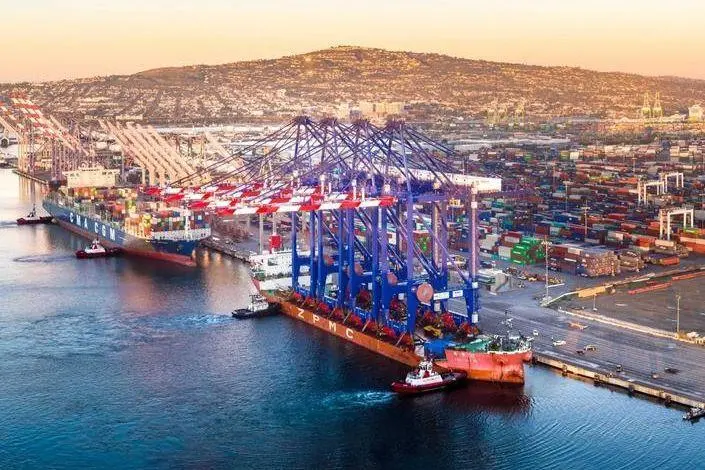
The EQT Infrastructure III fund (EQT Infrastructure) has agreed to sell its stake in FMS to global shipping line CMA CGM. FMS is one of the largest container terminals in the Port of Los Angeles, handling approximately 2.3m TEUs annually.
Sean Pierce, CEO and president of Fenix Marine Services, said: “Our vision was always to deliver on operational excellence and to do things better than they have been done before. All employees at Fenix Marine Services, whether on the front line in Port of Los Angeles or at our back-office in Arizona, have been critical in delivering that vision. This transaction is a testament to the strength and fortitude of the team. We thank our partners at EQT for their unique, active support of the company throughout this journey.”
Terminal investments grow
EQT Infrastructure said it is confident that CMA CGM is the “right partner” to continue the terminal’s growth.
This year, CMA CGM has acquired a stake in Spain’s Total Terminal International (TTI) Algeciras container terminal in the Port of Algeciras Bay, plus struck a deal to operate and manage the multi-purpose Pier 55 terminal at the Port of Alexandria in Egypt.
Building on technology
Since acquiring Fenix Marine Services in December 2017, EQT Infrastructure has backed significant investments in new equipment and systems, including the largest cranes in North America. An extensive yard reconfiguration increased terminal capacity by 40%, improved productivity, reduced turnaround time for truckers, and improved safety. EQT Infrastructure also supported the installation of automated gates and implementation of advanced inventory tracking systems, as well as the launch of innovative machine learning technology to optimise terminal operations.
The terminal’s entire equipment fleet has been converted to renewable diesel, eliminating over ten million pounds of greenhouse gases to date. Low-carbon hydrogen fuel cell technology is also being tested with partners including Toyota.
Related Articles
 EXPANSION & DEVELOPMENT
 PORT & TERMINAL NEWS
 PORT & TERMINAL NEWS