![PortStrategy[GreenPort]](https://www.portstrategy.com/wp-content/uploads/2026/09/PortStrategyGreenPort.svg)





POAL focused on 30-year capacity build
Container terminal automation, a deepwater terminal berth and three new cranes will provide Ports of Auckland (POAL) with additional capacity.
POAL revealed the plans to adapt to Auckland’s growing population in its draft 30-year masterplan, which focuses on projects anticipated to help it cope with demand until the port is moved.
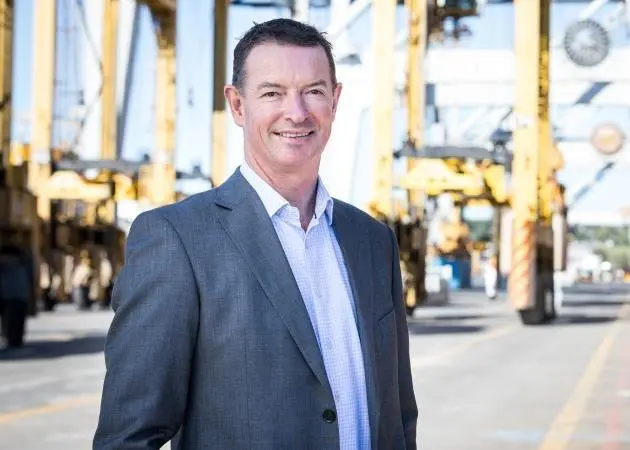
Tony Gibson, CEO of POAL, said: “Our Master Plan outlines all the projects that we will need to undertake until such time as the port is relocated. It includes the automation of the container terminal, completion of a deep-water terminal berth and installation of three new cranes.
“This work, along with other projects outlined in the plan, will provide us with additional capacity in our container terminal to serve a population of up to 5 million – three times the number of people living in Auckland today.”
More berth space
Mr Gibson said the port is “facing significant capacity issues on our general cargo wharves.” He explained POAL plans to build a five-storey car-handling building that will provide more capacity and free up space on Captain Cook Wharf for public space.
To increase berth space, POAL has proposed building a new wharf running east-west along the north end of Bledisloe Terminal.
Reaching an extra 13m north into the harbour, Mr Gibson stressed the distance is “essential to the success of the other wharf projects.”
Piled wharf
The wharf will be a piled structure in line with POAL’s commitment to no further reclamation.
“We will also remove all of Marsden Wharf and part of a wharf known as ‘B1’. This will bring three redundant wharves back into use and create nearly a kilometre of new general cargo berth space,” Mr Gibson added.
Northport is favoured for the port to relocate to, but a feasibility study commissioned on the relocation options is still in progress.
The plan creates space for freight and gives Auckland Council the time it needs to make a sound decision on where, when and how to move the port, he said.
Related Articles
 WORLD
WORLD
 PORT & TERMINAL NEWS
 PORT & TERMINAL NEWS