




Queensland bounces back from disasters
Devastating floods and cyclone damage have failed to dent Queensland’s ever-expanding coal industry.
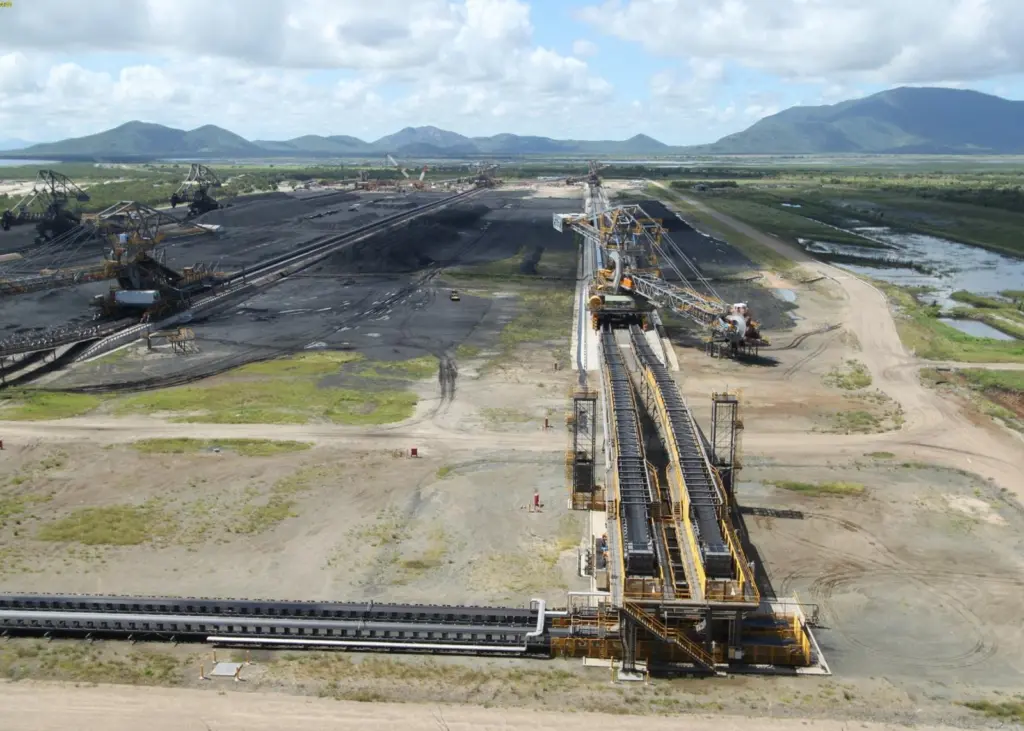
While Queensland suffered extensive damage to infrastructure across the state, coal port infrastructure remained largely untouched, allowing ambitious plans for Hay Point and Abbot Point to go ahead.
The Queensland Government announced last month it had engaged consultants Aurecon Hatch to prepare a Port Development Master Plan to further expand the Port of Hay Point, one of the world’s largest coal export ports located 40km south of the city of Mackay.
“The international demand for Queensland coal is significant and is forecast to continue to increase,” Queensland’s Ports Minister Craig Wallace said.
“Based on initial requests from industry, the Port of Hay Point could potentially double in export capacity within the next five to 10 years.”
The announcement follows endorsement last year of Dalrymple Bay Coal Terminal Management (DBCT) and the Adani Group as the preferred proponents for the development of the proposed new coal export infrastructure at Dudgeon Point, located at Hay Point.
Hay Point, along with the Mackay, Abbot Point and Weipa ports, is managed by the North Queensland Bulk Ports Corporation (NQBP).
NQBP chief executive officer Brad Fish said Dudgeon Point offered huge potential, with the Adani Group and DBCT Management working with NQBP to plan and construct additional coal infrastructure.
“We could see about 120m tonnes in place at Hay Point in five or six years,” he said. “It is extremely exciting and requires a lot of careful planning and coordination.”
DBCT Management leases the adjacent Dalrymple Bay Coal Terminal which it has recently expanded to 85m tonnes per annum – the maximum capacity on the available footprint. DBCT Management plans to provide new capacity in the Port of Hay Point in response to requests from the mining industry.
“We are seeing very strong growth from the Goonyella System, particularly from coking coal,” Mr Fish said.
“The throughput may be less than it could have been for the year. We won’t recover everything lost by flood, but we are still predicting a record year for the Port of Hay Point.”
The prediction follows a record throughput of 99.5m tonnes for the port in 2009-10 – more than 36m tonnes through the Hay Point Coal Terminal and about 63m tonnes through the neighbouring Dalrymple Bay Coal Terminal. That total was close to 17m tonnes higher than the previous year.
At Abbot Point, 25 kilometres north of Bowen, the ports corporation is preparing for the completion of the X50 expansion and the first ship is expected to be loaded from the new berth by the end of April.
“Current exports are 17-18 mtpa,” Mr Fish said. “That will expand to 50m tonnes by 2015-16. That is pretty strong growth. On top of that, we have awarded preferred developer status to BHP Billiton and Hancock Coal Pty Ltd for two major expansions (known as terminals two and three) at the Port of Abbot Point. That will happen over the next three to four years.”
The two additional terminals will eventually add an estimated 110m tonnes of coal per annum to the port’s throughput, with an initial capacity of 50m tonnes per annum.
Mr Fish said NQBP was in discussions with the coal market about future terminals past terminals two and three.
“At present, we are talking about four more terminals. The market will determine how this progresses,” he said. “This development is right across metallurgical and thermal coal. We are seeing a very strong demand – many existing partners wishing to expand, and a number of new partners seeking to enter the market.”
Also progressing is the Multi Cargo Facility planned for Abbot Point, a project aimed at diversification of the port and the development of major industry in Queensland’s declared State Development Area.
“We are going to the market with the Multi Cargo Facility construction,” Mr Fish said. “It is looking very positive. Subject to getting all the balls in the air down in our hands, we will be starting construction by the end of the year.”
Related Articles
 WORLD
WORLD
 PORT & TERMINAL NEWS
 PORT & TERMINAL NEWS