![PortStrategy[GreenPort]](https://www.portstrategy.com/wp-content/uploads/2026/09/PortStrategyGreenPort.svg)





Trucking penalty system questioned
The recently announced reforms aimed at reducing congestion at Sydney’s Port Botany has had a mixed reaction from the truckers themselves.
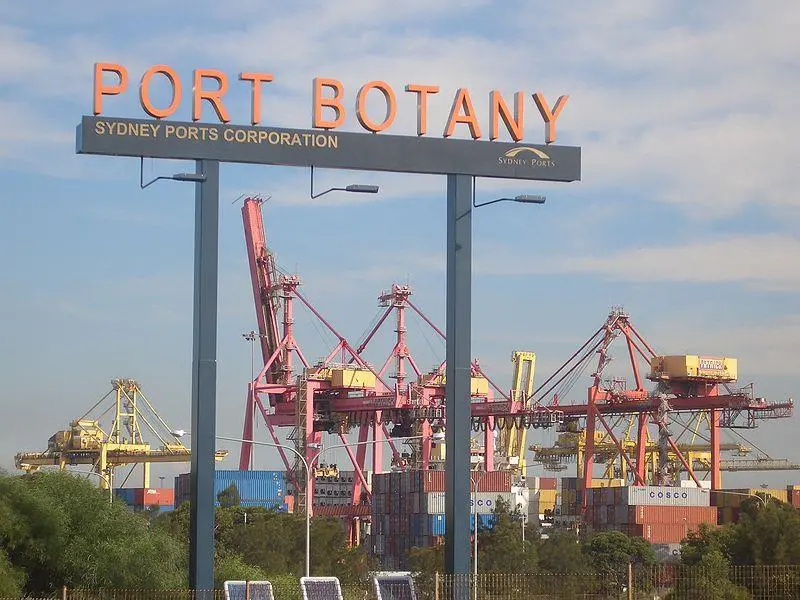
Opinion appears to be divided as to whether the new system of regulated penalties for under-performance of trucking movements, set to be phased in at the port from October, will solve the problem of congestion.
Under the new Port Botany Landside Improvement Strategy (PBLIS)truck carriers will receive a penalty payment if stevedores fail to meet the regulated standards: the reasoning being that without the reforms there are no incentives for stevedores to service trucks in a quick and timely fashion.
PBLIS aims to rectify this by implementing a series of mandatory regulations and penalty payments that will flow directly between the stevedores and road operators. The penalties are such that stevedores must pay the road carrier $25 for every 15 minute delay. Further, stevedores must pay the road carrier $100 for a cancelled slot if it has been cancelled within two hours of the designated time or $50 to be paid if cancelled outside this period.
However the road carrier must pay the stevedore $50 for late arrival and the road carrier must pay the stevedore $100 for no-show.
A meeting held by Sydney Ports Corporation revealed a split among truckers, with the Australian Trucking Association supporting the proposed Sydney Ports scheme but some individual truckers preferring private arrangements with terminal operators, particularly as the landside performance of the two terminal operators – Patrick and DP World – have varied. DP World has reportedly struggled to handle the volume of additional business won this year.
Further, box depots in Australia have begun to apply an “infrastructure surcharge” on boxes. Container parks in Brisbane, Port Botany and Melbourne are applying levies ranging from A$7 (US$6.3) to A$26 (US$23) a container as a result of increases in land rental charges in recent years. The depots are known to be facing tough economic conditions with very small margins.
Related Articles
 EQUIPMENT
 WORLD
WORLD
 PORT & TERMINAL NEWS