![PortStrategy[GreenPort]](https://www.portstrategy.com/wp-content/uploads/2026/09/PortStrategyGreenPort.svg)






A stitch in time
JLT Mobile Computers Per Holmberg explains why the choice of components is vital
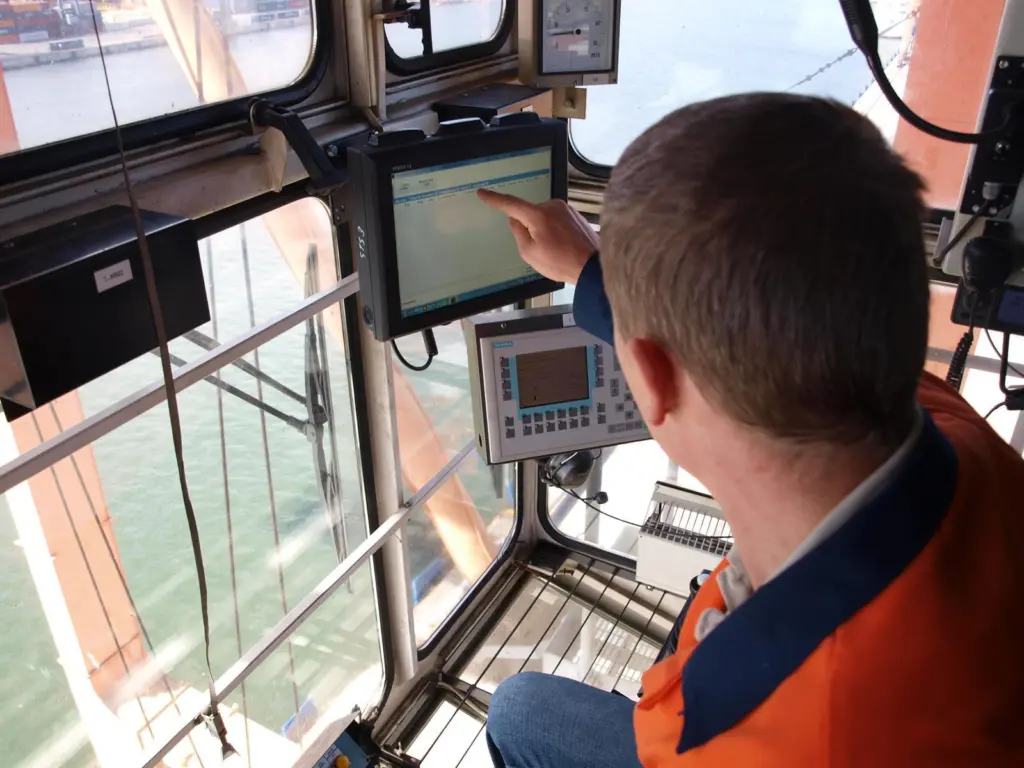
There are many proverbs we may remember from our childhood that still ring true today; ‘a stitch in time saves nine’ has always been a favourite of mine. The reason they remain relevant in a modern world is because the more things change, the more they seem to stay the same. You can’t fight human nature is, I think, the most poignant comment one can make about that. But isn’t modern technology supposed to be removing the ‘human element’ from industry?
It’s something that we hear more often; automated call centres perhaps being the best example of the dehumanisation of lean operations in a bid to trim the fat. And this is the crux of the problem that now faces every industry, including commercial ports. The need — and it is a need, not just a desire — to cut costs to a minimum is driving up investment in IT which, in turn, is supposed to drive down operational costs and deliver a return on that investment.
ROI drives all businesses, no matter what they are or how they do it. It could be argued that it de-risks processes that would otherwise rely on ‘fallible’ humans, but really it only shifts the risk from people to devices. In a modern business such as a port, the number of devices is increasing at an incredible rate, with each one representing a crucial link in the overall chain.
While people may be fallible, they’re also normally quick to respond to faults and, while in a well-structured IT network, faults — which are still inevitable — will probably be detected even quicker than a human could, corrective measures will still need to be taken. An operational manager I know was asked recently if he had experienced an IT fault lately and, if so, how long it took to correct the problem. His answer was yes, he had, and while it took only minutes to fix the problem it took the entire day to get operations back up to speed. What’s important here is not so much the speed with which faults can be detected but the efficacy with which remedies are put in place and — even more importantly in a lean operation — how quickly normal operation is resumed.
This is a problem facing many modern businesses; faults may happen, remedies will be found, but the workflow will inevitably be interrupted; resuming that workflow will ultimately take much longer than the time needed to detect and repair the fault, and no amount of automation is likely to change that.
So what’s the solution? Should technology be shunned? Should optimal operations be avoided? No, of course not; market forces dictate that all competitive operations must be lean and keen. The answer is to choose the equipment that will mitigate the possibility of failure in the first place. In many industries there is a drive towards what is referred to as ‘Five Nines’ up-time; that means service is available for 99.999% of the time. This is achieved through employing redundant systems; if one fails, another takes its place seamlessly.
In a commercial port, such redundancy isn’t viable, but by choosing the right components in the first place the risk of failure is drastically reduced. Now that mobile computers and wireless communications form such an integral part in the ‘up-time’ of a port’s operations, it makes sense to choose those components carefully and select those that have been designed and proven in the field to operate in the challenging conditions a port presents.
Look for processors with enough performance to outpace your application, wireless technology that prioritises a reliable connection, and rugged hardware designed to withstand the stress from weather, humidity, salt and vibrations. Select a hardware supplier that is proven in the industry, has the reputation of high-quality hardware, and has control of development, production and service to support your specific needs.
How long will it take to resume port operations if your computer hardware or wireless network goes down? Putting in place the right technology in the first place could easily ‘save nine’.
Per Holmberg is chief executive of JLT Mobile Computers. For more information, go to www.jltmobile.com.
Related Articles
 PORT TALK
 PORT TALK
 PORT TALK