![PortStrategy[GreenPort]](https://www.portstrategy.com/wp-content/uploads/2026/09/PortStrategyGreenPort.svg)




A watershed moment for recruitment
Peel Ports’ Howard Sloane explains why it’s time to throw out the HR rulebook
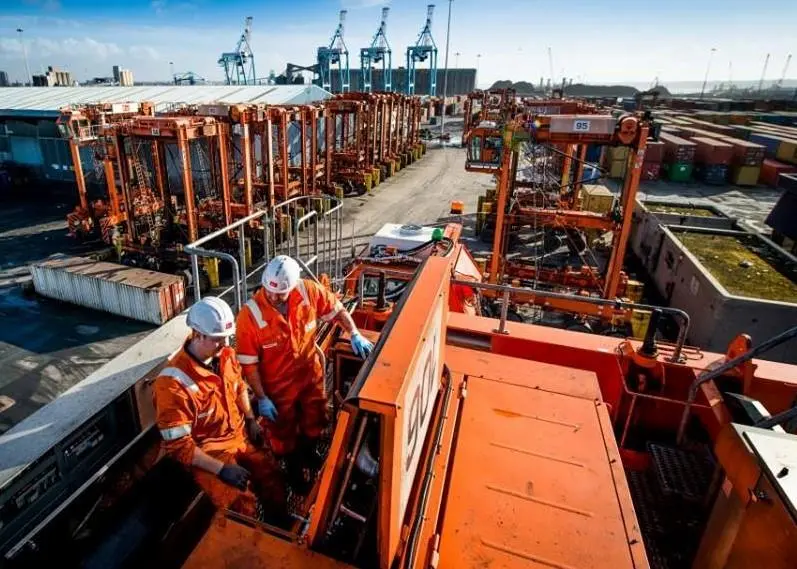
The rapid development of ports and terminals across the globe over the past two decades, coupled with the advances in technology and the demands of a new breed of infrastructure investors, are changing the focus of skills that organisations in the ports and logistics sectors need to drive the industry on to its next level of evolution.
It is a watershed moment in recruitment for our industry because we can no longer rely on the traditional sources for senior and executive-level managers. To be able to respond to a shifting environment, driven by changing customer needs, the ports industry needs to broaden its talent pool. Indeed, we are looking for individuals with the ability to drive transformation that will deliver success for our business. That means attracting a far wider range of leaders and innovators with different skill sets.
Like many ambitious businesses, Peel Ports has a dynamic five-year plan for growth. This year alone, we will open our £300m Liverpool2 container terminal, complete the final phase of the Drax biomass import facility and commission a fully-automated steel coil handling facility. Investments at our Mersey businesses, the Port of Liverpool and Manchester Ship Canal, exceed £600m; then there is a further £50m assigned to expansion at Sheerness in Kent by Peel Group, Peel Ports’ parent company. We are also at the initial stage of determining a masterplan for the re-invention of our Hunterston facility, converting one of the UK’s largest coal import terminals to a mixed-use low-carbon energy park.
To deliver that growth means that, as a company, we need to recruit up to 30 senior leadership roles across the group in the short to medium term.
Two prong
This need has impacted our organisation’s resourcing and talent management strategy in two key ways.
First of all, we are investing more in training as part of our programme of continuous improvement. Graduate trainee schemes, apprenticeships and employee development programmes will help us ‘grow our own’ with clear career progression plans. But these initiatives will not meet all our leadership needs.
So, the second element of our strategy is to reach further beyond the traditional ‘hunting grounds’ to attract talent from outside our industry who have transferable business and technical management skills.
We may be competing with a greater range of organisations than previously for the best talent but port management has a great deal to offer – and with the crossing of geographical boundaries naturally part of the logistics world, it makes for a highly mobile and flexible workforce, regionally and globally.
The opportunity to work in a modernising sector, with a global footprint, presents not only sustainable, upward career progression for the best people but the opportunity to explore new challenges. For businesses, including ours, we gain fresh insights to complement existing approaches on our priorities of customer service, innovation, team performance and leadership.
To attract candidates from this broader talent pool we have cast our net wider, using a range of social media platforms, while also promoting our brand values globally across a variety of industry sectors. So far this approach is proving more successful than the traditional route of using head-hunters or recruitment agencies – as well as being more cost-effective and quicker.
However, as with all aspects of our business in the challenging supply chain sector, there is no scope for us to rest on our laurels.
We will continue to approach recruitment with a forward-focused view on how the industry’s skill requirements may develop in coming years. This will ensure we have a pipeline of talent, both internal and external, to meet these emerging requirements and further our competitive advantage.
Peel Ports Group HR director Howard Sloane is a Fellow of the Chartered Institute of Personnel and Development and has spent 20 years working in large multi-national organisations developing award-winning and transformational HR strategies across a variety of industry sectors.
Related Articles
 PORT TALK
 PORT TALK
 PORT TALK