![PortStrategy[GreenPort]](https://www.portstrategy.com/wp-content/uploads/2026/09/PortStrategyGreenPort.svg)




Reducing the risk factor
TT Clubs Laurence Jones explains why automation is one solution to reducing casualties in ports
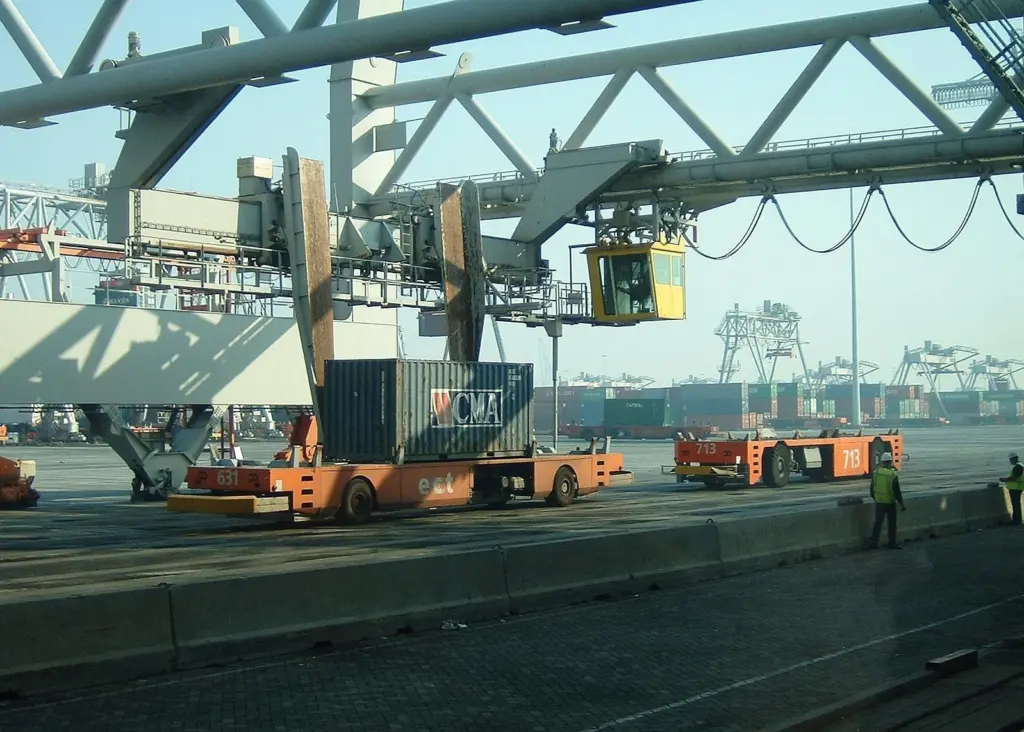
Consider the scene: unmanned internal transfer vehicles whisk containers from the remotely-controlled gantry crane deep into the yard, to be stacked precisely by automated stacking cranes. You could be forgiven for wondering if you are on a film set awaiting some inter-galactic action.
But this scene is becoming reality in many parts of the world, where the combination of new development and anticipated throughput justify the necessary investment in automation. From a risk perspective, this has to be welcome in an industry that continues to incur the trauma of injuries and fatalities year by year. Inevitably there are varied causes of injuries, but key among them are the human propensity to act unpredictably.
Following analysis of its claims experience and risk assessments, the TT Club has habitually highlighted the need to minimise the presence of people within the terminal area alongside large industrial machinery. In that respect, increasing automation appears to be a dream risk mitigation. However, realistically, there will still be many container terminals where automation is not economically viable or even possible. This should not prevent such terminals implementing an appropriate level of automation and utilising other technologies – and robust procedures – to help make people safer.
Even in the most automated setting, there will be a number of interfaces with humans – it is difficult to imagine that people can be entirely removed or relocated. For example, ship lashing is a heavily manual task. While ship design, technology, lashing bars themselves and procedures will continue to be reviewed and developed in order to improve the safety of lashers, it may be impossible to remove them entirely. Other functions where automation may be more of a challenge currently could be the loading or unloading of containers from external trucks and maintenance of equipment.
Safety first
As a result of such remaining human interfaces – and perhaps even more so in a sophisticated operation – careful consideration needs to be given in these areas. Thus, while there are huge benefits and opportunities in automation, provided it is economically viable and implemented professionally by experienced providers, the plans have to go far beyond the infrastructure investment itself.
The continuing need in relation to third party truck drivers arriving at the terminal is clear. Here, ‘smart’ ID technologies can support rigorous site induction procedures, especially if there is greater differentiation between ports that may be visited by third parties, linking directly into terminal security systems to manage access rights, highlight infringements or need for refresher training, and log attendance. Further automation may be possible in relation to the process of locking/unlocking twistlocks on chassis. Currently, the most widely adopted practice forbids truckers from alighting from their cab anywhere within the terminal stacking yard, whether for twistlocks or loading operations.
Inevitably, it will become necessary to maintain equipment within the automated areas or respond to an emergency situation. As a result, the infrastructure implementation has to include clear lock down procedures, so that areas can be safely isolated as required. Typically, these should be supported by control system and visual warnings that can ensure that any person legitimately operating within the automated zone does so safely. It is a given that there will also be adequate physical and monitoring security to keep others out.
Whatever the extent of automation that is possible in any particular setting, it is clear that technologies will continue to play an important part in preventing injuries. Thoroughly implemented innovation, considered in advance in the broadest operational context, will secure the opportunity not just to improve profitability but to also reduce injuries and fatalities. Dare we dream of zero?
Laurence Jones is risk assessment director at the TT Club. For more information on the TT Club go to www.ttclub.com.
Related Articles
 PORT TALK
 PORT TALK
 PORT TALK