![PortStrategy[GreenPort]](https://www.portstrategy.com/wp-content/uploads/2026/09/PortStrategyGreenPort.svg)


Smartening up to the occasion
Hamburg Port Authoritys Jens Meier explains how to make data work to improve productivity
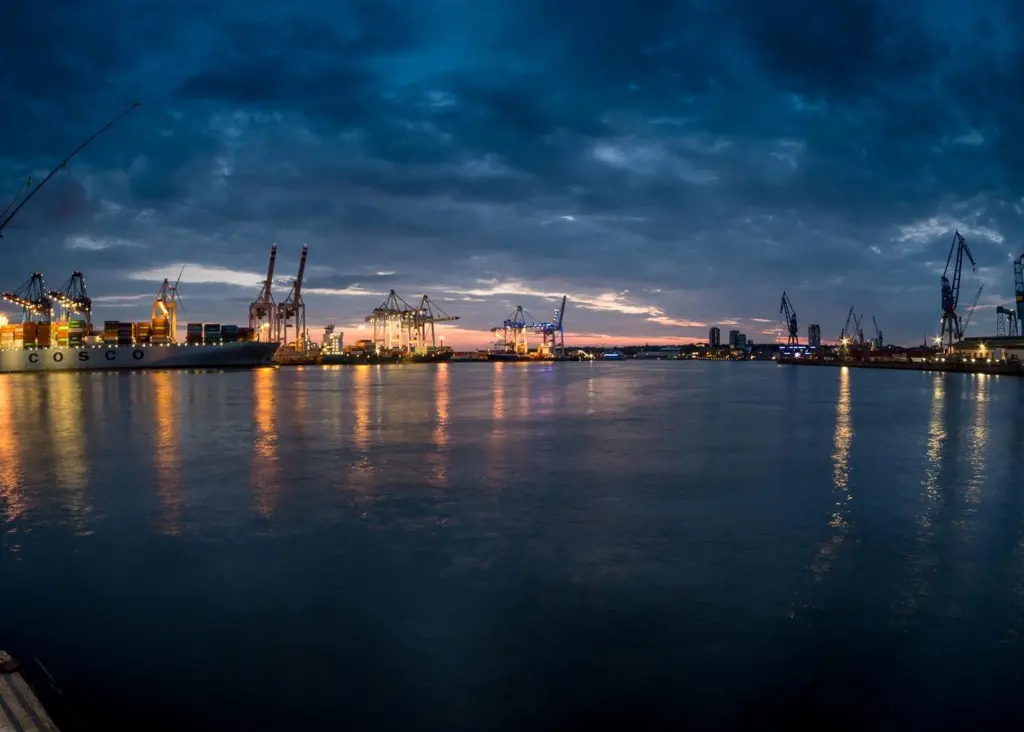
Hamburg wouldn’t be Hamburg without its port. It creates jobs, provides income security and spurs economic growth in the entire region. The port area covers roughly 10% of the area of the city. Due to the port’s location right in the heart of the city the Hamburg Port Authority (HPA) faces two major challenges: the close vicinity of the port to residential areas and the high volumes of economic and transit traffic.
The existing infrastructure facilities must be used intelligently and efficiently as space is limited. We cannot, and do not wish to, keep on expanding the road, rail and waterway network.
We saw the opportunities information technology offered early on and developed a long-term strategy aimed at making the Port of Hamburg a smartPORT over the next years. For us, ‘smart’ refers to the intelligent exchange of information to increase the quality and efficiency of the port as an important link in the supply chain – taking account of both economic and ecological aspects. A special focus of the strategy lies on infrastructure, traffic flows and trade flows.
Establishing intelligent infrastructure is imperative to ensure smooth and efficient traffic flows and, ultimately, trade flows. Information technology – such as Bluetooth, hotspots or wi-fi, cloud, mobile end devices, the Internet of Things and Big Data – plays a key role in implementing it.
In 2010 measuring points were installed at all the major junctions in the Port of Hamburg. Inductive loops and detectors accurately capture traffic volumes, the type of vehicles and their speeds. The data collected is transmitted to the Port Road Management Centre where it is processed to determine current traffic conditions on the port’s roads. The Centre’s IT-supported information system uses state-of-the-art technologies to provide information reliably and fast.
This is merely the beginning of our efforts to establish a comprehensive traffic management system in the port. Once fully implemented, it will include all three modes of transport – road, rail and waterways.
At the national IT summit held at the end of October in Hamburg we, together with our project partners SAP and Deutsche Telekom, had the opportunity to present the smartPORT logistics pilot project to Chancellor Angela Merkel, the federal minister for economic affairs and energy, Sigmar Gabriel, the federal minister for transport and digital infrastructure, Alexander Dobrindt, and other representatives from the business and scientific world. The feedback was positive throughout.
smartPORT logistics substantially contributes to making our vision of smartPORT a reality. In future all modes of transport will be co-ordinated to improve the flow of information and, ultimately, traffic flows. Ships will communicate directly with the operating staff at the bridge control station. Depending on how far away the ship is and how fast it is approaching, an operator will open the bridge just in time and raise the bascules just as high as necessary. Thus the times the bridge is raised will be available long before the ship actually arrives so that the information can be transmitted to the mobile end devices of drivers in the port who intend to cross the bridge. Drivers can then adjust their route accordingly. In pilot operations we were able to increase the productivity by more than 12% due to the use of smartPORT logistics.
Another example of how the port is gradually becoming more intelligent is the use of mobile GPS sensors. Once activated, a sensor will transmit its position and ID to a central system that collects this information and provides it for further processing. GPS sensors could be used to track and locate expensive equipment in the port or mark existing construction sites. In addition to the GPS sensors, adapters can be installed that are fitted with additional sensors which measure, e.g., temperatures, wind forces, wind directions and the current in the River Elbe. This is just one example of how intelligent networks and sensor technology can contribute to making port management more efficient. Our YouTube channel gives an idea of the projects and what else is happening in the Port of Hamburg: www.youtube.com/hamburgportauthority.
We will present more results of our efforts to become a smartPORT at the IAPH World Ports Conference that will take place in Hamburg in 2015 (www.iaph2015.org). The Port of Hamburg is host port for the 29th IAPH world ports congress, which takes place June 1-5, 2015.
Jens Meier is chairman of the management board of the Hamburg Port Authority.
Related Articles
 PORT TALK
 PORT TALK
 PORT TALK