![PortStrategy[GreenPort]](https://www.portstrategy.com/wp-content/uploads/2026/09/PortStrategyGreenPort.svg)





The need for robust safety inductions
At last, the ‘safety first’ message seems to be getting through, says TT Clubs Laurence Jones. In the past, it might have been a prominent sign placed at the main gate of a facility. Once past the gate though, safety was forgotten; operations always came first.
At industry conferences, TT Club often felt alone speaking about safety – and usually squeezed in at the end of the last day. In that context, safety definitely did not come first.
Happily, things have changed. The industry is now discussing safety. Some operators may still just talk, but many now realise that safety not only save lives but also improves productivity and profitability; the safest terminals can be demonstrated to be the most efficient and productive.
So now there is focus on saving lives and saving money. But why are we still injuring people? Unfortunately injuries and fatalities will not simply disappear overnight. There is still a lot of work to be done on safety awareness, implementing safer procedures and installing safer technologies and equipment. Analysis by the TT Club indicates that 80% of injury and fatality costs are caused by operators of handling equipment and other vehicles. All too often pedestrians are run over by trucks or struck by reversing handling equipment. Other common incidents on terminals include truck overturns, and containers being dislodged from the stack and landing on trucks or pedestrians.
Installing technology can help – rear view cameras and anti-collision sensors on mobile equipment; RFID tags on pedestrians and mobile equipment; stack profiling on cranes to prevent them striking containers. All these will prevent incidents, as will procedures such as one-way traffic flows, limiting vehicles and pedestrians in the yard, and mandating a safe area for truckers to open and close twistlocks. Fundamental, however, is enforcing good site safety induction procedures.
Outside help
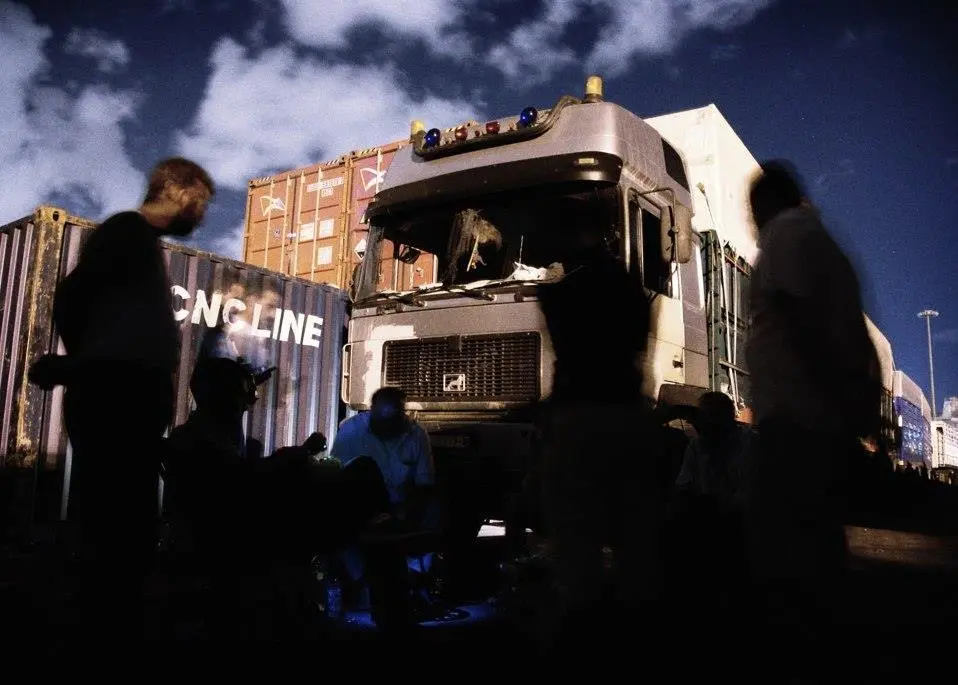
Induction works best in reducing incidents because it is third parties in terminals that are most at risk. External truck drivers are the ones who are injured most commonly. They enter danger areas or they alight from trucks when and where they shouldn’t. Reliance on signage at the main gate is insufficient; adequate site safety inductions are required.
Such induction is best achieved face to face, through a training course similar to those provided to terminal employees. This can most readily be implemented for regular drivers. On completion of the course and closing test drivers receive a card with their name, photo, training date and, importantly, an expiry date. Drivers are denied entry without a valid card.
An alternative, where face to face is impractical as too many drivers are irregular or ‘one-off’ visitors, can be installation of computer terminal kiosks. Here, drivers complete on-line type training via a Q&A in order to receive a printed slip which is needed to gain entry. An effective variant on this, when training courses are impractical, is to require those planning to visit a terminal to complete an on-line safety training course and then print a certificate with which to gain entry.
Proper induction procedures will help minimise accidents. Furthermore, should a serious injury or fatality occur, where appropriate induction procedures are in place the terminal operator is likely to face reduced exposure to workplace safety penalties and an improved defensive position for any compensation claim.
The main aim is to prevent injuries. No visitor should enter a terminal without receiving a proper safety induction. A sign at the gate, while perhaps better than nothing, is not adequate. Controlling access to those who are trained, whether face to face or by other means is much better.
Laurence Jones is risk assessment director at the TT Club. For more information on the TT Club go to www.ttclub.com.
Related Articles
 PORT TALK
 PORT TALK
 PORT TALK