![PortStrategy[GreenPort]](https://www.portstrategy.com/wp-content/uploads/2026/09/PortStrategyGreenPort.svg)






€7.5m grant for European automation project
A project which aims to show that autonomous ships and automation in ports can make waterborne transport much more flexible and user-friendly while further reducing the environmental impact of EU transport has secured a €7.5m grant.
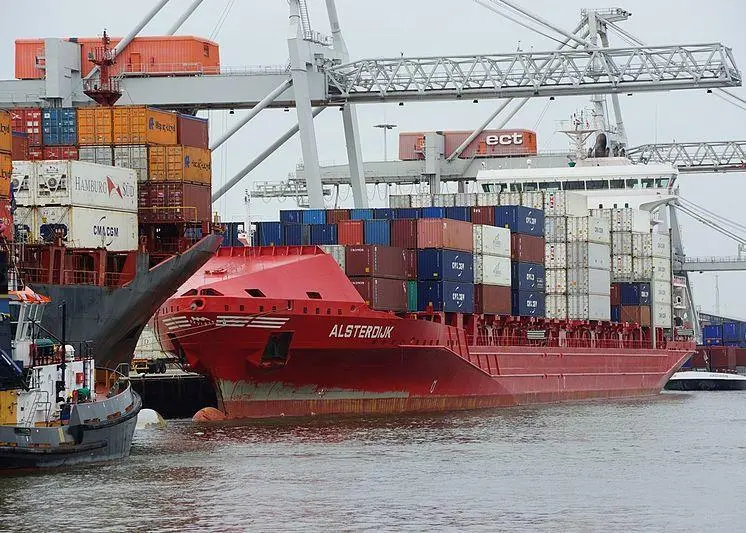
Funded by the EU’s Horizon 2020 Research and Innovation programme and coordinated by SINTEF Ocean in Norway, the three-year ‘Advanced, Efficient and Green Intermodal Systems’ (AEGIS) project started on 1 June. It will focus on integrating smaller ships, inland transport and short-sea shipping with larger terminals to create a new and more competitive European transport system, alongside reducing road congestion and noise and dust pollution and incorporating sustainable propulsion.
“Autonomous ships combined with port automation is the one of the keys to our future waterborne transport systems. End-user services will be much improved, regularity and frequency can be increased and this with no increase in costs,” said Ørnulf Jan Rødseth, secretary of the International Network for Autonomous Ships.
Kalmar and MacGregor, both part of Cargotec, will develop new solutions for cargo handling in ports and on vessels. Grieg Connect will provide corresponding solutions for digital integration and automation.
Three test cases
The AEGIS use cases are located in North Europe and represent typical inter-European transports that need to be linked to local distribution systems. Case A is led by North Sea Container Line in cooperation with the Port of Trondheim in Norway.
It uses small cargo shuttles to link coastal container ships to rural and urban destinations in the region. This saves time for the larger ships and adds flexibility and frequency with the shuttles.
Case B is led by DFDS and will link RORO short sea services in BeNeLux to inland waterways. This will use a similar concept as in Case A.
Case C is led by Port of Aalborg in cooperation with Port of Vordingborg, both located in Denmark, and will examine how existing small and medium sized ports can use automation to facilitate the transfer of cargo from trucks to sea.
In all cases, automatic transshipment is a key factor.
“AEGIS is a project that supports our strategy on port developments, sustainability and increased use of waterborne transport,” said Terje Meisler, head of maritime at Port of Trondheim. “For us it is particularly important that the project develops concepts for smaller and more flexible vessels and includes digitalization as well as a complete logistics solution, including port operations. We are really looking forward to working with the AEGIS partners.”
Related Articles
 PORT & TERMINAL NEWS
 PORT & TERMINAL NEWS
 CONTAINER & CARGO HANDLING