![PortStrategy[GreenPort]](https://www.portstrategy.com/wp-content/uploads/2026/09/PortStrategyGreenPort.svg)



AI tides shift harbour management
South Australia’s push toward smarter maritime operations has taken a step forward, with BMT developing a working prototype of its ADAPT platform under Phase 2 of the state-backed Deep Blue Project.
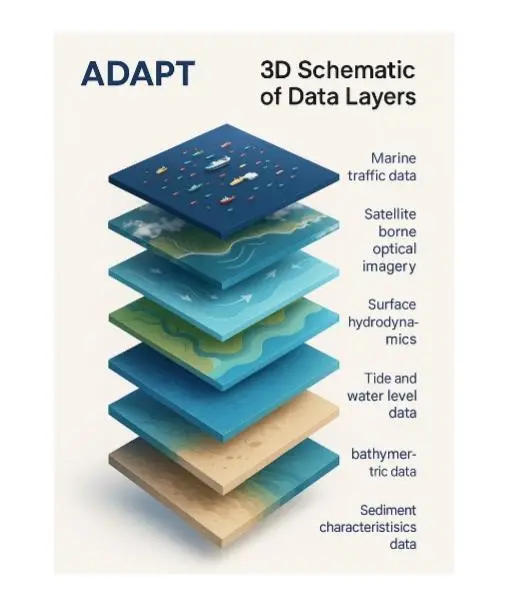
The system, designed with the Department of Infrastructure and Transport (DIT SA), aims to rethink how harbour authorities interpret and act on the flood of environmental and operational data generated each day.
Rather than relying on periodic surveys and siloed datasets, the cloud-based platform blends inputs from autonomous vessels, metocean sensors and machine-learning models. The goal is simple: turn overwhelming information into clear, real-time guidance. “Ports don’t suffer from a lack of data — they suffer from too much of it,” explained one project engineer.
ADAPT’s algorithms sift through these streams to detect patterns, spot anomalies and forecast conditions that typically require manual monitoring. Early trials suggest efficiency gains of up to 15%, largely by avoiding unnecessary dredging and tightening maintenance planning. A DIT SA spokesperson said the prototype ‘gives planners a level of foresight we’ve not had before’, adding that it could help maintain channel access with fewer disruptions.
BMT sees the platform as part of a broader shift toward data autonomy. “This project represents a step change in how Australia thinks about and manages maritime data,” a BMT representative said. “By combining AI and autonomy, Deep Blue is proving that data isn’t just collected – it’s active and transformative.”
The effort builds on BMT’s collaboration with Ocius Technology, whose renewable-powered Bluebottle autonomous vessels recently demonstrated long-duration data collection off Gippsland.
Related Articles
 EXPANSION & DEVELOPMENT
 CONTAINER & CARGO HANDLING
 PORT & TERMINAL NEWS