![PortStrategy[GreenPort]](https://www.portstrategy.com/wp-content/uploads/2026/09/PortStrategyGreenPort.svg)

EU unveils ambitious ports strategy
The European Commission has adopted a new EU Ports Strategy aimed at strengthening the competitiveness, resilience, security and sustainability of ports across the bloc.
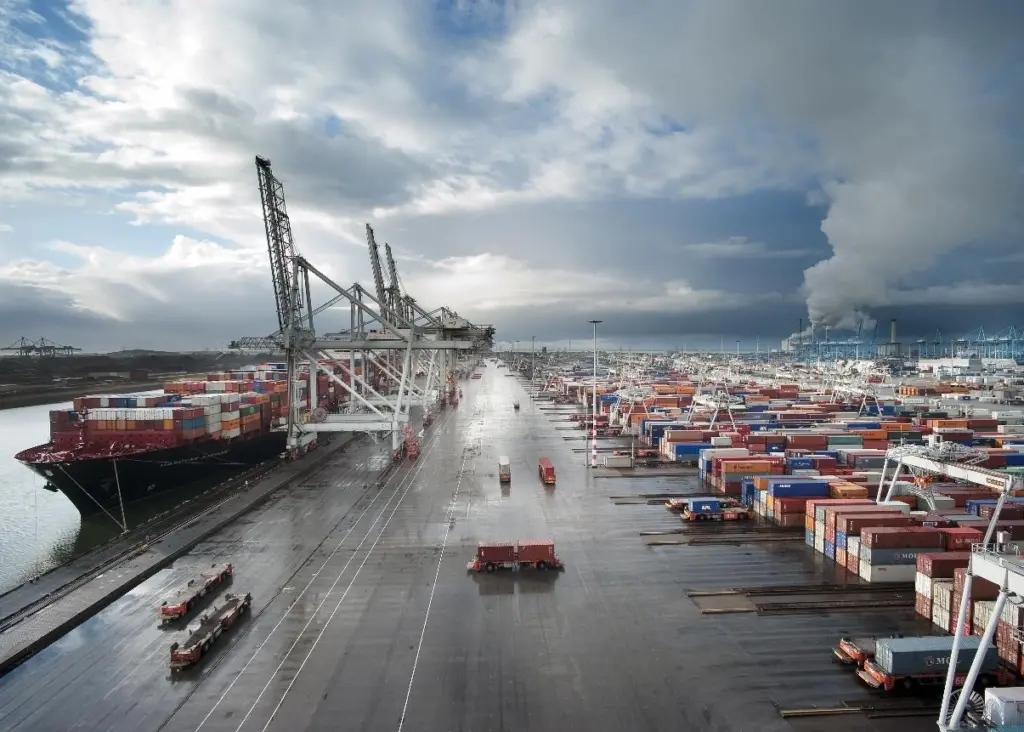
Ports are central to Europe’s economy, handling about 74% of the EU’s external trade and moving around 3.4 billion tonnes of goods each year, alongside nearly 395 million passengers.
The sector supports more than 423,000 direct jobs and plays a key role in connecting islands, coastal areas, Arctic territories and outermost regions to the wider European economy.
According to the Commission, the strategy responds to growing pressure on ports as they evolve into complex industrial and logistics hubs. Facilities must expand capacity while simultaneously decarbonising operations, digitalising systems and strengthening security in response to geopolitical tensions and evolving threats.
The initiative sets out five priority areas for action: boosting competitiveness, innovation and digitalisation; advancing the energy transition; improving security; expanding access to finance; and supporting skills and quality employment.
READ MORE: A pivotal moment for EU port strategy
Under the plan, the Commission will develop guidance on foreign ownership of strategic port infrastructure and set criteria for EU funding related to investments in third-country ports. It also intends to accelerate permitting procedures for key energy and environmental projects, while supporting electrification and the deployment of clean energy solutions such as hydrogen in port areas.
Security measures will include updated guidance on emerging threats, improved customs coordination across EU ports and new frameworks to combat drug trafficking, building on cooperation with the European Ports Alliance. A new forum will also enable port authorities and member states to exchange best practices on cybersecurity.
“Working hand in hand with industry and all relevant stakeholders, we will turn these strategies into concrete results and anchor Europe as the leading waterborne continent,” said Apostolos Tzitzikostas, European Commissioner for Sustainable Transport and Tourism.
A high-level Maritime Industries and Ports Board will oversee the implementation of the strategy.
Related Articles
 EXPANSION & DEVELOPMENT
 CONTAINER & CARGO HANDLING
 PORT & TERMINAL NEWS