![PortStrategy[GreenPort]](https://www.portstrategy.com/wp-content/uploads/2026/09/PortStrategyGreenPort.svg)


Hapag-Lloyd grows Rotterdam terminal stake
Hapag-Lloyd has agreed to acquire a 25% stake in APM Terminals Maasvlakte II from APM Terminals, deepening the companies’ partnership at one of Rotterdam’s key container terminals.
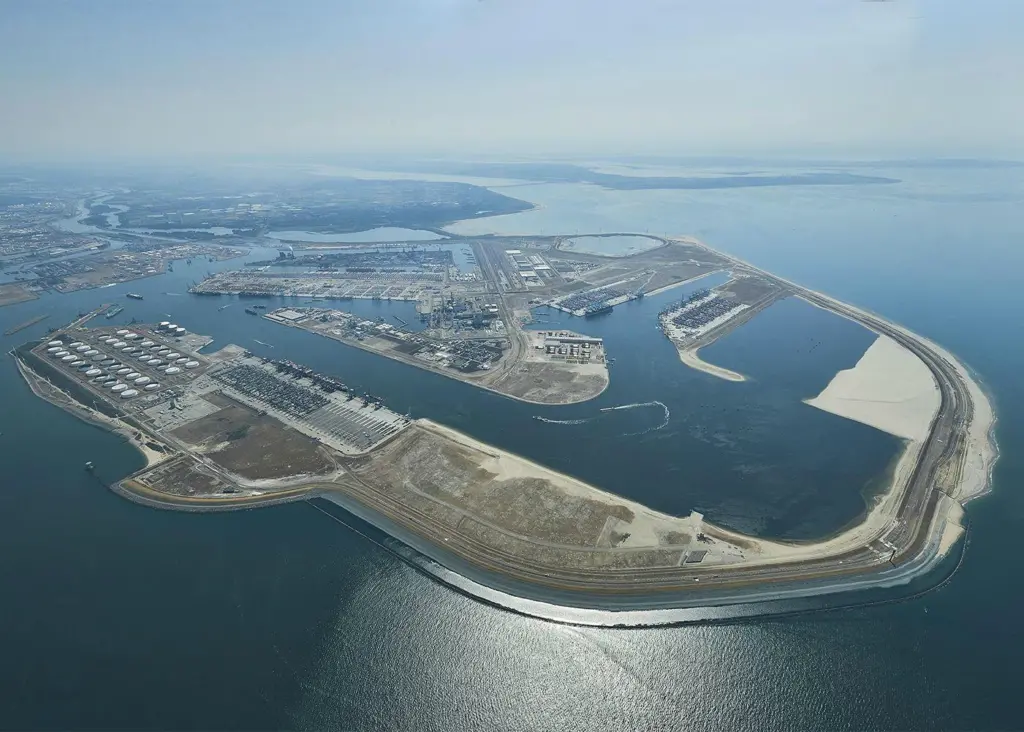
The investment will support the terminal’s continued development, capacity expansion and operational performance, while strengthening Maasvlakte II’s role as a major European hub for the Gemini Cooperation between Hapag-Lloyd and A.P. Moller-Maersk.
Hapag-Lloyd said the deal would also secure long-term automated terminal handling capacity and expand its global terminal portfolio through Hanseatic Global Terminals.
“With the planned investment in Rotterdam, we will further enhance the efficiency and reliability of our network,” said Dheeraj Bhatia, chief technology information officer of Hapag-Lloyd and chief executive of Hanseatic Global Terminals.
“The terminal is a key element for Gemini Cooperation and fits well with our strategy to build a stronger terminal portfolio in core markets.”
APM Terminals will retain operational control of Maasvlakte II and said the transaction demonstrated the strength of its relationship with Hapag-Lloyd. Chief executive Keith Svendsen said the company remained committed to making the facility ‘the best terminal in northern Europe for every customer calling at it’, with a focus on safety, quality, delivery and cost.
Operational since 2015, Maasvlakte II is undergoing a major expansion designed to increase its role as a European gateway. The project will add 1,000 metres of deep-sea berth, taking the total to 2,000 metres, alongside additional yard capacity and four new rail tracks.
The expansion also includes automated terminal tractors and other automated equipment. Once completed, the terminal is expected to increase annual handling capacity towards 5.4 million teu, improving resilience and supporting future cargo flows through Rotterdam.
Financial details of the transaction have not been disclosed. Completion remains subject to approval from relevant authorities and regulators.
Related Articles
 EXPANSION & DEVELOPMENT
 CONTAINER & CARGO HANDLING
 PORT & TERMINAL NEWS