![PortStrategy[GreenPort]](https://www.portstrategy.com/wp-content/uploads/2026/09/PortStrategyGreenPort.svg)


UK’s North East advances autonomous logistics
The North East Automotive Alliance and partners have successfully completed the P-CAL (Port Connected and Automated Logistics) project, marking a significant step forward for autonomous logistics in the UK.
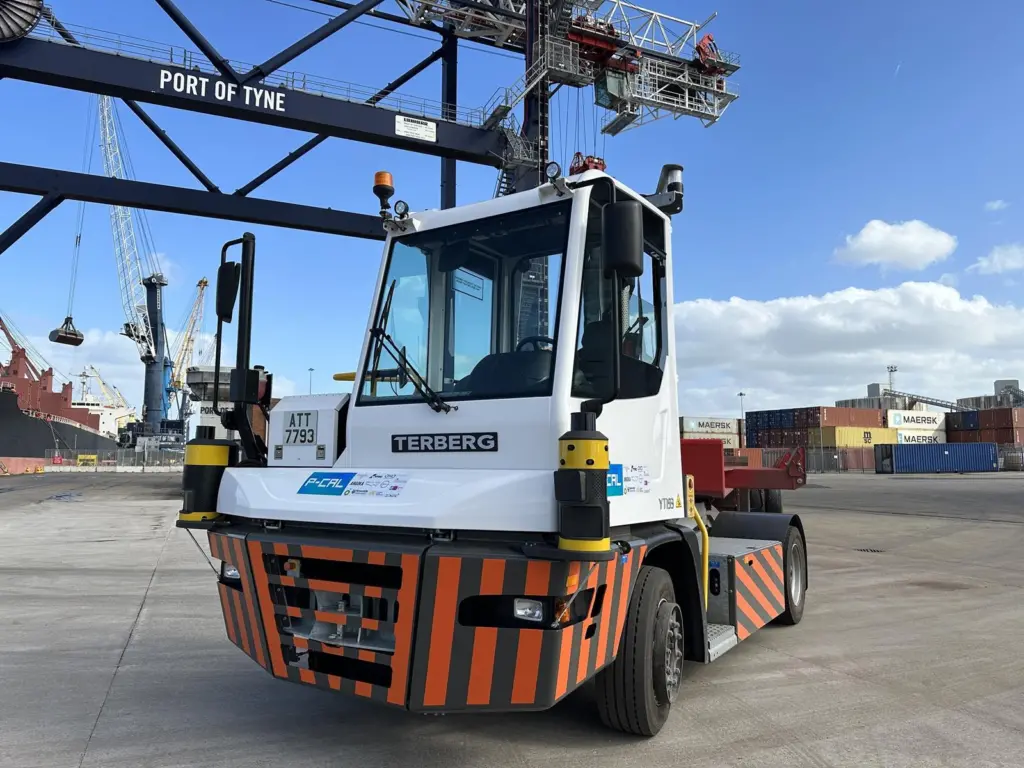
Delivered through the government-backed CAM Pathfinder programme, the initiative brought together the Port of Tyne, Oxa and a consortium of industry and academic organisations to deploy a fully autonomous terminal tractor within a live port environment. The project builds on earlier regional trials and moves connected and automated mobility (CAM) technologies into real-world, safety-critical operations.
“P-CAL represents a defining moment in the North East’s journey from pilot projects to real world autonomous operations,” said Paul Butler, founder and chief executive of Oxa.
“The learning gained here will shape future CAM deployment and reinforces the region’s position as a national leader.”
Over the course of the programme, partners developed and validated an autonomous container transport system capable of operating on a busy quayside. The solution integrated advanced communication networks, real-time coordination with crane operations, terminal system connectivity and a cybersecurity framework, all within a complex operational design domain reflecting real port conditions.
Graeme Hardie, operations director at the Port of Tyne said: “Delivering autonomous logistics in a live port environment has been a major step forward for the sector. P-CAL has shown what’s possible when innovation is applied to real operational challenges, improving safety, efficiency and sustainability.”
The project also highlighted the importance of cyber resilience in connected infrastructure. Shadi AR, chief technology officer at Angoka said: “The project has demonstrated how secure, purpose-built digital infrastructure can enable safe and trusted autonomous operations in critical industrial environments.”
With successful trials completed, the consortium says the next phase will focus on scaling the system across wider port operations.
Related Articles
 EXPANSION & DEVELOPMENT
 CONTAINER & CARGO HANDLING
 PORT & TERMINAL NEWS