![PortStrategy[GreenPort]](https://www.portstrategy.com/wp-content/uploads/2026/09/PortStrategyGreenPort.svg)





Developing “natural” dredging
One of the world’s largest dredging contractors and marine construction companies (in terms of 2007 turnover), Van Oord is successfully deploying relatively new technology in its dredging activities.
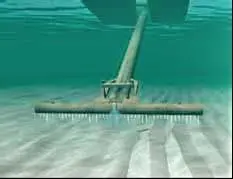
One of these new technologies is the use of the Water Injection Dredging method. “This methodology was developed by our company,” says Wouter Dirks, Van Oord’s Senior Engineer. “It removes the sediment by making use of natural processes. Water is injected in the sediment which creates a density current transporting the sediment to deeper parts of the port, channel or river. In this way, we don’t have to pick up the sediment and transport it by mechanical means to another location – it can move in the deeper parts by itself and the entire process happens one or two metres above the seabed.” The Water Injection system is, the company states, the “way to natural dredging”. Settled sediment is brought back into suspension by injecting it with water. The cohesion between the grains is eliminated and the sediment forms a mixture with the injected water. This mixture turns into a density current, which is moving under the influence of gravity and density gradients. The density current flows away horizontally, taking the sediment particles with it. According to Dirks this technology is often used in small ports and marinas because of the maneuverability of the vessels and is also successfully adapted in larger ports in the UK along the River Thames, several places in Netherlands and also further destinations, like Brazil, India or Singapore. Dirks continues: “The environmental engineering department of Van Oord plays an important role in our effort to offer our clients professional advice regarding environmentally friendly solutions, as early as the project design and work preparation phase. We invested in tailor-made computer software that can help us predict turbidity in the water surrounding a dredging project. With this software we can develop work methods that produce less turbidity and sedimentation in sensitive areas. For our project staff we set up a course in measuring water quality around dredging works. Project staff was trained in providing professional supervision to the implementation of environmental management procedures at project sites.” In terms of developing environmentally friendly dredging equipment for situations where, for example, heavily contaminated sediment needs to be dredged, Van Oord has developed a highly accurate and high density Auger Suction Dredger. “Highly contaminated sediment should not be mixed with the environment,” Dirks explains. “The Auger dredger can reach very high accuracy, with deviations of only a few centimetres, high concentration and the turbidity in the surrounding water by stirring up of polluted material is virtually zero. This method is very successful and best for dredging soft contaminated sediment.”
Related Articles
 EQUIPMENT
 ALTERNATIVE FUELS GREENPORT