



Dust free loading process
ISG Pit to Ship Solutions has designed a dust free logistic system to transport products from the mine site into the ship’s hull using sealed containers and a tippler. The product is not handled again until it is tipped into the ship’s hull, says Garry Pinder, Managing Director of ISG Pit To Ship solutions.
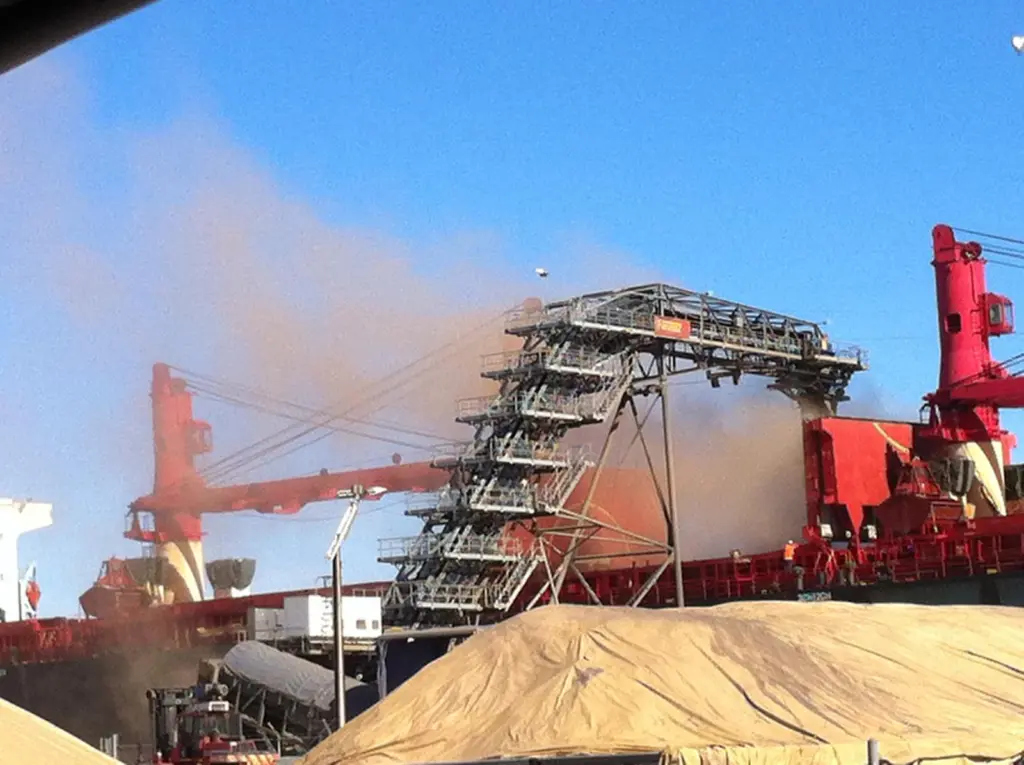
The system involves the use of sealed containers and current port infrastructure in either bulk or container ports. Moreover, the system can be set up and running in six months, compared to the five years with current systems. When looking at the benefits of this system, we can see that there is no product loss, no pollution out of the container or into the sampled product, there is no need for expensive and labour intensive storage sheds or conveyor belt systems.
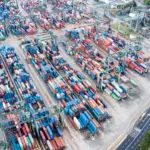
Containers are loaded at the mine site and then taken to the port either by road or rail. Then, at the port, whether it’s bulk or containerised, the containers are block stacked awaiting the ship to arrive. Once the ship has arrived, the containers are taken around to the key side, using a tippler attached to either a land based crane, ships crane or overhead crane. The containers are lifted into the ship’s hull where once inside the hull the ISG patented lid lifter lifts the lid off the container , the container is then turned 360 degrees and the product unloaded . The lid is then returned to the container inside the ship’s hull and the container goes back to the stack ready to be transported back to the mine site to continue the process all over again. The containers never leave the country and are used in a round loop process from pit to ship.
This system is environmentally friendly and provides ports with another string to their bow by using current port equipment. The only additional equipment the port needs is a tippler. Mining companies have no more environmental dust issues, their product is not lost during the transport and loading process, and they can move the containers to their next project when finished.
In Australia, copper concentrate class 9 dangerous goods are being loaded next to pristine white beaches and yacht clubs, without dust residual located outside the ship’s hull. Mineral sands and iron ore are also loaded at the same port using containers and tipplers, and all are given the tick of approval by the Environmental Protection Authority (EPA).
Ship blending
The beauty of this system with copper and mineral sands is that you can sample at the mine site knowing that no pollution can get into your product. You can also block stack your product, so when you are blending in the ship, you have different classes of your product already sampled to blend in the ship. For example, you can advise port operators to use 200 of one stack, 50 of another stack and another 100 of a third stack to provide the required blend you need.
ISG containers have been tested to BK2 and ADG7 ISO codes, we also cycle test our container and have full Finite Element Analysis (FEA) reports with all containers. ISG has the patent on the tippler lid and lid lifter, and a patent pending on other features including our corner casting design that stop product from flowing into the corner castings , this feature reduces crane down time and product spill on the key side. Furthermore, ISG has produced a bulk 20’container for iron ore in the Congo with EXXARO that has a pay load of 40 tons, most bulk containers have a payload of 32 tons. Our internal bath tub design also stops product hang up.
There is no standard container for all commodities, each product type has a different Specific Gravity (SG) and this determines the container height. The tippler is designed to use gravity to assist in the turning cycle and product height is critical to this operation.
The pride of the fleet is the copper and mineral sands containers as these commodities are at the high end of the mineral value price. We have designed our containers to be sift proof and the lid is an automatic design that is locked when the lid is placed on them at the mine site and is only opened inside the ship’s hull with the tippler, this is an automated system with no manual labour required.
Our iron ore container can also have the lid option to stop dust and the container being filled with water in high rain fall areas. Furthermore, our nickel and coal container design allows for high cubic loads.
Once government officials and environmental advocates understand this system and see the green potential, there will be a domino effect. Port authorities with low export rates will also perceive a new opportunity to gather business that was previously out of their reach.
Is this process cost effective?
If you were building a green field port, setting aside the traditional infrastructure you need like the key side, roads etc., you would need another 30-50 million USD for storage sheds. Containers cost around 10 million USD depending on the amount, a conveyor belt system costs around 100 million USD, tipplers costs around 450,000 USD each, and normally three tipplers are purchased by the port and the containers are purchased by the mining companies. So, when making the comparison, you would need 150 million including a dust problem or else around 13 million and no dust problem.
If you currently have a container port, you only need the containers and tipplers, all the other infrastructure is in place. An over loaded bulk terminal can store the container several miles away and road them in when the ship arrives, using the ship cranes to load them into the ship’s hull. Currently, there are different good practice examples of this system in Chile, Argentina, Africa and Australia. At present, the benchmark is in Australia but the other locations are catching up.
For animated and real life videos of this process please visit www.pittoship.com.
Related Articles
 EQUIPMENT
 ALTERNATIVE FUELS GREENPORT