![PortStrategy[GreenPort]](https://www.portstrategy.com/wp-content/uploads/2026/09/PortStrategyGreenPort.svg)






Fixing a port-city mismatch
In a bid to help ports become more competitive, the Organisation for Economic Co-operation and Development’s (OECD) recent report looks at mitigating their negative impacts on the environment, land use and traffic congestion.
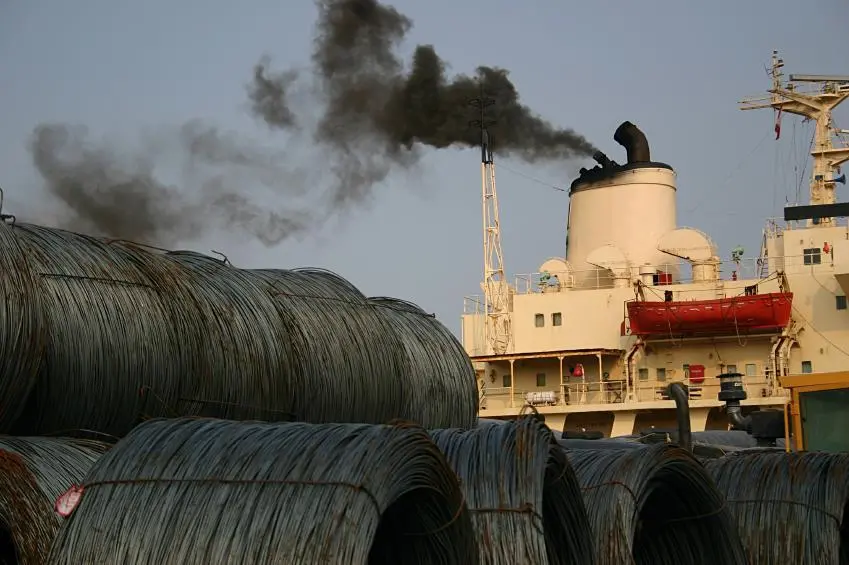
While ports and cities are historically strongly linked, the OECD report says the link between port and city growth has become weaker, and ports’ negative impacts on the environment aren’t doing them any favours.
Olaf Merk, administrator, ports and shipping, International Transport Forum (ITF), told GreenPort: “’Greening’ ports is important as it gives more a licence to continue to operate. Maintaining ports close to cities, which is the case for most ports, is not sustainable if ports are not sustainable; if they are not green.”
As a global sector, the impacts of shipping and ports can be substantial. For example, more than half of the sulphur dioxide emissions in Hong Kong are related to shipping. A third of the land surface of the city of Antwerp consists of its port, which is not problematic in itself, but could raise the question of opportunity costs, says the report. In addition, port truck traffic is said to account for more than 85% of total truck traffic on some sections of the highways in Los Angeles.
While some of shipping’s impacts are global, such as greenhouse gas emissions, the report suggests most of the negative impacts of ports are localised, taking place close to the port area – in terms of noise and dust – and in the metropolis – air emissions, water quality, congestion and land use.
As such, “ports should develop policies to reduce the health impacts of shipping and port activity on urban population,” the report states. It goes on to add that there’s a “port-city mismatch: the combination of benefits spilling over to other regions and the localised negative impacts”.
So, vital global regulation of environmental impacts of shipping should run alongside port policies to reduce the health impacts of the sector on urban population.
This could take the form of “internalising external effects and polluter pays-principles”. More incentive schemes for cleaner ships have started to appear – notably at Gothenburg, Los Angeles, Long Beach, Oakland, Rotterdam, Hamburg and Antwerp – but need to be introduced on a much larger scale, the report adds.
Mr Merk told GP most ports need to improve, especially large ports in emerging markets close to cities. “Due to their size, reducing impacts in Chinese port-cities would significantly improve things. They have initiated policies, but it would help if there would be a coordinated approach for ports in the same region, for example the Pearl River Delta, creating a level playing field for Hong Kong, Shenzhen and Guangzhou.
In addition, the report suggests traffic impacts of ports could be mitigated by better transport planning, intermodal strategies and more incentives to spread traffic flows over the day, including port gate strategies and urban congestion fees.
Related Articles
 EQUIPMENT
 ALTERNATIVE FUELS GREENPORT